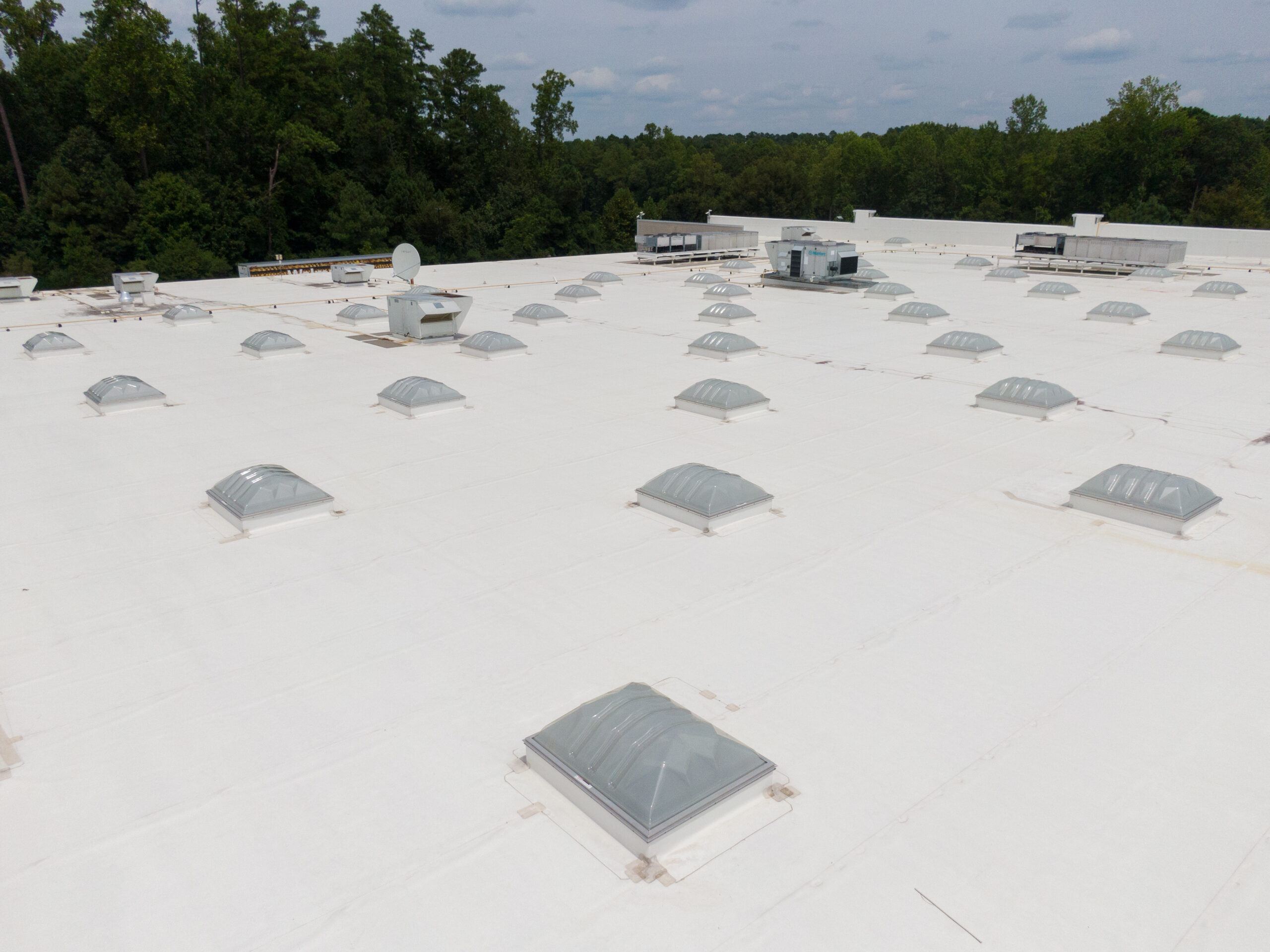
Commercial roofing for restaurants, quick-service chains, breweries, and food service facilities throughout Dallas, TX.
Dallas operates one of the country's most intense food service economies, from the Uptown dining corridor and Deep Ellum's bar-and-restaurant scene to the massive QSR and fast-casual footprint lining the LBJ Freeway feeder roads, Central Expressway service roads, and the endless strip center development in Plano, Frisco, Garland, and Arlington. The sheer volume of restaurant rooftops in the DFW metroplex means that commercial roofing for food service is a major, specialized trade segment here — not a niche. And the North Texas climate, which swings from 105°F summers to ice storm warnings that shut down the city in February, ensures that every marginal flashing detail eventually gets exposed regardless of which season first finds it.
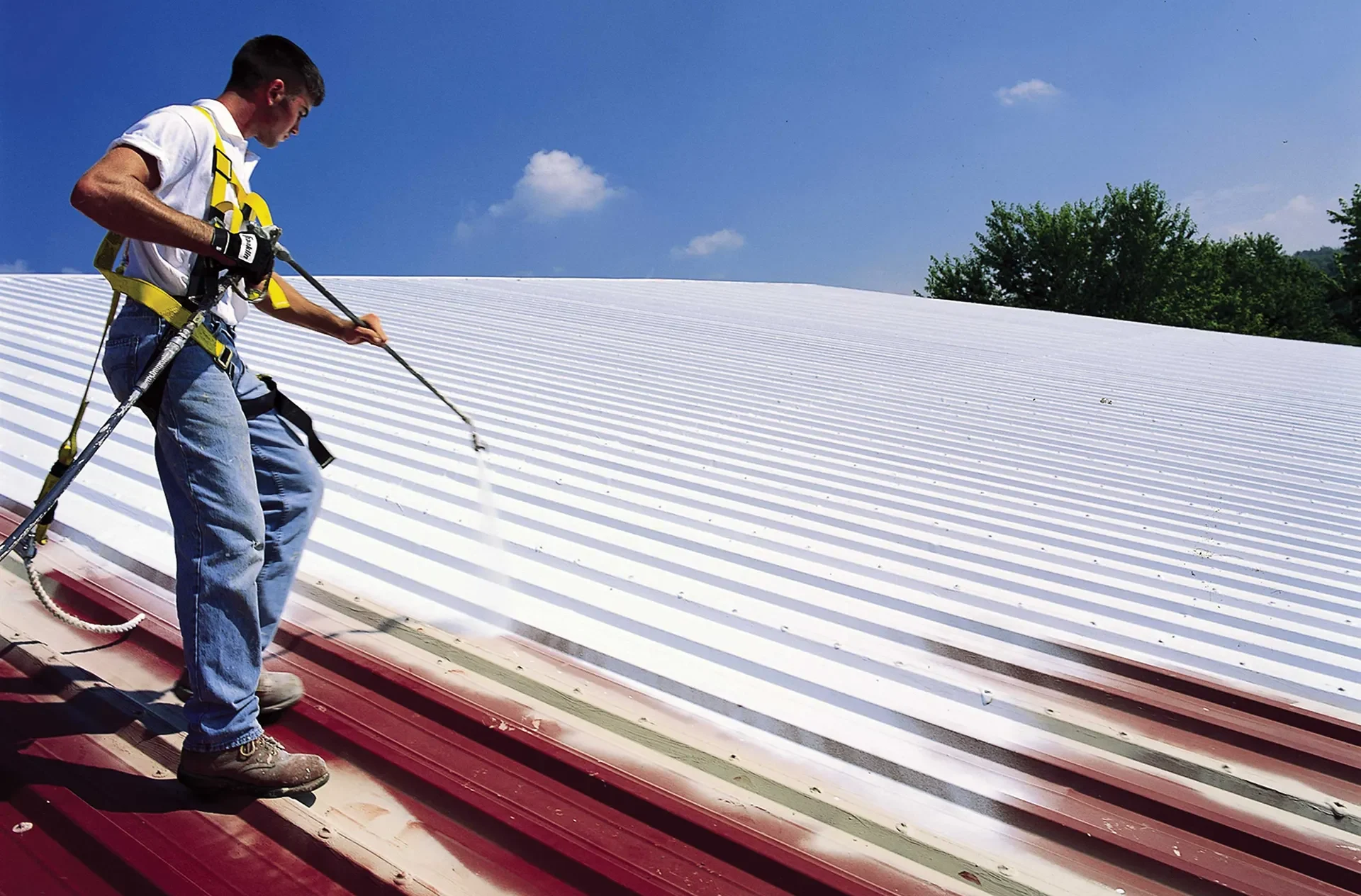
Texas summer heat is the dominant variable in Dallas restaurant roofing performance. A black or aged single-ply membrane on a Dallas restaurant roof can exceed 185°F at the surface during July and August, and the thermal expansion that temperature produces in membrane seams and flashing laps is far beyond what the same product experiences in temperate climates. Exhaust zone flashings that were adequately attached at installation pull free from curb faces under repeated extreme thermal cycling, creating a progressive separation that's invisible from inside the building until a storm event drives water through the gap. Reflective white membranes reduce surface temperatures dramatically and extend service life meaningfully in the North Texas heat environment.
Dallas's severe thunderstorm season, peaking from April through June, creates a hail and wind-driven rain threat that's among the most severe in the contiguous United States. Insurance carriers in the DFW market are highly familiar with roofing claims from hail events, and food service buildings with aged or improperly maintained membranes are the highest-risk category in the claims data. Restaurant operators who re-roof with hail-rated membrane systems, document the installation with manufacturer inspection and certification, and maintain that certification through the warranty period have measurably better outcomes in both roof performance and insurance cost compared to those running on degraded systems without documentation.
Grease exhaust management in Dallas's restaurant environment involves an additional variable that less active food service markets don't encounter at the same scale: the sheer exhaust volume from high-throughput QSR concepts running 15-18 hours daily in a climate that keeps the kitchen hot year-round. A Dallas McDonald's or Chick-fil-A running 1,200-1,500 customers daily generates exhaust loads that accumulate grease residue faster than the same concept in a cooler climate, because neither the kitchen temperature nor the ambient temperature outside ever drops enough to allow the membrane surface to cool and harden the residue. Regular scheduled cleaning of the exhaust zone — quarterly for high-volume concepts — is a maintenance requirement, not an optional service.
Walk-in cooler roofing details in Dallas face the extreme thermal differential between Texas summer exterior temperatures and cooler operating temperatures. A cooler running at 35°F against a 95°F exterior is a 60-degree differential, and the vapor drive toward the cooler surface under those conditions is aggressive. Any gap in the vapor retarder assembly at the curb perimeter allows warm humid air into the cooler wall assembly, where it condenses immediately. Dallas restaurant operators who have dealt with a condemnation notice from Dallas County health inspectors over mold in a cooler surrounds understand the business impact — it's not just the repair cost, it's the forced closure pending remediation and re-inspection that costs real revenue.
Deep Ellum's restaurant and bar buildings, and the Lower Greenville commercial strip, represent the older end of the Dallas food service building inventory — structures from the 1920s through 1970s with rooftop conditions that reflect continuous commercial use without coordinated renovation cycles. New tenants opening in those buildings routinely discover that the roof is the last thing that was replaced, and that the existing exhaust penetrations from prior concepts are present but not maintained. A thorough pre-lease roofing assessment for any Deep Ellum or Lower Greenville operator is not due diligence theater — it directly determines whether the TI budget is adequate or whether a full re-roof is needed before opening.
Dallas's ice storm events — typically one or two significant events per winter — create a specific short-duration but high-consequence loading condition on restaurant roofs. Grease-contaminated membrane surfaces near exhaust curbs hold ice bonded to the surface differently than clean roofing does, and the weight of ice on already-stressed exhaust curb flashings can produce immediate failures. The February that normal weather never would. Operators who had performed exhaust zone maintenance and flashing inspection before that event had measurably fewer emergency calls than those who had deferred maintenance.
TPO and PVC membranes both perform in Dallas's extreme heat environment when properly specified, but the thickness and substrate attachment method matter more in North Texas than in cooler markets. A 45-mil TPO that would perform adequately in the Midwest may show seam failure from thermal cycling stress by year eight in a Dallas summer environment. Sixty-mil as a minimum, with reinforced fleece backing at equipment curbs, is a more defensible starting point. PVC at exhaust zones provides the grease resistance that TPO lacks, and the material cost premium is negligible relative to the extended service life at the highest-stress locations.
Selecting a commercial roofing contractor in the Dallas market means navigating a large pool of contractors who range from highly experienced food service specialists to general commercial operators who have simply landed in a restaurant-heavy market. The differentiating questions are specific: How do you specify exhaust zone membrane for a building running 15 hours of QSR kitchen operation daily? What's your hail rating specification for the DFW storm zone? Can you provide three restaurant or brewery re-roof references completed in Dallas in the last two years? The right contractor answers those questions before you finish asking them — they're accustomed to being evaluated on the specifics because the best food service operators in Dallas have learned to ask.