Most commercial roof leaks in Dallas are not hard to find — if you know where to look. We trace the source before we propose a repair, because patching the wrong location wastes money and leaves the leak active.
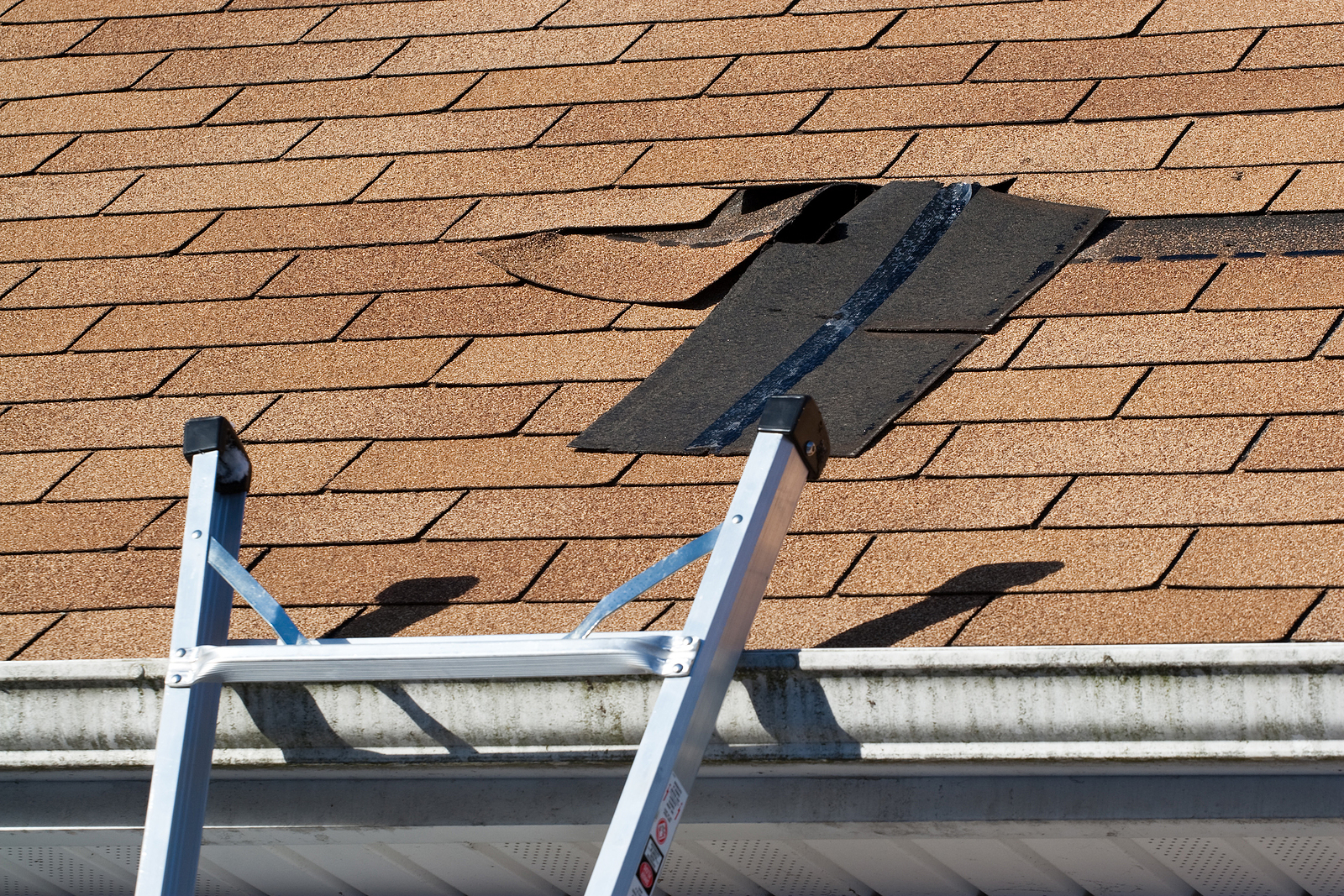
We get calls every month from building owners who have had the same commercial roof leak repaired three times by three different contractors. Each time, someone patched something visible and the leak came back. The reason it keeps coming back is that no one traced the source before picking up a caulk gun.
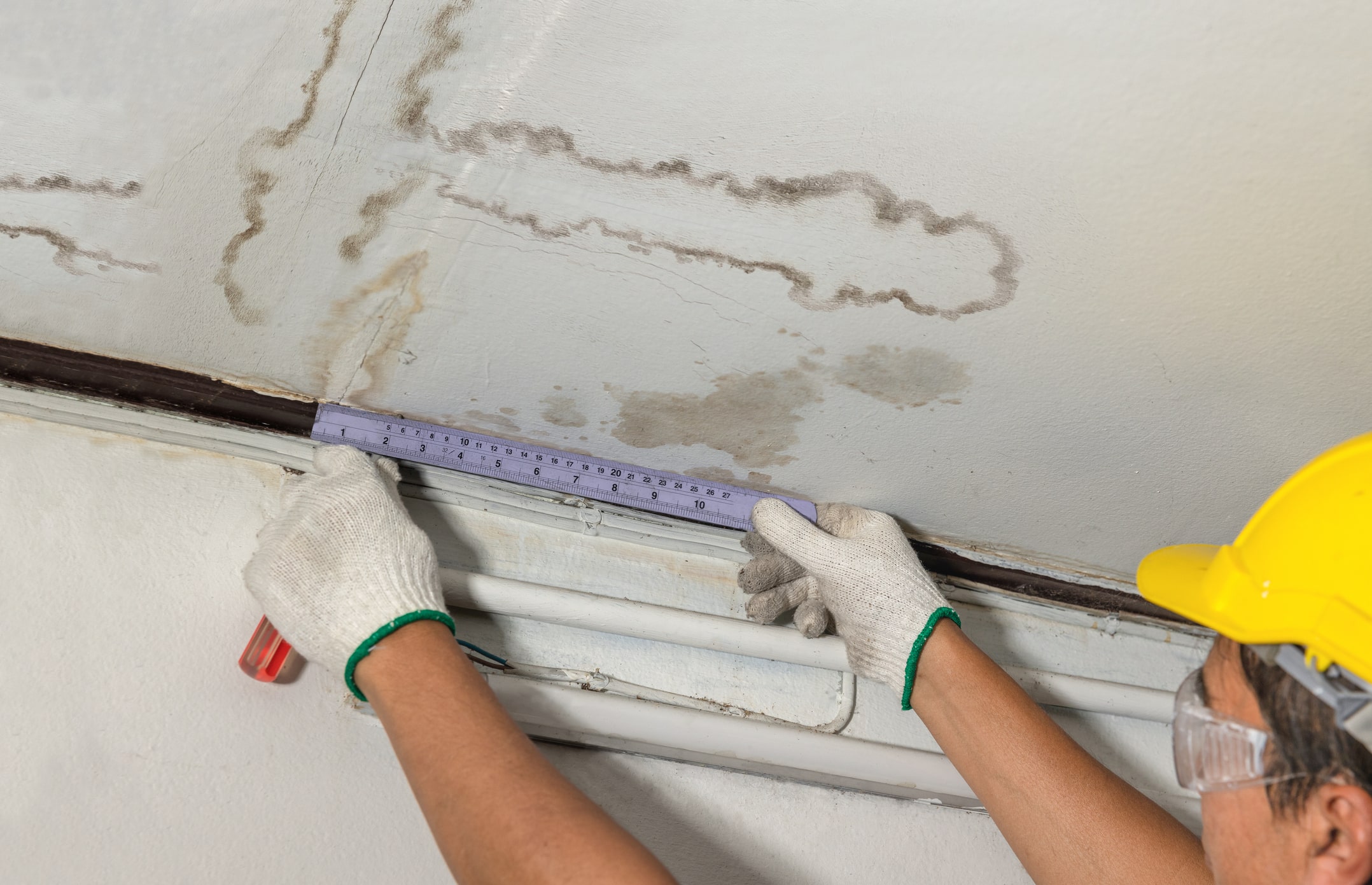
On a flat commercial roof, water enters at a specific point and travels horizontally inside the insulation or along the deck surface before dropping through a ceiling penetration. The ceiling stain is rarely above the leak source. We trace from the stain back to the source — using smoke testing, water testing, and systematic membrane inspection — before we propose any repair. The repair then closes the actual source, not the nearest visible anomaly.
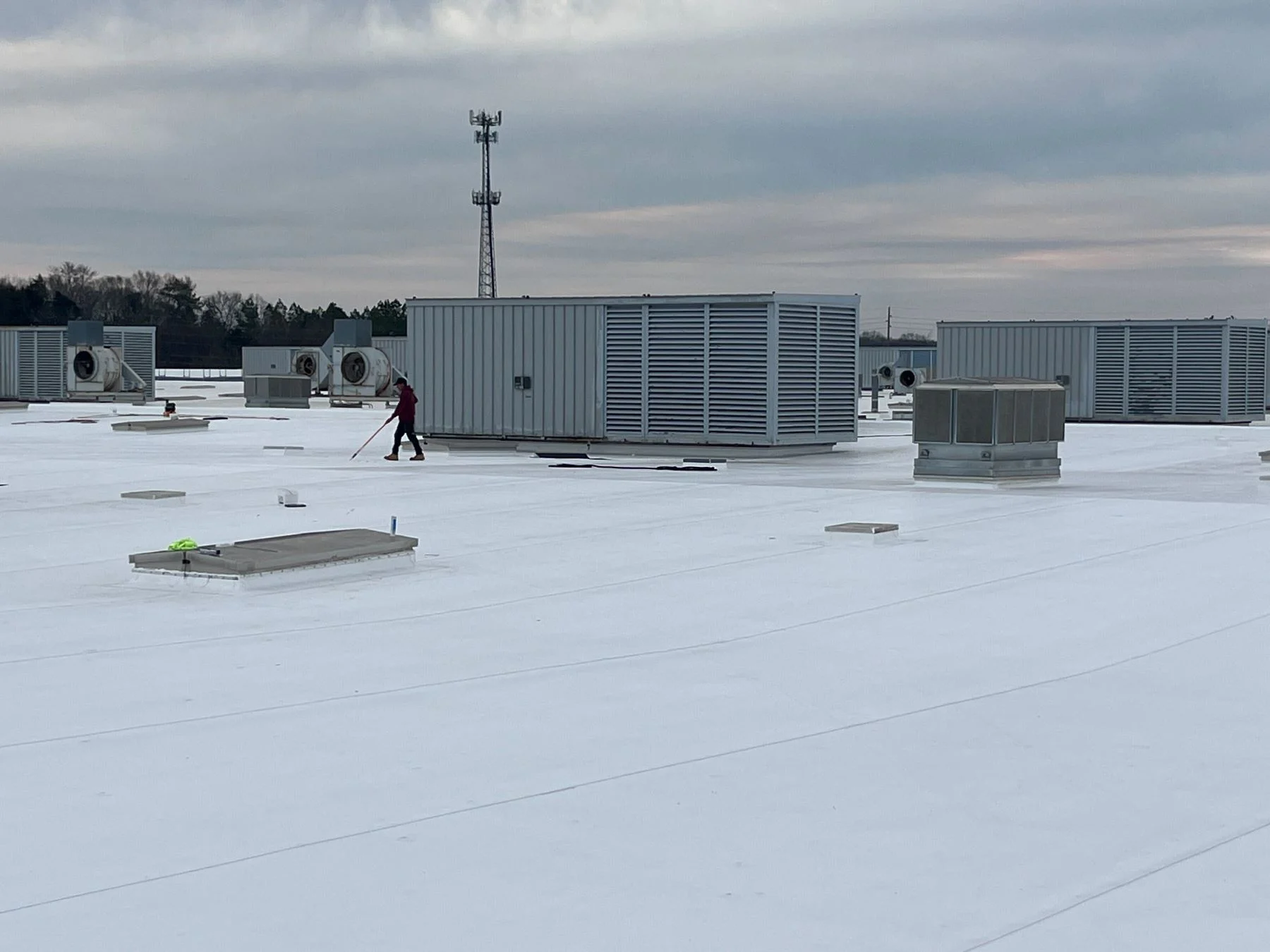
Dallas commercial buildings have a set of common leak sources that repeat across building types and membrane systems. We know what to look for and where to look for it. The result is usually a one-visit diagnosis and a permanent repair, not a sequence of temporary patches that buy time until the next rain event.
Smoke testing is our first tool when the ceiling stain's location does not immediately suggest the source. We introduce theatrical smoke at the suspected entry zone and trace where it exits at the roof surface. Smoke follows the same path water does — through membrane breaches, along deck seams, out through unsealed penetrations. The smoke makes the path visible in a way that looking at the roof surface alone cannot.
Water testing is our second tool, used when the membrane condition is known and we are narrowing down which specific location is passing water. We flood a zone of the roof, isolate it with temporary water dams, and watch the interior below for infiltration. This method takes more time but produces a precise answer when the source is in a zone with multiple candidates.
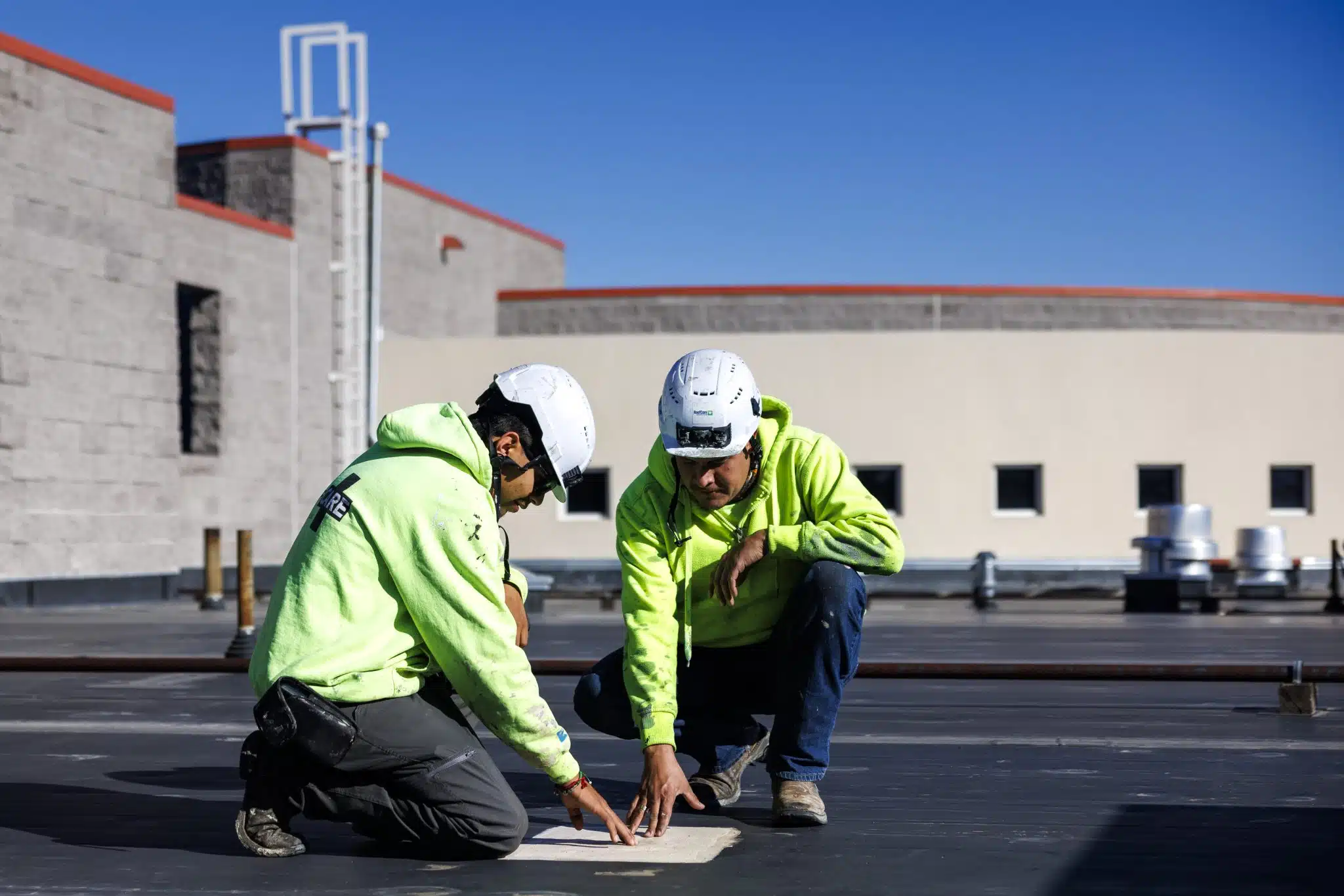
Systematic visual inspection, conducted before any testing, documents every anomaly in the suspect zone: open seams, flashing gaps, penetration seal failures, membrane splits, prior repairs that have failed or shrunk. We photograph each anomaly before we decide which gets the smoke or water test. The inspection gives us a priority list rather than a random starting point.
Drain-edge seam failure: The membrane-to-drain flange connection is the highest-stress flashing detail on a flat roof. Dallas thermal cycling — surface temperatures above 160°F in summer, freeze events in winter — works the membrane at the drain connection more aggressively than almost any other detail. We see drain-edge seam failure on roofs as young as 7-10 years where the drain flashing was undersized or improperly clamped.
Parapet cap flashing separation: The flashing at the top of the parapet wall expands and contracts with the wall and the roof surface independently. On Dallas buildings with concrete block parapets, the differential movement between the block wall and the roofing system works the counter-flashing loose over time. Rain runs down the back side of the parapet, behind the counter-flashing, and enters the wall cavity or directly into the ceiling below.
HVAC curb corner failures: Every rooftop unit sits on a curb, and every curb corner is a place where the flashing membrane has to make a 90-degree turn. Curb corner failures are especially common on older modified bitumen systems where the corner strapping has dried and cracked. They are also common on TPO systems where the curb flashing was installed with pre-formed corners instead of field-fabricated corners — pre-formed corners shrink and pull away at the attachment edge.