Most of our repair clients are facility managers or building owners who have been told by a previous contractor that the whole roof needs replacement. We verify that claim with cores and a moisture survey. When full replacement is the right call, we say so. When repair extends useful life another 8-12 years at a third of the replacement cost, we say that too.
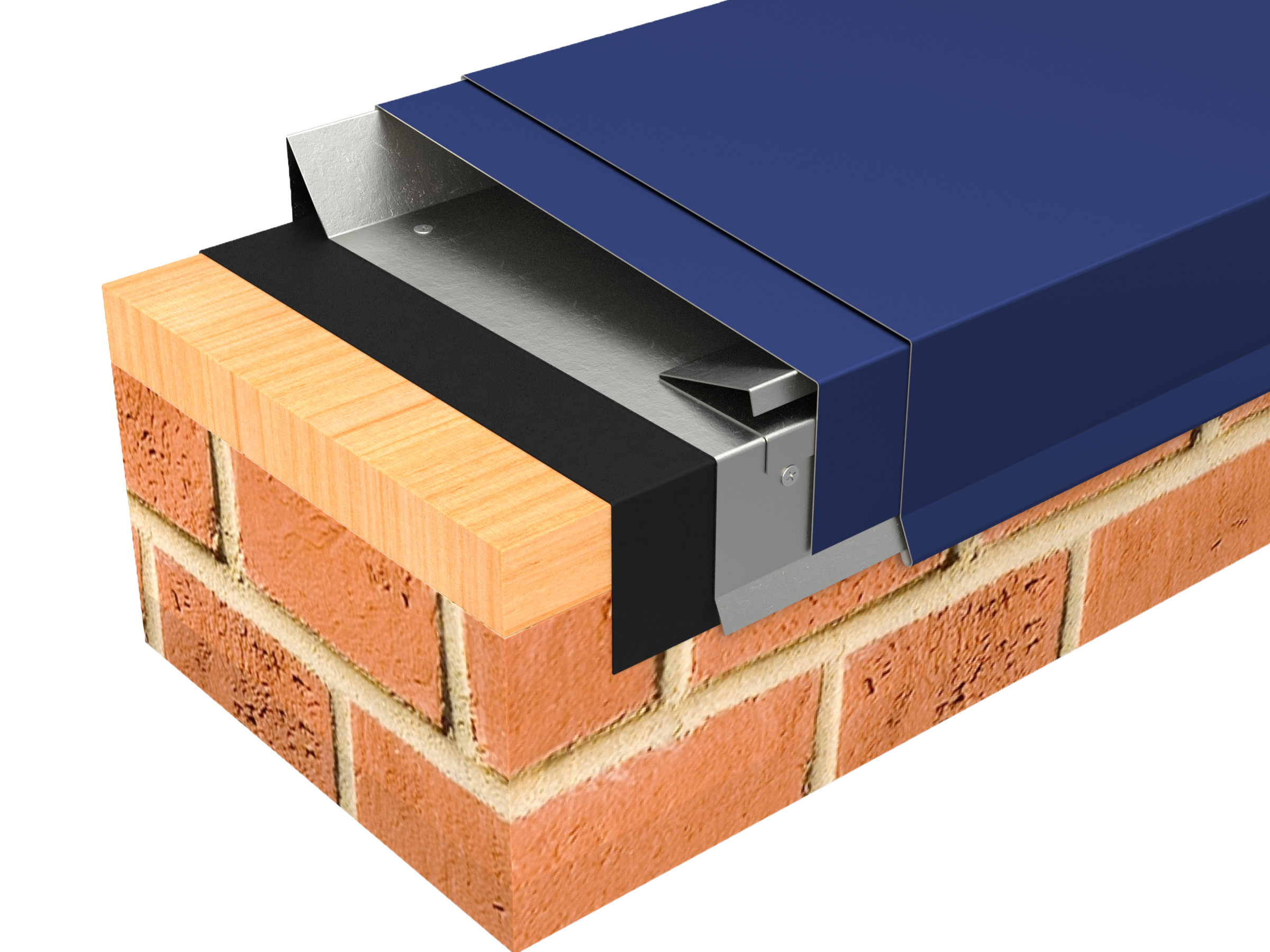
Parapet flashing separation: The most common failure mode on Dallas commercial buildings built before 2000. Parapet walls are thin — often single-wythe masonry — and they move with the clay-soil heave cycles. Standard through-wall flashing details from the 1980s and 1990s did not account for this movement. The result is a gap at the base of the parapet where water enters laterally. Repair scope: remove the compromised flashing, install a new base flashing with a slip-sheet detail that allows wall movement, terminate with a surface-embedded counter-flashing.
Seam separation on TPO and EPDM: Heat-welded TPO seams and factory-seamed EPDM laps fail at low-quality installation points or at areas of unusual membrane stress — near roof drains, at equipment curb corners, along the perimeter where wind-uplift loads are highest. Repair scope: clean and dry the failed seam area, apply compatible seam repair tape or re-weld with a hot-air gun, probe-test the repair. Failed seams that run more than 50 linear feet in a concentrated area shift the conversation toward replacement of that membrane field section.
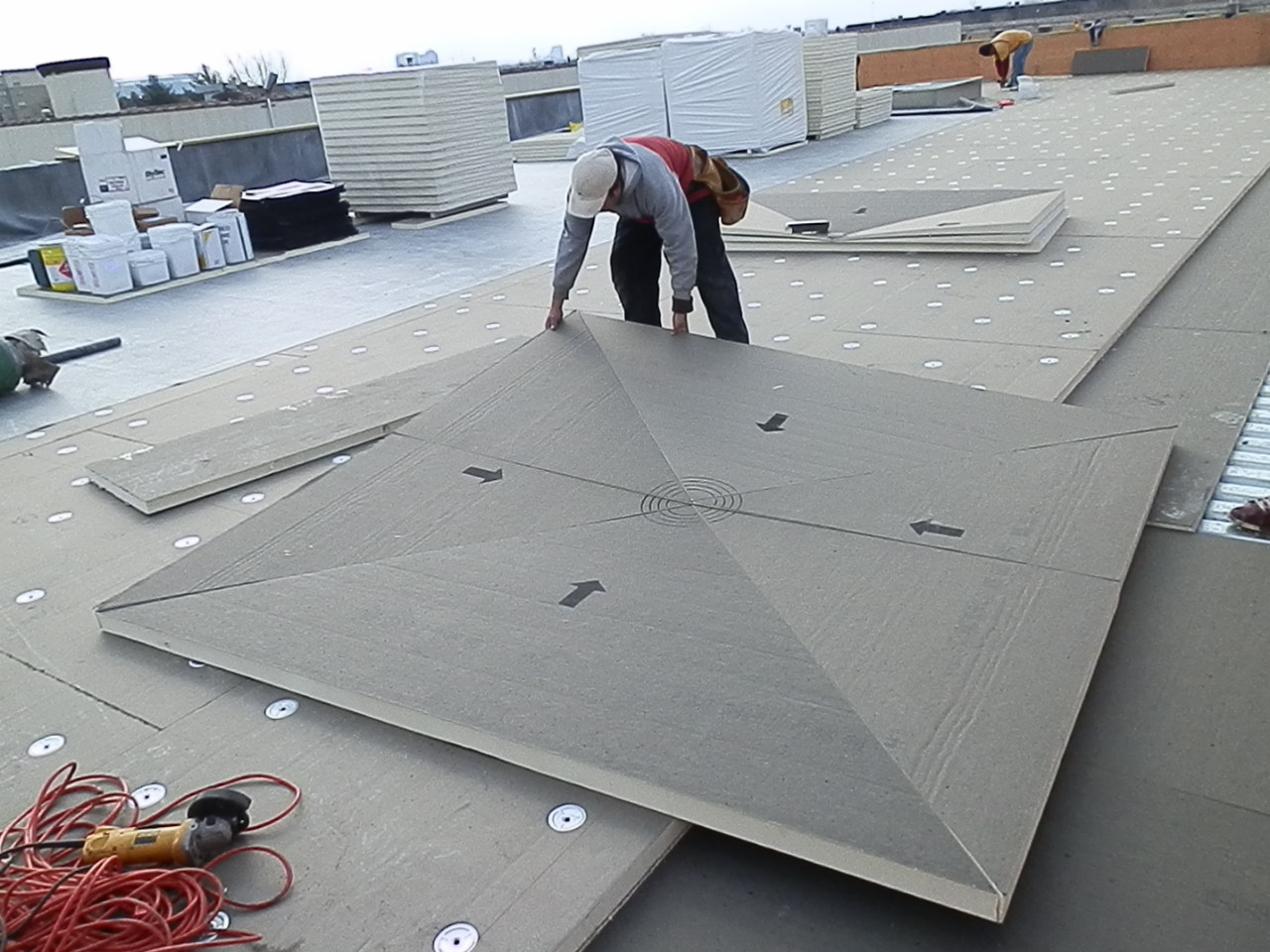
Drain failures: Ponding water around roof drains is the leading cause of accelerated membrane degradation in Dallas. Many 1990s-era Dallas commercial buildings have undersized drains (2-inch or 3-inch bodies) that cannot handle the 100-year storm volume Dallas code now requires. Repair scope: core-cut and replace the drain body and ring, re-flash with a compatible membrane sump, verify the drain connects unobstructed to the storm line.
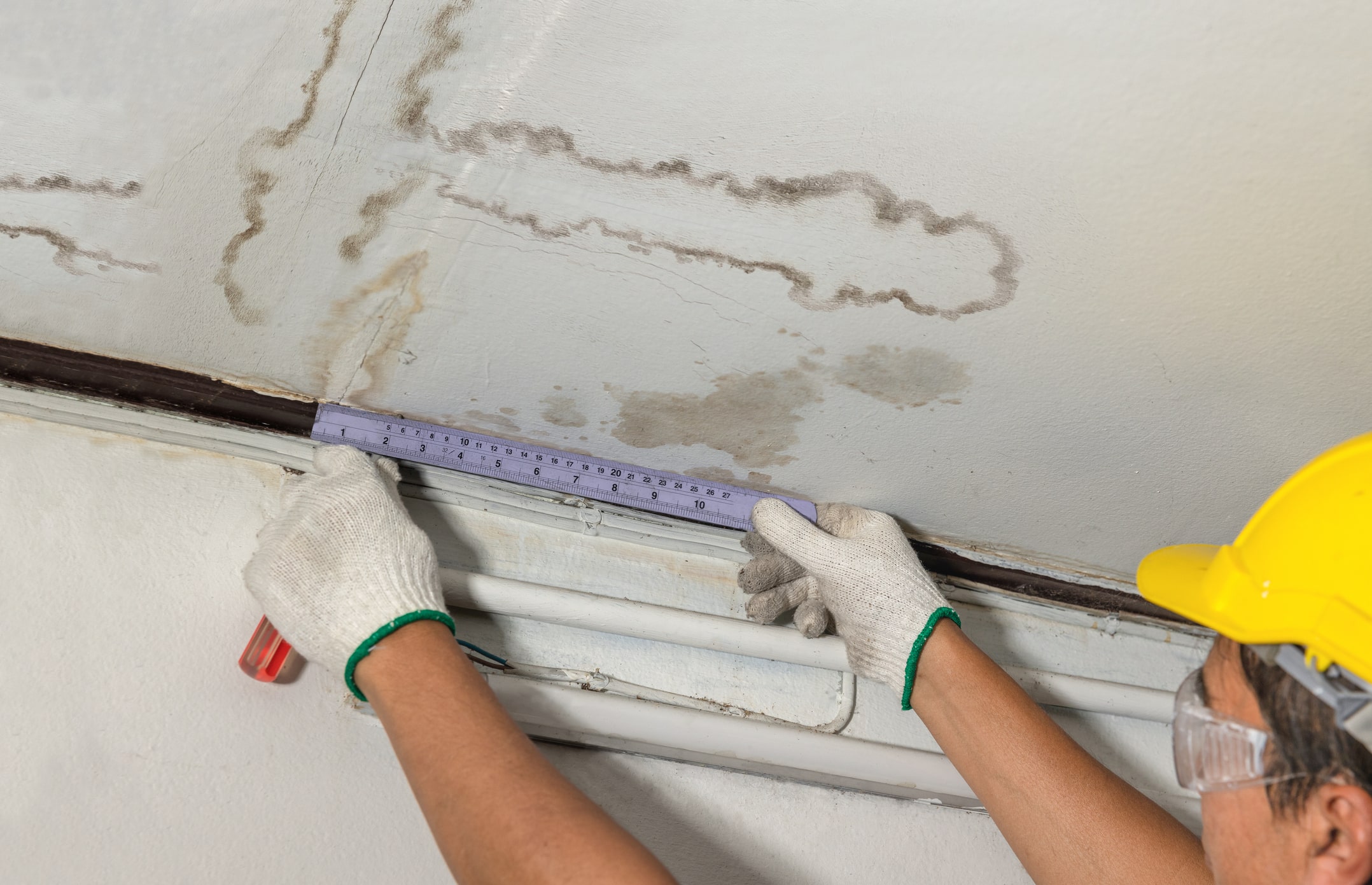
We pull moisture cores in 5 to 10 representative locations on any roof where insulation saturation is suspected — sagging membrane, staining on interior ceilings, or roofs over 15 years old. If more than 25% of cores read wet, repair economics no longer pencil. Recovering a wet insulation system traps moisture, voids any new warranty applied on top, and produces the same failure pattern in 3-5 years. In that case, replacement is the honest recommendation and we say so plainly.
When cores read dry and the failure is localized — a parapet run of 40 linear feet, a cluster of failed seams near one drain, a single ponding area — repair is the right call and we scope it that way. Our business depends on long-term facility relationships, not on maximizing the size of a single project invoice.
Every repair job we close out with a photo-keyed map of the repair locations on the roof plan, before-and-after photos at each repair point, the product data sheets for every material applied, and a written service record that goes into the building's roof asset file. This documentation matters for two reasons: manufacturer warranty claims require evidence of documented maintenance, and the next building owner or facility manager inherits a legible repair history instead of a pile of invoices.
For buildings on our maintenance contracts, repair documentation feeds directly into the annual roof condition report — so the building owner has a running asset condition record, not a series of disconnected service calls.
Fixed scope after a written inspection. After we walk the roof and document the failures, we deliver a fixed-price written scope. If we open a repair area and find additional damage that changes the scope, we stop, photograph it, and call you before proceeding. No surprises on the invoice.
Yes. Most manufacturer warranties allow any credentialed contractor to perform repair work, as long as the repair materials are compatible with the existing system and the repair is documented per the manufacturer's protocol. We carry credentials with GAF, Carlisle, Johns Manville, Sika Sarnafil, and Versico. We submit the repair documentation to the manufacturer's warranty department after closeout.