214-441-608924/7 Emergency SupportDallas, Texas Commercial Roofing

Planning Capability

Commercial Roof Zone Mapping in Dallas

Roof zone diagrams for Dallas commercial buildings — the permanent reference system that makes every inspection, repair, and capital report useful and comparable over time.

Inspect

Document membrane age, drainage, access, penetrations, storm marks, and active leak points.

Scope

Choose repair, recover, coating, replacement, or maintenance from field evidence.

Maintain

Keep logs, post-storm notes, warranty closeout, and capital timing in one usable record.

Every report, inspection record, and capital document we produce is anchored to a zone diagram specific to that building. The diagram is the permanent reference that survives

A photograph of a roof defect is not useful documentation if you cannot locate it on the roof. An inspection report that says 'flashing deterioration at northeast parapet' is not useful if the building has 400 linear feet of northeast parapet and you cannot tell which section the report is referring to. Zone diagrams solve this problem by creating a numbered reference system for every section of the roof that every subsequent report can anchor to.

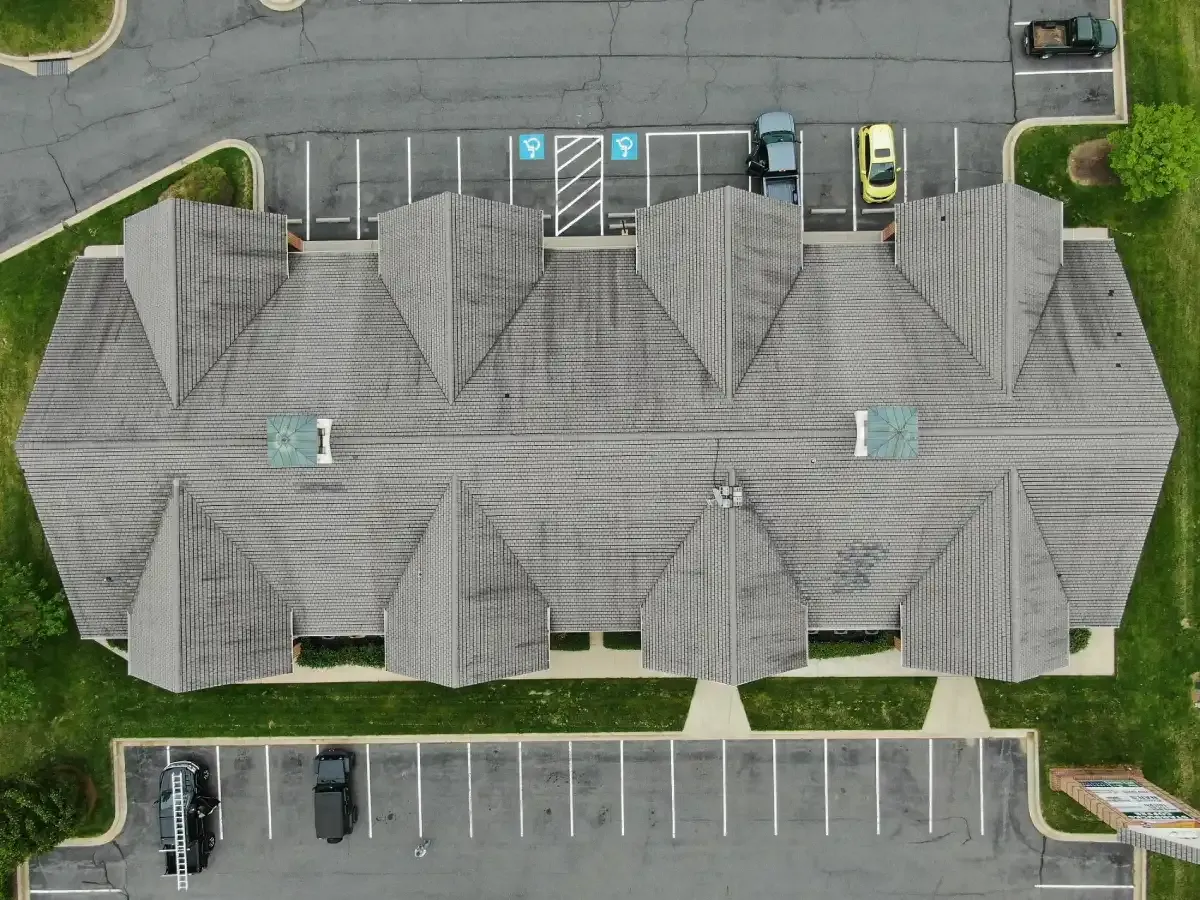
Zone mapping is the first step on every building we add to our inspection program. Before the first inspection report, we produce a zone diagram keyed to the building's actual roof layout — its physical dimensions, drain locations, mechanical equipment positions, parapet geometry, expansion joints, and roof access points. The zones are numbered sequentially and sized to meaningful physical boundaries: an expansion joint defines a zone boundary, a drain cluster defines a zone, a mechanical equipment island defines a zone.

The zone diagram is then used to anchor every photo in every inspection — each photo is labeled with a zone number and a defect descriptor. Every scope item is logged by zone number. Every core sample is plotted by zone number. When the fifth inspection on the same building references 'zone 7,' everyone working from that inspection knows exactly where zone 7 is, what it looked like in the four prior inspections, and what the current report says about it. That consistency is not possible with undifferentiated photo dumps or narrative-only reports.

We start with the building's roof plan if one exists — from the original permit set, from the property's as-built drawings, or from the building's facility team records. If no plan is available, we measure the roof geometry on-site. The diagram is then drawn to scale with roof section areas labeled (in square feet per zone), drain locations marked, rooftop equipment positions marked, and roof access points marked.

Zone numbering follows a consistent convention: zones run north-to-south and west-to-east, numbered sequentially so that zone 1 is always the northwest-most section. Sub-zones within a main zone (for example, the parapet return within zone 3) are designated with a letter suffix: zone 3A (field membrane), 3B (parapet return), 3C (drain detail). This gives us a zone-level reference for field conditions and a sub-zone reference for specific details that need individual tracking.

For buildings with multiple roof levels — a main roof plus a lower canopy or an attached building wing — each level gets a separate zone diagram with a building-level prefix so zones on the main roof are '1-' prefixed and zones on the lower wing are '2-' prefixed. This prevents zone-number collisions across a complex building footprint.

Every photo in every inspection report is labeled with the zone number and a brief defect descriptor. Photos are organized in the report by zone number so a reader can navigate the report geographically — find zone 7 on the diagram, turn to the zone 7 section of the photo log, see every photo from that zone in sequence.

We photograph every zone on every inspection, including zones in good condition. The absence of defect is documentation — if zone 7 has a pristine seam and no flashing issues in three consecutive inspections, that record is useful when zone 7 eventually develops a defect, because the trend data shows when the deterioration started. It is also useful in a warranty claim, because the manufacturer's field inspector can see that the area in question was in good condition as recently as the last inspection.

For buildings where we are taking over from a prior contractor, we establish the zone diagram on our first inspection and note which zones were photographed versus which we are documenting for the first time.
Planning Capability

Questions we answer before work starts.

Do you produce zone diagrams for buildings you did not install?

Yes. The zone diagram is a documentation tool, not tied to who installed the roof. When we take over an inspection program for a building where we were not the installer, our first service is producing the zone diagram and conducting the baseline inspection. The diagram is keyed to the actual current roof configuration, which may differ from any prior as-built drawings.

What happens to the zone diagram if the roof is replaced?

The zone diagram is updated at replacement closeout to reflect any changes to the roof's physical configuration — new drain locations, equipment repositioning, added penetrations, any changes to parapet geometry. The prior diagram and the inspection history under it are archived with the replacement closeout package as the pre-replacement condition record. The updated diagram then starts the new inspection cycle on the replaced roof.

Can you integrate zone diagrams with a building management or CMMS system?

The zone diagram and the zone-keyed inspection record are exportable as PDFs with consistent zone nomenclature. We have exported zone records into client CMMS systems where the zone number becomes the asset ID for the roof section. Contact us at 214-441-6089 to discuss what format your system needs.

Capabilities

Related Capabilities

Planning Capability

Infrared Roof Scanning in Dallas

Infrared thermography for commercial roof moisture detection in Dallas — when IR works, when it doesn't, and how we use it with core sampling for confident moisture mapping.

Planning Capability

Maintenance Program Management — Commercial Roofing Contractors Dallas

Recurring maintenance contract administration for Dallas commercial roofs — semi-annual and annual cadence, documented inspection visits, and manufacturer warranty maintenance compliance.

Planning Capability

Third-Party Roofing Quality Inspection — Commercial Roofing Contractors Dallas

Independent QA inspection during another contractor's commercial roof installation in Dallas — manufacturer warranty inspection support, seam testing, flashing detail verification, and documented findings.

Planning Capability

Commercial Roof Inspections in Dallas

Annual and semi-annual commercial roof inspections for Dallas buildings — zone-keyed photo logs, written condition deliverables, and documented maintenance records that keep manufacturer warranties intact.

Planning Capability

Commercial Roof Capital Planning in Dallas

Multi-year roof CapEx forecasting for Dallas commercial property owners — condition-data-driven sequencing, lifecycle cost analysis, and written capital defense for budget approval.

Roof Service

EPDM Roofing — Installation and Replacement in Dallas, TX

EPDM commercial roofing installation and replacement on Dallas industrial buildings — 60-mil systems, mechanically attached and fully adhered, with manufacturer warranty closeout.

Roof Service

Industrial Roofing in Dallas, TX

Industrial Roofing for manufacturing facilities, warehouses, and industrial buildings throughout Dallas area.

Roof Service

Humidity & Trapped-Moisture Roof Repair in Dallas, TX

Repair for trapped moisture, blistering, ridging, and saturated insulation in Dallas, TX commercial roofs. We diagnose interior humidity and failed vapor barriers, then fix the cause.