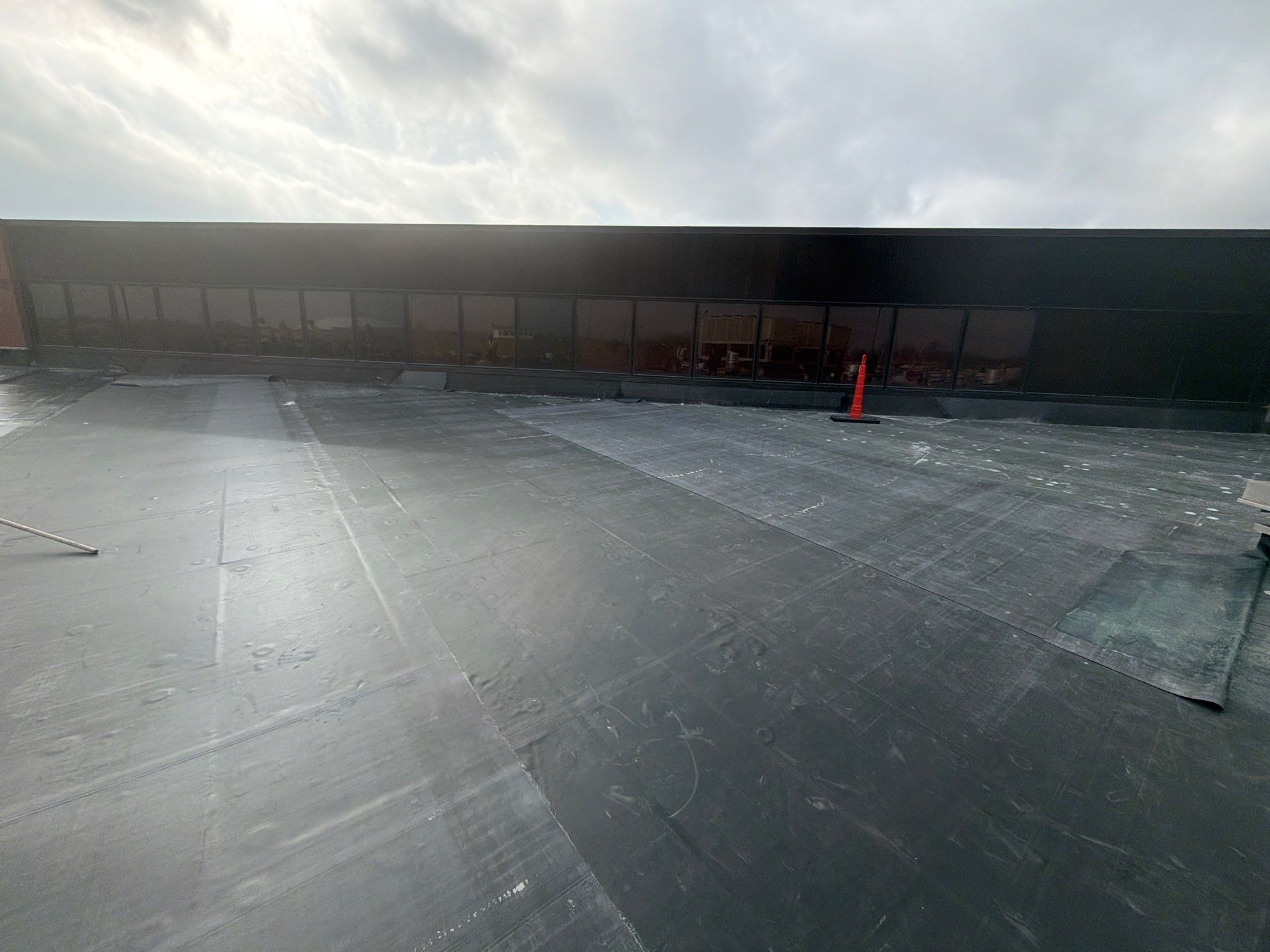
60-mil EPDM on Dallas industrial and commercial buildings — mechanically attached or fully adhered, with manufacturer warranty paths and end-of-life replacement expertise on the 1990s-era Stemmons Corridor inventory.
EPDM (ethylene propylene diene monomer) was the dominant commercial roofing membrane for Dallas industrial buildings through the 1980s and 1990s. The Stemmons Corridor distribution centers — many of them 200,000 to 600,000 square feet of single-story industrial built between 1982 and 2000 — were largely roofed in EPDM mechanically attached on steel deck. That inventory is now 25 to 40 years old, well past the 20-year design life of the original 45-mil systems, and represents a significant replacement cycle that is active through the early 2030s.
We specialize in this replacement cycle. Our crews have dismantled more 1990s EPDM systems on Stemmons and Walnut Hill than most contractors in the metro. We know what the original deck condition looks like, how the original fastener patterns performed, and what the recover-versus-replace math produces on these specific buildings. On many of the Stemmons inventory, a single-ply TPO recover over the existing insulation — where cores confirm the ISO is still dry — is the better capital call than a full EPDM-to-EPDM replacement.
On new installations, we install 60-mil EPDM in mechanically attached and fully adhered configurations for industrial, healthcare, and education facilities where the building owner specifies EPDM and its particular performance characteristics (excellent temperature range, good chemical resistance, proven 30-year track record in Dallas conditions).
60-mil is the current commercial-grade standard for EPDM installations. 45-mil systems — common on 1980s and 1990s installations — are no longer specified for new work by any major manufacturer on commercial buildings. The additional thickness provides meaningful improvement in puncture resistance, seam durability, and overall system longevity. Most 60-mil EPDM installations carry 20-year manufacturer NDL warranties.
Mechanically attached EPDM: Membrane fastened with screws and plates through seam laps into the insulation and deck. The attachment pattern is designed against the building's wind-uplift zone and exposure category per IBC 2021. Most Stemmons Corridor buildings are Exposure B — but tall buildings near the Stemmons interchange, where wind acceleration through the highway corridor creates higher dynamic pressure, get Exposure C pattern density.
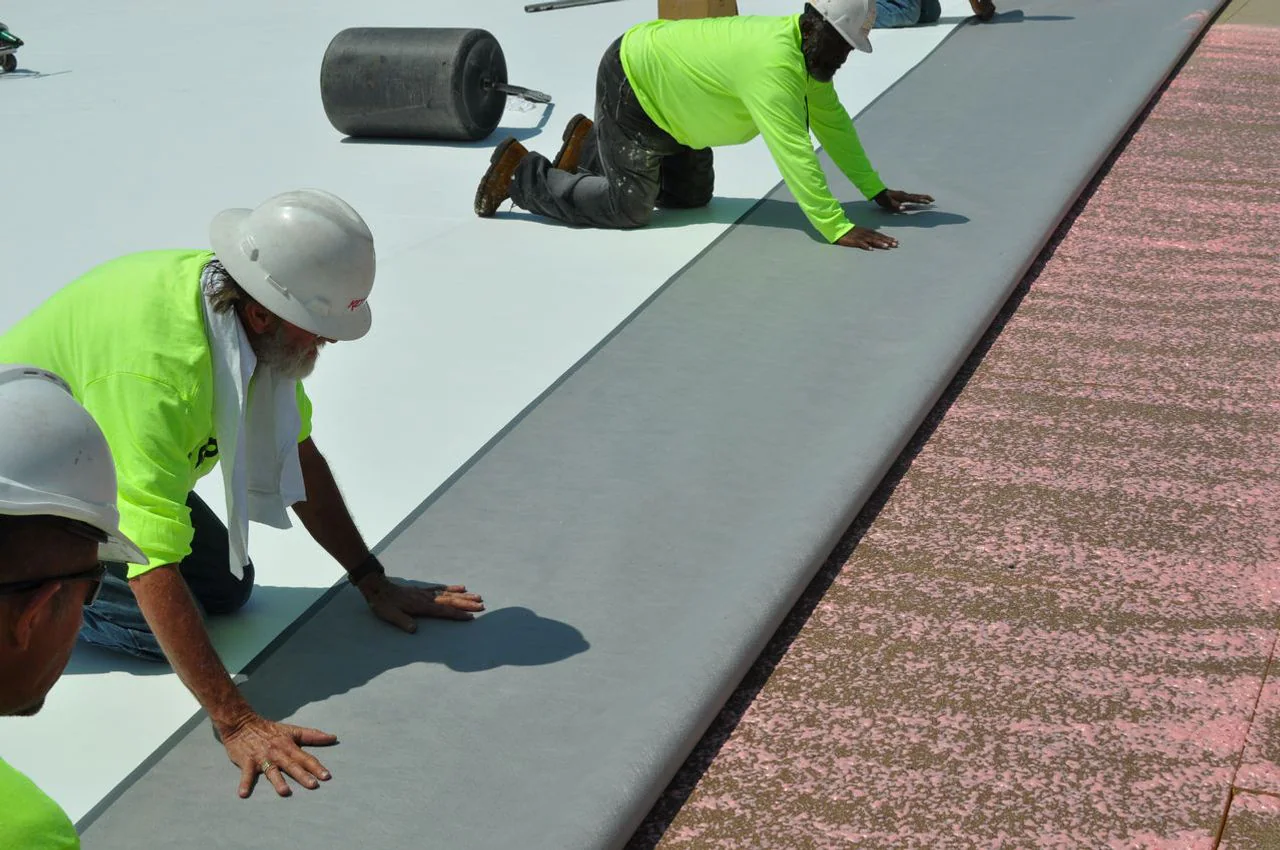
Fully adhered EPDM: Membrane bonded to cover board or insulation surface with a contact adhesive applied to both surfaces. Produces a tighter, more aesthetically clean installation without fastener plate read-through. Required on some low-slope applications where mechanical attachment pattern cannot achieve the required design pressure, and preferred for installations where foot traffic or mechanical equipment maintenance creates puncture risk over mechanical fasteners.
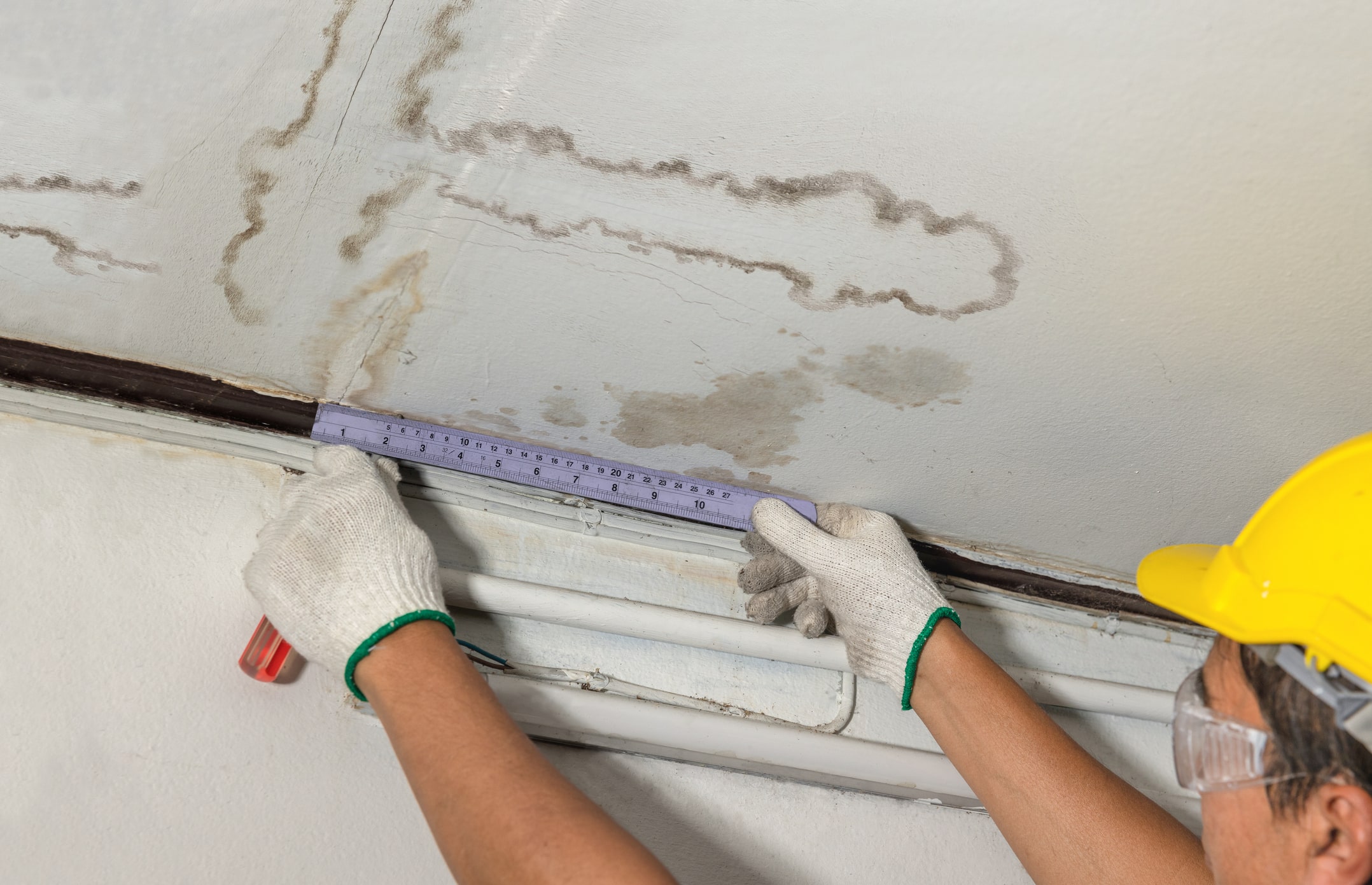
The practical reality of 1990s EPDM at end of life: the seams have lost adhesion over 25-30 years of thermal cycling, the lap sealant is cracked and brittle, and the field membrane often shows surface checking (fine cracking) that is cosmetic on 45-mil but becomes a water pathway on a compromised system. These are not repair candidates — they are replacement projects.
Our typical scope on Stemmons Corridor industrial replacement: full EPDM tear-off, moisture survey on the existing polyiso insulation (cores at 10 representative locations per 50,000 sq ft), replacement of saturated insulation sections only, installation of new 60-mil mechanically attached EPDM or TPO (based on owner preference and building use), and manufacturer warranty closeout. We run sections of 5,000-10,000 sq ft per day with same-day dry-in so the building stays weathertight throughout the project.
Why some Stemmons owners choose TPO over new EPDM for the replacement: TPO carries equivalent warranty terms, installs slightly faster because heat-welded seams are faster than EPDM adhesive seaming, and provides better reflectivity (cool-roof performance). EPDM's advantage is lower material cost and a longer proven track record in this specific building type. Both are valid — the owner's capital priorities and the specific building's maintenance history drive the recommendation.