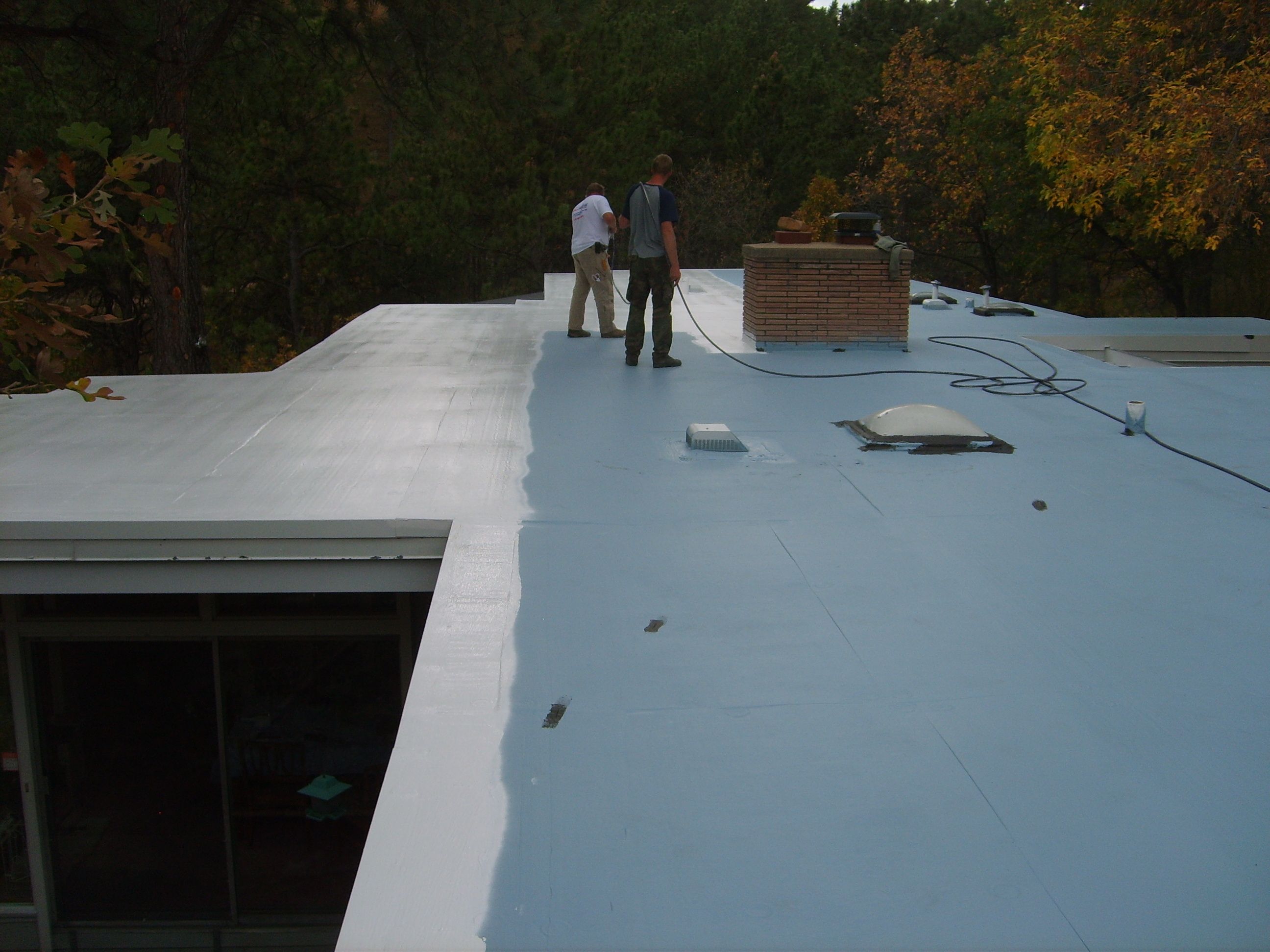
TPO, PVC, and EPDM single-ply membranes specified and installed against your Dallas building's actual wind-uplift zone, substrate, and use profile — not a default spec applied uniformly to every project.
Single-ply dominates new commercial roofing in Dallas for straightforward reasons: fast installation, manufacturer- TPO, PVC, and EPDM collectively account for the large majority of new commercial membrane installations across Dallas, Collin, Denton, and Tarrant counties. What the spec sheets do not tell you is that the same TPO membrane in three different attachment configurations performs very differently on a Dallas building exposed to the spring severe weather season.
The attachment method decision is where most single-ply specifications either earn or lose their long-term value. Mechanically attached is the volume method — economical and fast, but the membrane flaps under wind load, which creates fatigue at the fastener plates over time and produces noise in high-wind events. Fully adhered eliminates the flutter but costs more in labor and requires a clean, dimensionally stable substrate. Ballasted is structurally expensive and complicated for future repair access. Choosing among these three for a specific building requires knowing the building's wind-uplift zone, deck type, live-load capacity, and maintenance access patterns.
We design the attachment method selection into the scope document — with the wind-uplift calculation, the substrate assessment, and the cost differential between methods presented explicitly. Owners who understand why we are specifying mechanically attached versus fully adhered make better decisions about their buildings.
Mechanically attached: Appropriate for most Dallas commercial buildings with metal deck substrates and standard Exposure B wind classification. Attachment pattern (screws and plates per linear foot of seam) is designed per the membrane manufacturer's FM Global or UL wind-uplift design tables against the building's height, exposure, and zone (field vs. perimeter vs. corner). Perimeter and corner zones always require higher fastener density — the 2019 NW Dallas tornado event that tracked through the Walnut Hill and Midway area peeled back perimeter TPO sections on several buildings where the original pattern was designed for field-zone density throughout.
Fully adhered: Required when the deck cannot tolerate additional fastener penetrations (some structural concrete decks, existing waterproofed decks, and green-roof assemblies), when the wind-uplift design requirement exceeds what mechanical attachment can deliver, or when the building's aesthetic or noise requirements prohibit membrane flutter. AT&T's office campus installations at One AT&T Plaza and associated properties have typically specified fully adhered on the visible-roof portions of the building envelope. Adhesive selection is system-specific — TPO requires a water-based or solvent-based TPO adhesive, EPDM requires contact cement, PVC requires PVC-compatible bonding adhesive.
Ballasted: Membrane loose-laid with washed river stone ballast (typically 1.5-inch nominal at 10-12 psf). No fasteners, no adhesive — the weight holds the membrane down. Requires structural verification that the building's deck can carry the ballast load. In Dallas, most modern commercial buildings have steel deck systems designed for 20-25 psf live load — ballasted systems consume most of that load capacity and leave little margin for snow (rare but not zero: the 2021 Uri event produced 4-6 inches of wet snow across DFW). Ballasted systems are mostly found on pre-1990 construction and are rarely specified for new Dallas commercial work.
TPO (thermoplastic polyolefin): Default specification for most Dallas commercial buildings without chemical exposure concerns. Heat- Material cost is the most economical of the three membrane types per square foot.
PVC (polyvinyl chloride): Specified for chemical exposure environments — restaurants, food processing, dry-cleaning tenants, industrial chemical handling. 25-year NDL warranty available from Sika Sarnafil and Versico. Material cost premium of 10-20% over TPO is offset by longer warranty term and longer effective service life in chemical-exposure applications.
EPDM (ethylene propylene diene monomer): Thermoset membrane with the longest proven track record in Dallas industrial applications. Cold-seamed (adhesive and tape, not heat-welded) — requires specifically trained crews and different seaming protocols. Preferred for extreme temperature applications and medical facility environments where chemical exhaust resistance is required. 20-year NDL available at 60-mil.