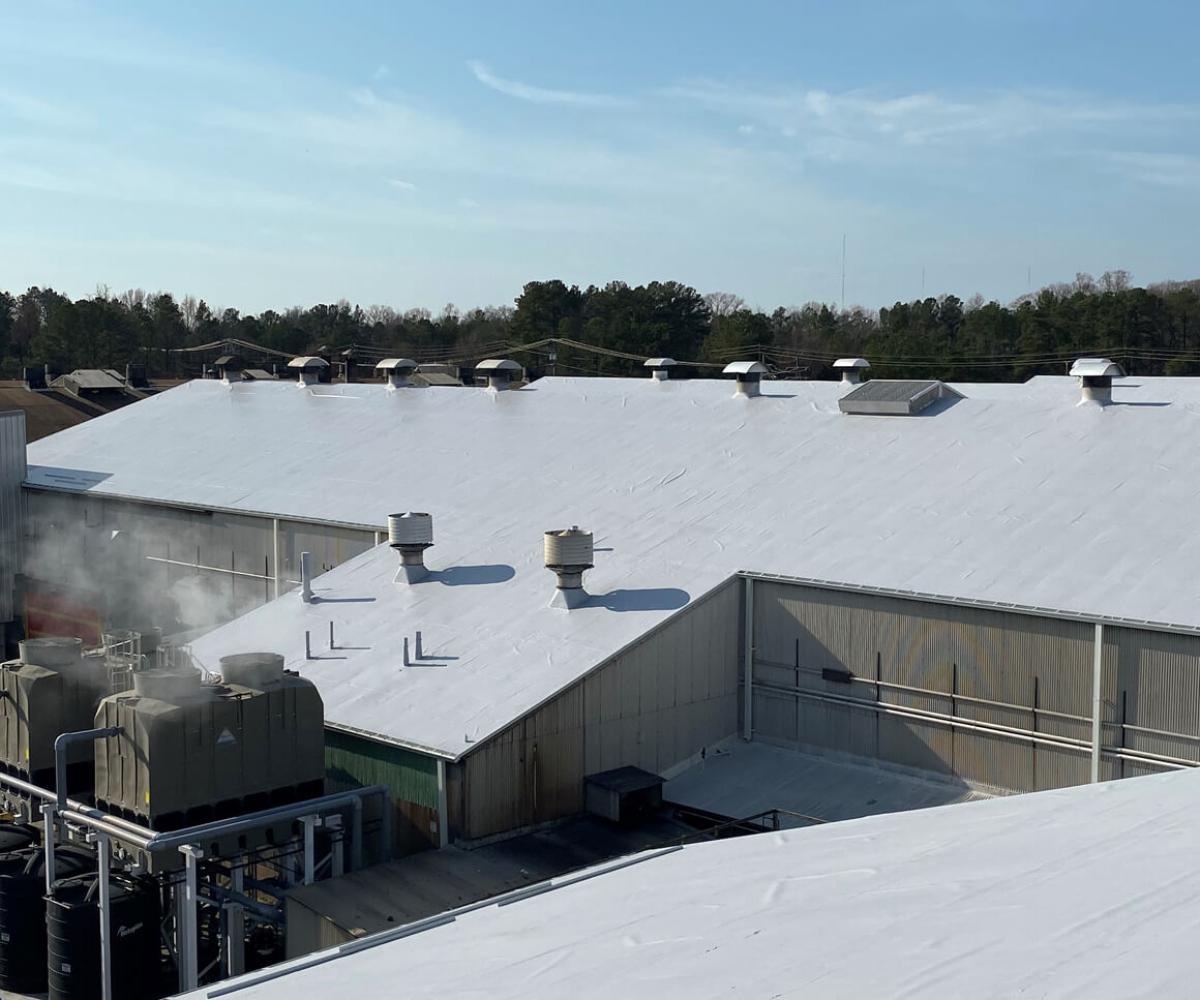
Manufacturing plants in Garland, Mesquite, and Carrollton run production schedules that do not pause for roofing. We sequence around shift changes, chemical process environments, and overhead crane clearances to keep your production running.
The industrial belt across Garland, Mesquite, and Carrollton contains some of the most diverse manufacturing in North Texas — automotive suppliers, food processing facilities, metal fabrication shops, electronics assembly plants, plastics processors, and chemical blending operations. Raytheon has defense manufacturing in Garland. Samsung Austin Semiconductor operates near the Metroplex. Williamhouse-Regency and other plastics and packaging manufacturers run production in Carrollton. Every one of these facilities has a roofing environment that is shaped by what happens inside the building.
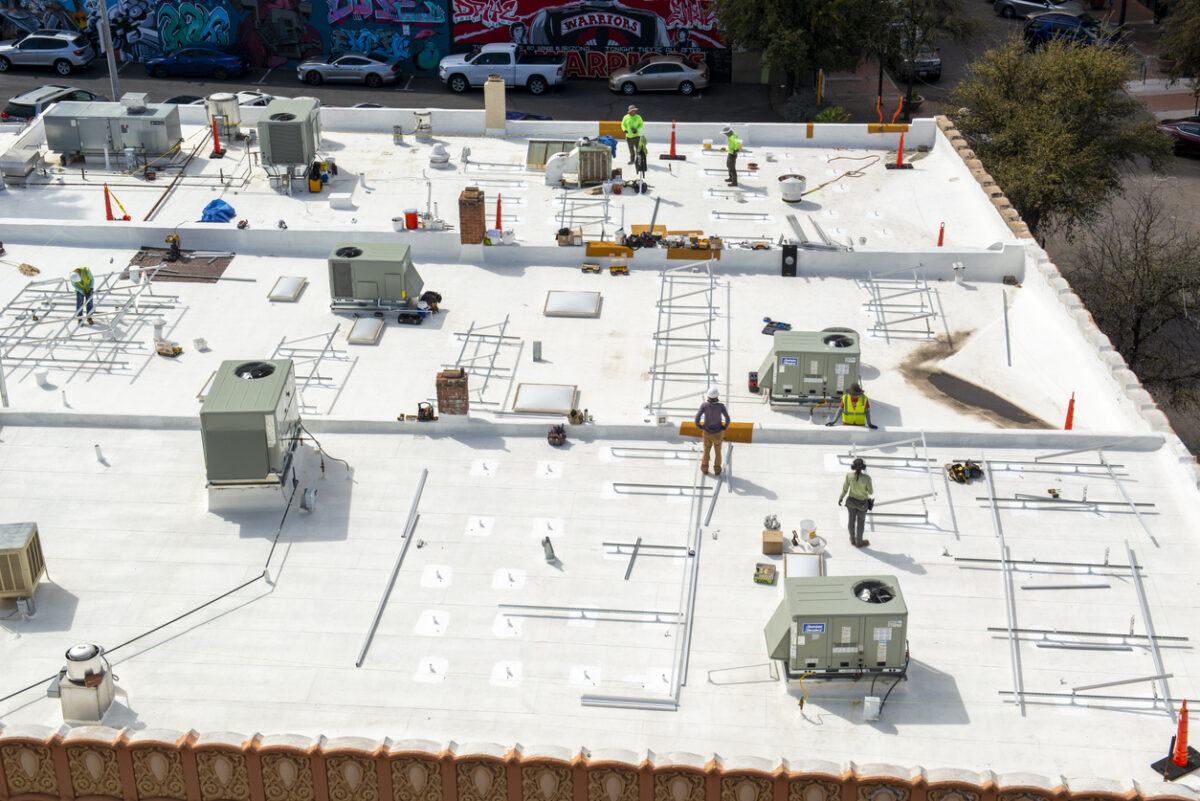
Process emissions are the roofing variable that most contractors underestimate in manufacturing environments. A plastics extrusion plant vents process exhaust that degrades standard TPO flashing materials at high-concentration areas. A food processing facility has steam exhaust from cooking lines that creates constant moisture loading on the roof membrane around exhaust fans. A metal fabrication shop has overhead cranes that require any rooftop penetration work to be coordinated with the crane operator schedule to avoid a dropped-load hazard.
We have done the scoping work on manufacturing buildings across this corridor and we know what questions to ask before we write a scope: What is coming out of your exhaust stacks and at what temperature? Where are your overhead cranes and what is their reach? When does production run and when are the change-over windows? The answers to those questions drive the membrane specification, the penetration detail, and the production sequence.
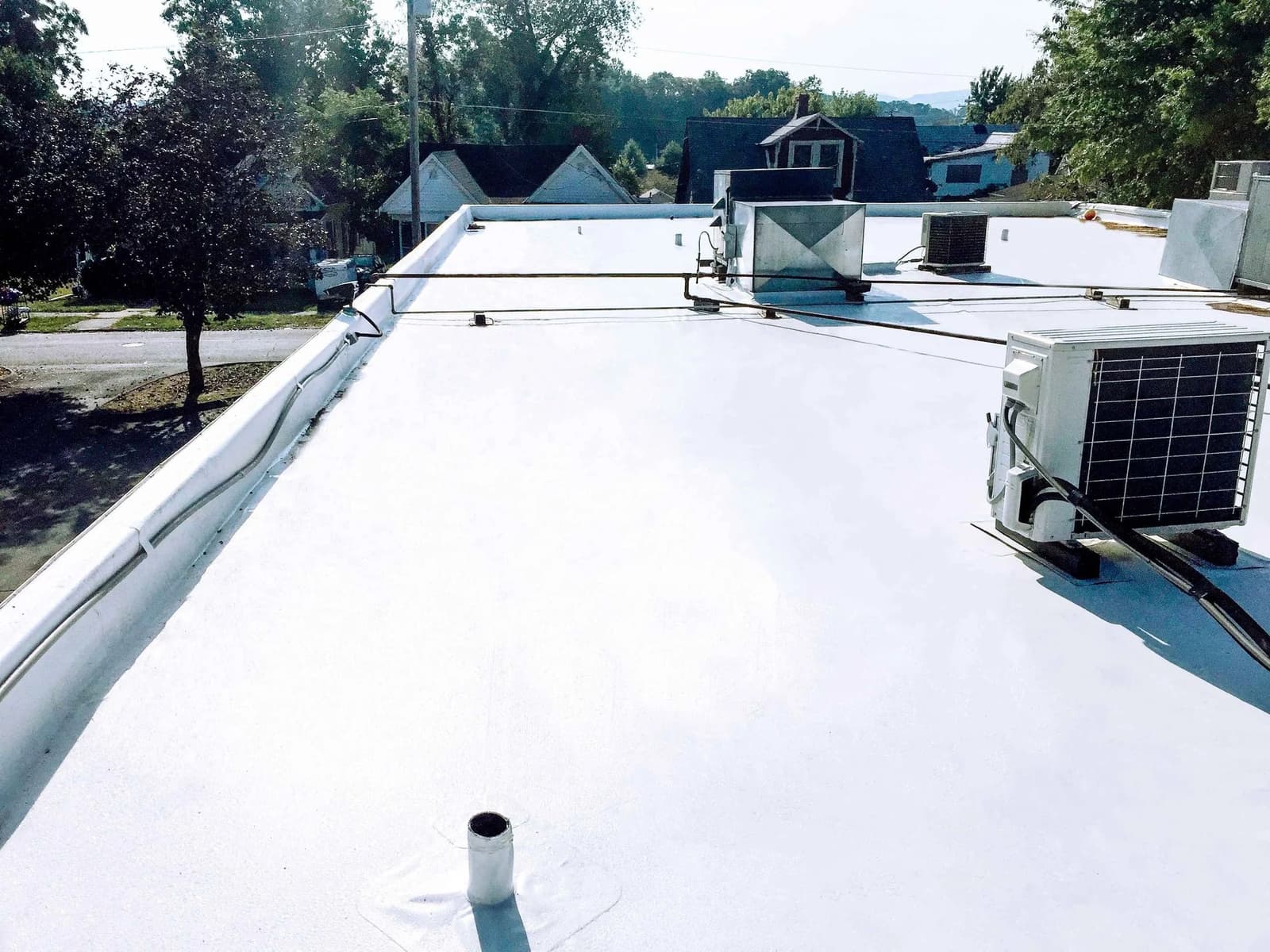
TPO is the right membrane for most commercial buildings, but there are manufacturing environments where TPO's chemical resistance is not adequate for the specific exposure. Plastics processing exhaust, solvent-based finishing operations, and certain chemical blending environments can degrade TPO flashing materials over time at high-concentration exhaust points. PVC membranes carry significantly better chemical resistance than TPO and are the appropriate specification for those specific zones.
The practical approach is not to replace a whole roof system with PVC when only certain zones have significant chemical exposure. We spec TPO for the general roof field and PVC at the penetration flashings and roof zones adjacent to process exhaust stacks. This captures the chemical resistance where it is needed without the added cost of a full-field PVC installation. We document the chemical exposure conditions in the spec so that future contractors and warranty inspectors understand what was specified and why.
Food processing plants add a moisture-management layer to the chemical question. For food processing reroofs, we add a vapor barrier above the deck, specify closed-cell polyiso as the primary insulation, and verify that every roof drain in a high-steam area is a large-bore drain with an oversized dome — not the 4-inch standard drain that handles rainwater but not continuous condensation drainage.
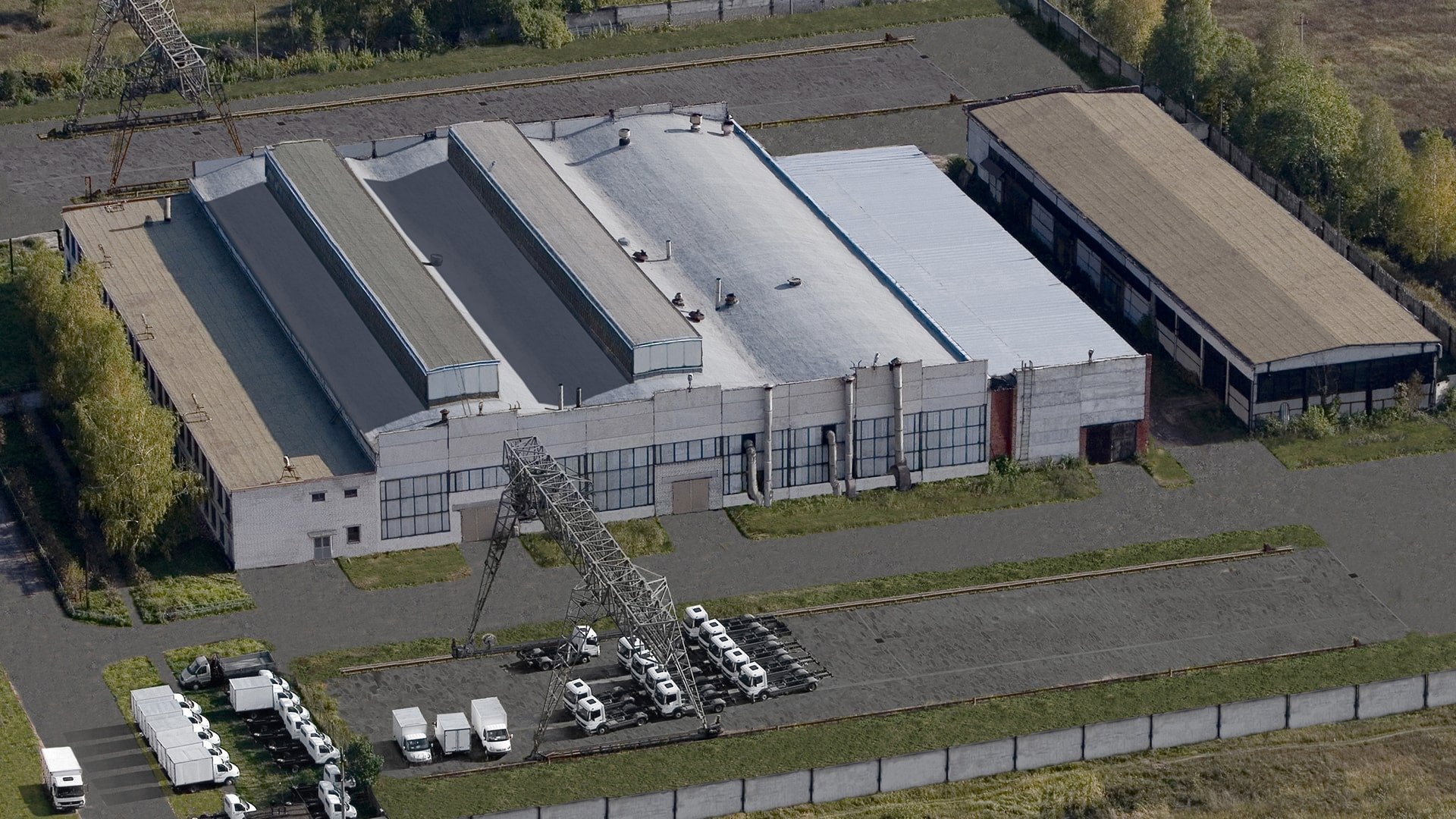
Manufacturing buildings in Garland and Mesquite commonly run bridge cranes and jib cranes on rails that run the building's full length. The crane rail supports attach through the roof deck at columns, and those column-head flashings are typically the most failure-prone penetrations on the building because every crane cycle loads and unloads the column, which fatigues the flashing over time. Re-flashing column-head penetrations on an active crane building requires coordination with the crane operator — the crane has to be parked at the far end of the building, in a designated maintenance position, while we work the flashings.
We write the crane coordination requirement into the project scope before contract signing so the facility manager can get the maintenance-position authorization from the production team in advance. A verbal agreement between our foreman and a crane operator on the day of production is not adequate for this hazard — we need a signed maintenance-position authorization from the facility's safety director for every crane on the building.
Manufacturing plants in this corridor run three shifts, single shift, or two shifts depending on the product and the customer schedule. The change-over window — typically 30 to 60 minutes between shifts — is the lowest-activity period on the floor and the time window we use for heavy equipment moves, crane lifts, and any work that would generate dust or debris that lands inside the facility.