Dallas-area data centers along the US-75 Telecom Corridor and Las Colinas run 24/7 at uptime standards that do not bend for roofing contractors. We have structured our production sequencing, penetration protocols, and emergency response around what data center facility managers actually need.
The US-75 corridor through Richardson is one of the highest concentrations of data center real estate in the southern United States. CyrusOne, Equinix, and QTS operate major facilities in the corridor. Iron Mountain runs a significant colocation campus in the area. Legacy carrier and enterprise data center buildings from the 1990s Telecom Corridor buildout are scattered between them — many on original BUR or first-generation EPDM roofing systems that are approaching or past their service life.
Roofing on a data center has exactly one absolute rule: you do not cause a cooling event. The cooling towers, precision air conditioning units, CRAC units, and free-cooling economizers that cover a data center roof are not rooftop accessories — they are mission-critical infrastructure. A moisture intrusion event into an active electrical room or a cooling interruption from a bungled penetration can cascade into rack shutdowns, SLA violations, and six-figure customer credits. We build our project sequencing around preventing that outcome, not just hoping for it.
Our project managers have worked with colocation facility managers, hyperscale operations teams, and enterprise IT infrastructure directors on data center roof projects across the Metroplex. The documentation standards are different, the change-management process is different, and the definition of an acceptable risk is far more conservative than on a standard commercial building. We
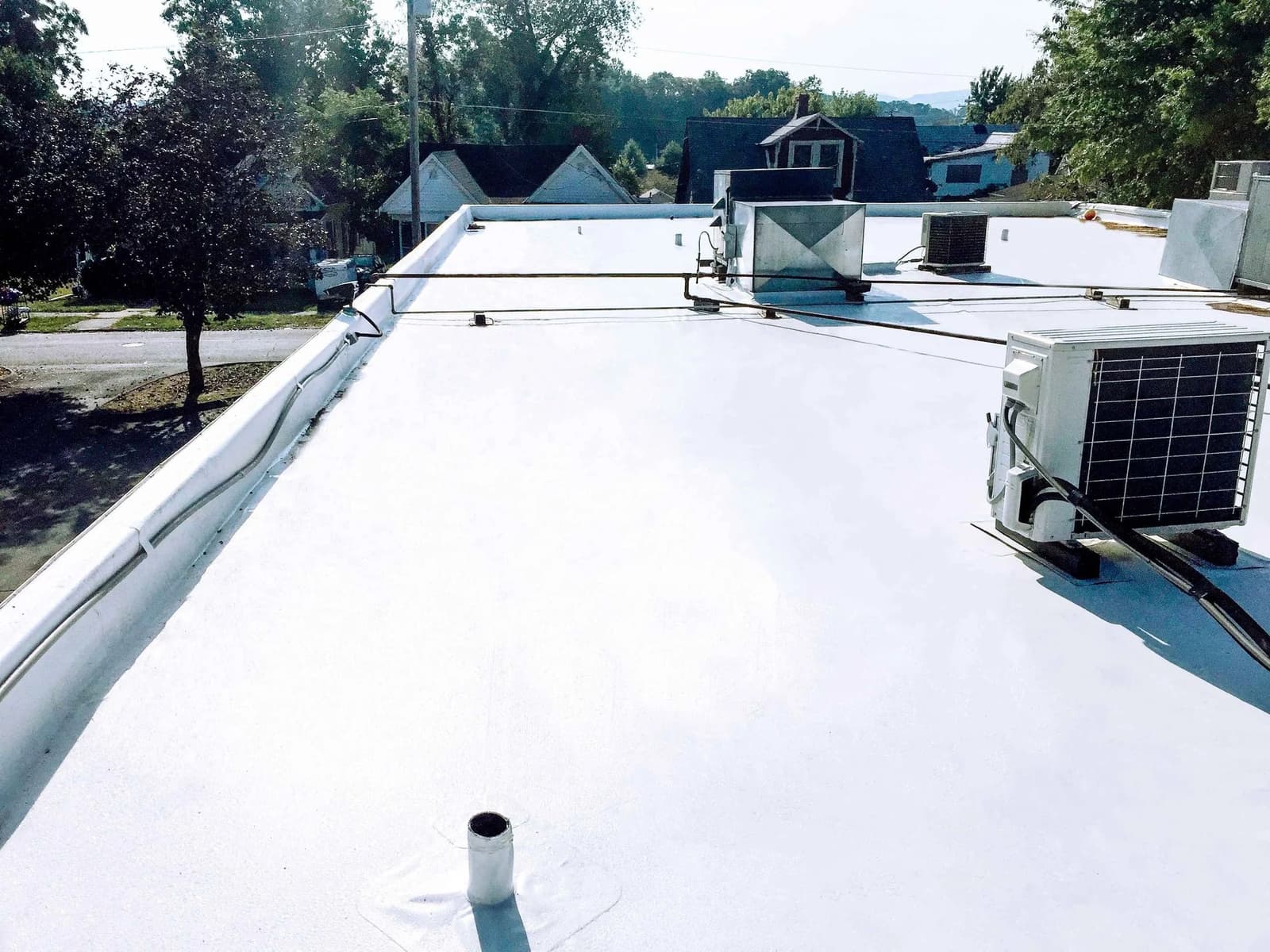
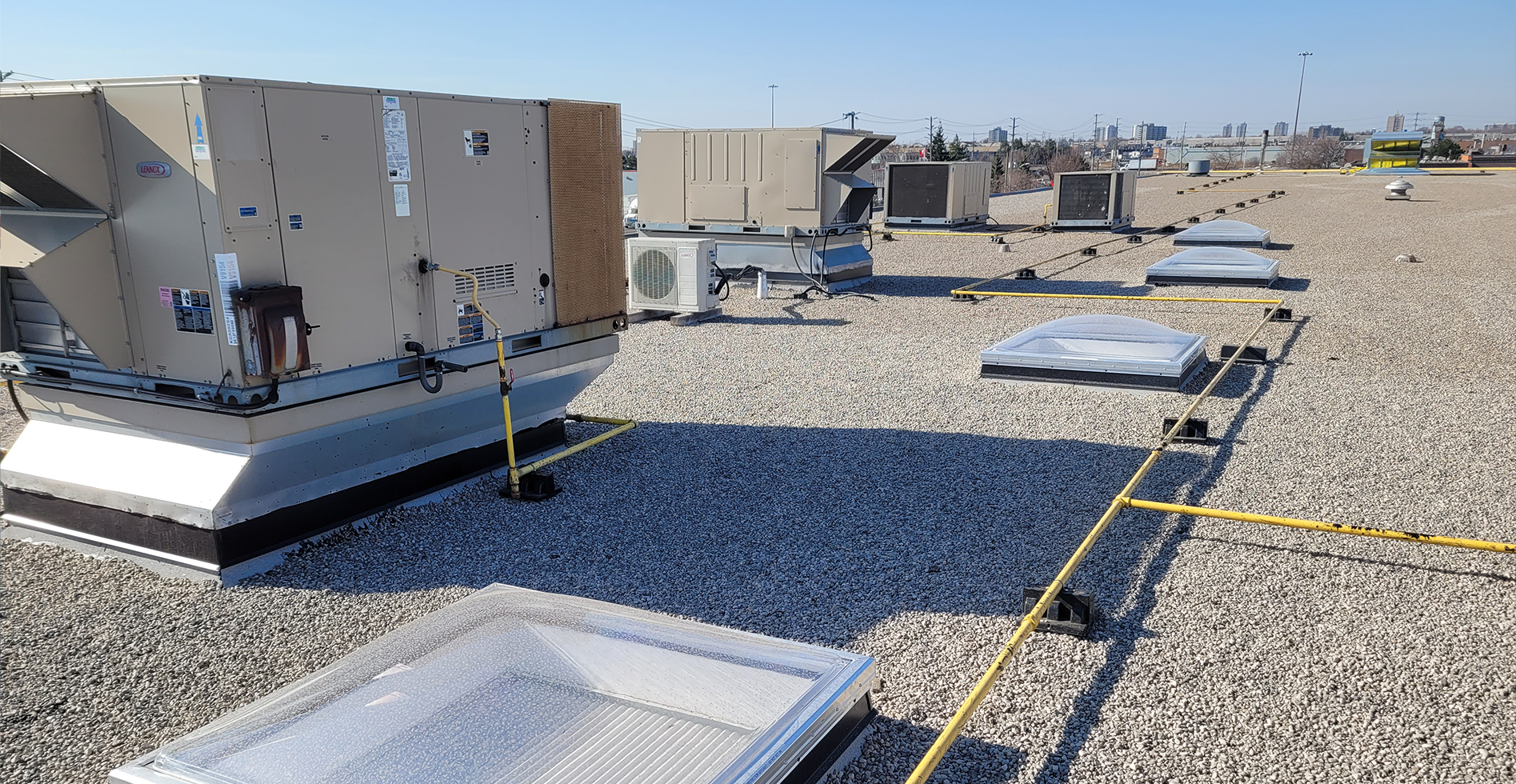
Data center roofs carry more penetrations per square foot than almost any other building type. Conduit bundles, fiber pathways, generator Each one of those penetrations is a potential water intrusion point and a potential fiber or conduit damage event if a contractor is not paying attention.
We inventory every penetration before production begins — photograph, measure, and log each one against a roof zone diagram that the facility manager approves before we start. Every penetration gets individual attention during production: existing flashing stripped to the deck, deck treated if any corrosion or moisture damage is present, new curb or pitch-pan flashing installed to manufacturer spec, and final photograph on closeout. Fiber conduit penetrations get a secondary water stop inside the conduit path, because a standard pitch pan does not seal the conduit bore itself — only the annular gap around it.
For legacy Telecom Corridor buildings that have accumulated decades of penetration add-ons — some with field-fabricated flashings that were never to any specification — we do a penetration audit before presenting a roof scope. Some of these buildings have fifty to one hundred penetrations that need to be documented, assessed, and re-flashed cleanly. That is a larger scope item than a standard reroof, and we price it separately so the facility manager understands what they are buying.
Cooling towers on data center roofs run continuously during Dallas summer. They cannot be taken offline for roofing work without bringing backup cooling online first, and most data centers do not have excess cooling capacity — they run the towers at 90-95% of their cooling ceiling during peak loads in July and August. That means roofing work around cooling tower bases and supply/return line penetrations has to happen during the narrow windows when tower output is lowest: early morning in spring and fall, or during scheduled maintenance shutdowns that the facility has planned months in advance.
We ask for access to the facility's maintenance schedule before we finalize the production sequence on a data center project. If a cooling tower is scheduled for its annual inspection in October, that is the window when we can work the base flashing, the supply line penetrations, and the area of roof directly around the tower. We build the rest of the production sequence around that anchor. This requires the facility manager to trust that we will be ready when the window opens — which is why our pre-construction documentation and mobilization timeline is written in the contract, not just assumed.
CRAC unit supply and return penetrations require the same planning. On the Equinix campus in the Telecom Corridor, precision air conditioning units are stacked such that a moisture event above any one unit affects the data hall below it. We work those penetrations with temporary cover plates in place, dry-in the penetration before end of shift, and document the dry-in with a photograph uploaded to the project log that same day.