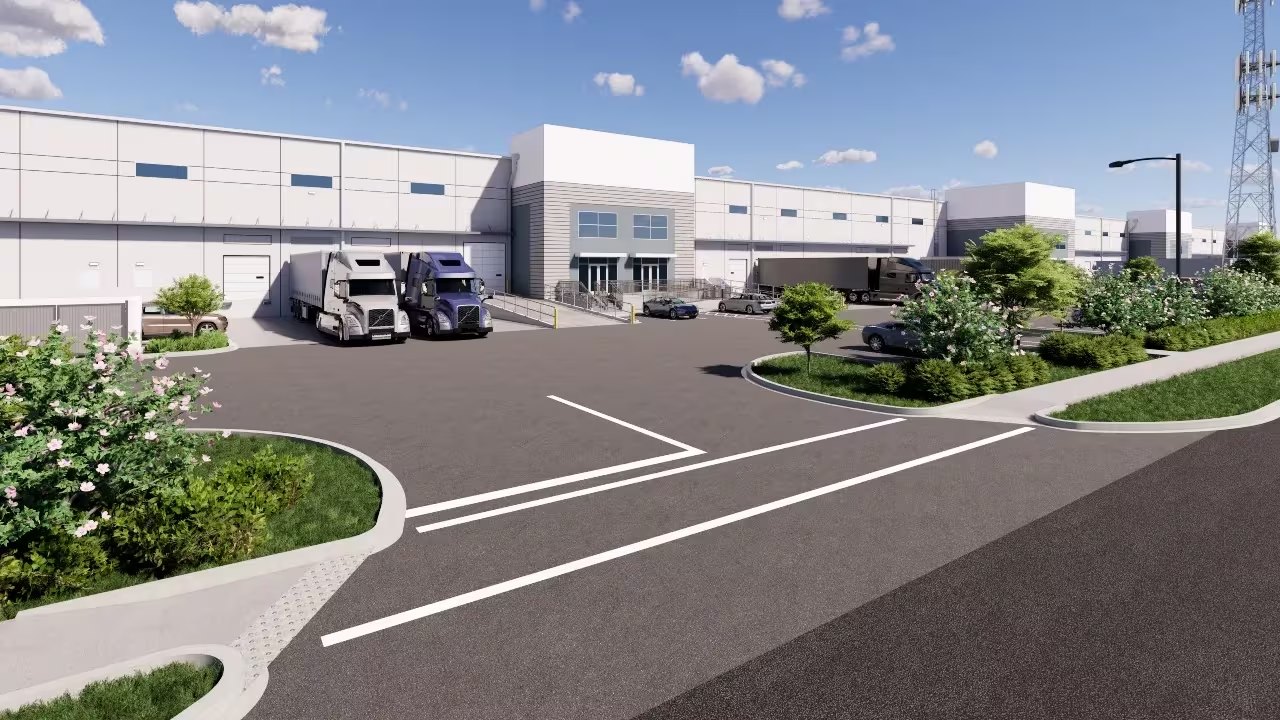
Distribution centers on Stemmons, Las Colinas, and the DFW Airport freight corridors run around the clock. Our crews work around your loading dock schedule, dock door activity, and shift changes — not the other way around.
The Stemmons Corridor between I-35E and the Trinity River is one of the largest continuous industrial real estate concentrations in Texas — 200,000 to 1,000,000 square foot distribution buildings stacked from the 35W junction north through Carrollton. Las Colinas along SH-114 has its own logistics cluster, and the DFW Airport freight corridor on the west side of the airport serves the air-cargo operations that feed much of North Texas's supply chain. These buildings run 24 hours a day, seven days a week.
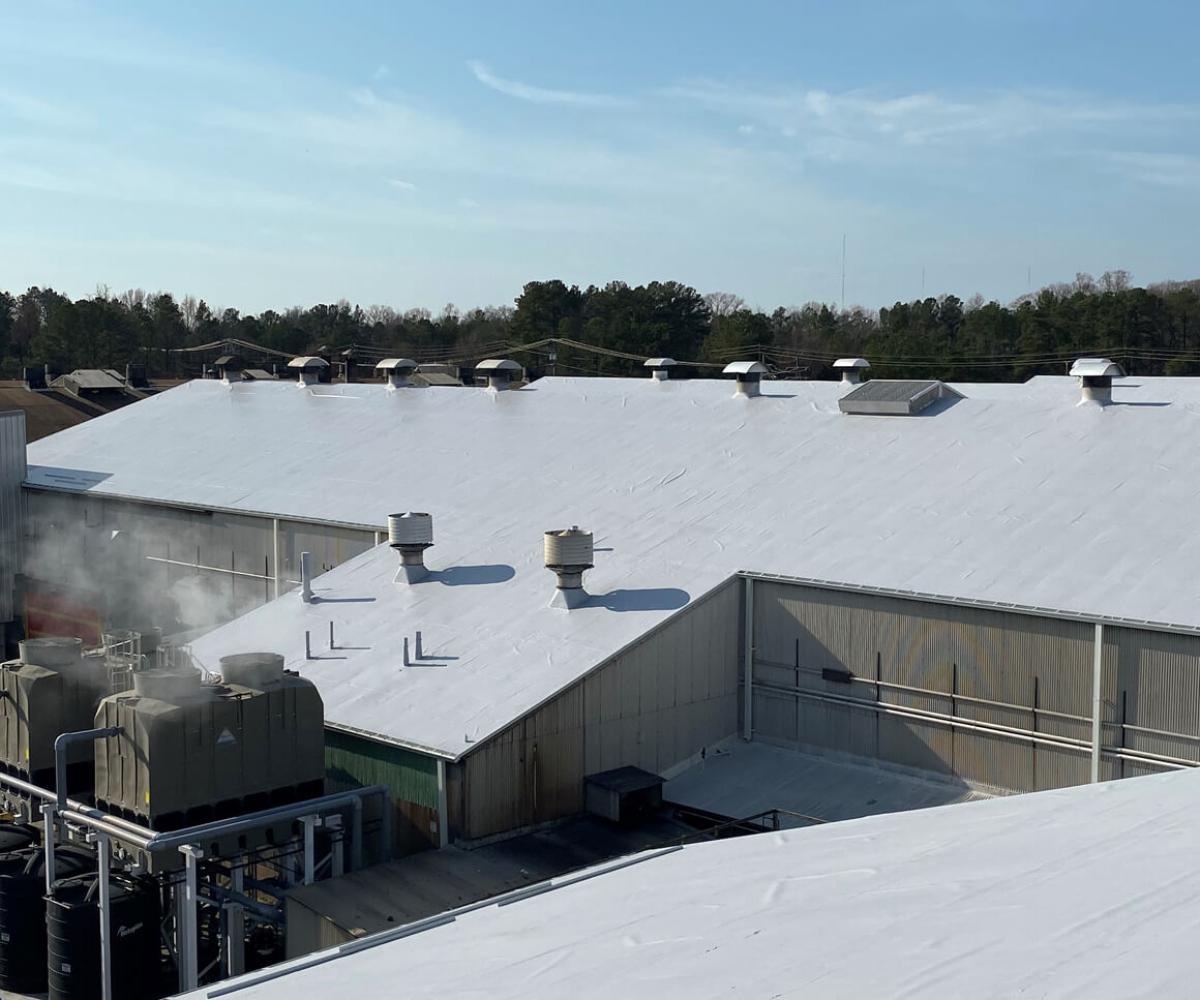
We do a lot of roofing on logistics buildings. The Stemmons generation of buildings was mostly built between 1985 and 2005, which puts a large share of them at 20-40 years old — right at the replacement threshold for original modified bitumen systems and first-generation EPDM. The replacement cycles on these buildings are not waiting for anyone. Building owners are making reroof decisions right now, and the ones who plan ahead get better pricing and better production windows than the ones who wait for a catastrophic leak.
The operating reality of a logistics building is that the roof is almost always over occupied, active space. Receiving is running. Outbound is running. The pick lines, the sorters, the cross-dock lines — none of that stops for a roofing crew. That means we sequence the work so that tear-off debris, nail drops, and equipment staging never conflict with what is happening on the floor below.
The first conversation we have with every logistics facility manager is about the floor plan. Where are the pick lines? Where is the receiving dock? Where is the cold storage? Where are the sprinkler system supply lines that will react to a smoke or dust event from tear-off? We map the production sequence against the floor plan and the operating schedule before we set foot on the roof.
Tear-off generates debris — membrane scraps, insulation fragments, fasteners, and loose aggregate from ballasted systems. On a logistics building, any one of those items hitting a conveyor belt, a forklift operator, or a product pallet is an operational event that the facility manager has to explain to the distribution center's customer. We use debris-containment parapet skirts on every open-edge tear-off section and we collect and bag debris on each production section before moving to the next. Nail magnets run the dock aprons at end of shift.
Loading dock proximity requires its own planning. Dock doors are typically at the low side of a sloped logistics building, and crane placement for material staging competes directly with inbound and outbound trailer activity. We coordinate crane placement and material lift windows with the facility's dock scheduler before mobilization — not on the morning of the lift. If a 53-foot trailer is docking at 6 AM, the crane is not in that bay at 6 AM.
Distribution centers carry inventory that does not tolerate water events. A leak above a picking aisle during a rain event can damage product, trigger insurance claims, and create slip hazards that shut down operations. We take the dry-in standard seriously: no section of roof is left exposed at end of shift without a temporary single-ply dry-in membrane lapped and fastened.
Cold storage and refrigerated distribution areas require additional planning. The existing roof assembly over a cold storage area functions as part of the thermal envelope for the refrigeration system. Removing that assembly creates a heat-gain event inside the refrigerated area that the refrigeration system has to fight. We sequence cold storage reroof sections for the shortest possible exposure window, coordinate with the facility's refrigeration contractor on the system's capacity to handle the additional load during tear-off, and dry-in with the same insulation R-value as the final assembly to minimize the delta.
Most high-bay distribution buildings in the Stemmons and Las Colinas corridors run steel deck with either mechanically attached TPO over polyiso or original modified bitumen over polyiso from the 1990s-2000s build cycle. TPO replacement is the dominant scope — it handles the thermal cycling that metal deck generates better than EPDM at Dallas temperatures, and it carries manufacturer warranties that line up with building capital planning horizons.