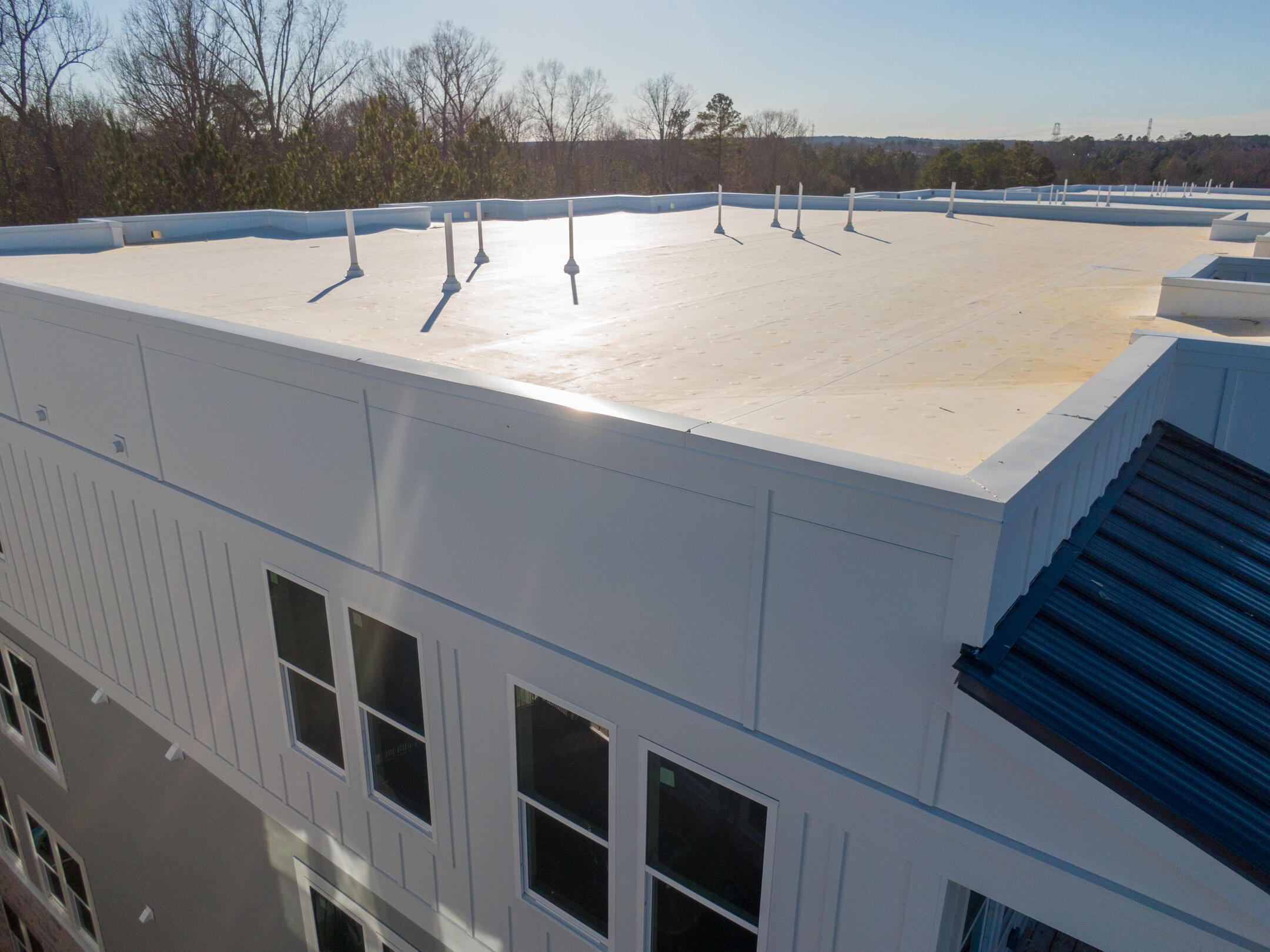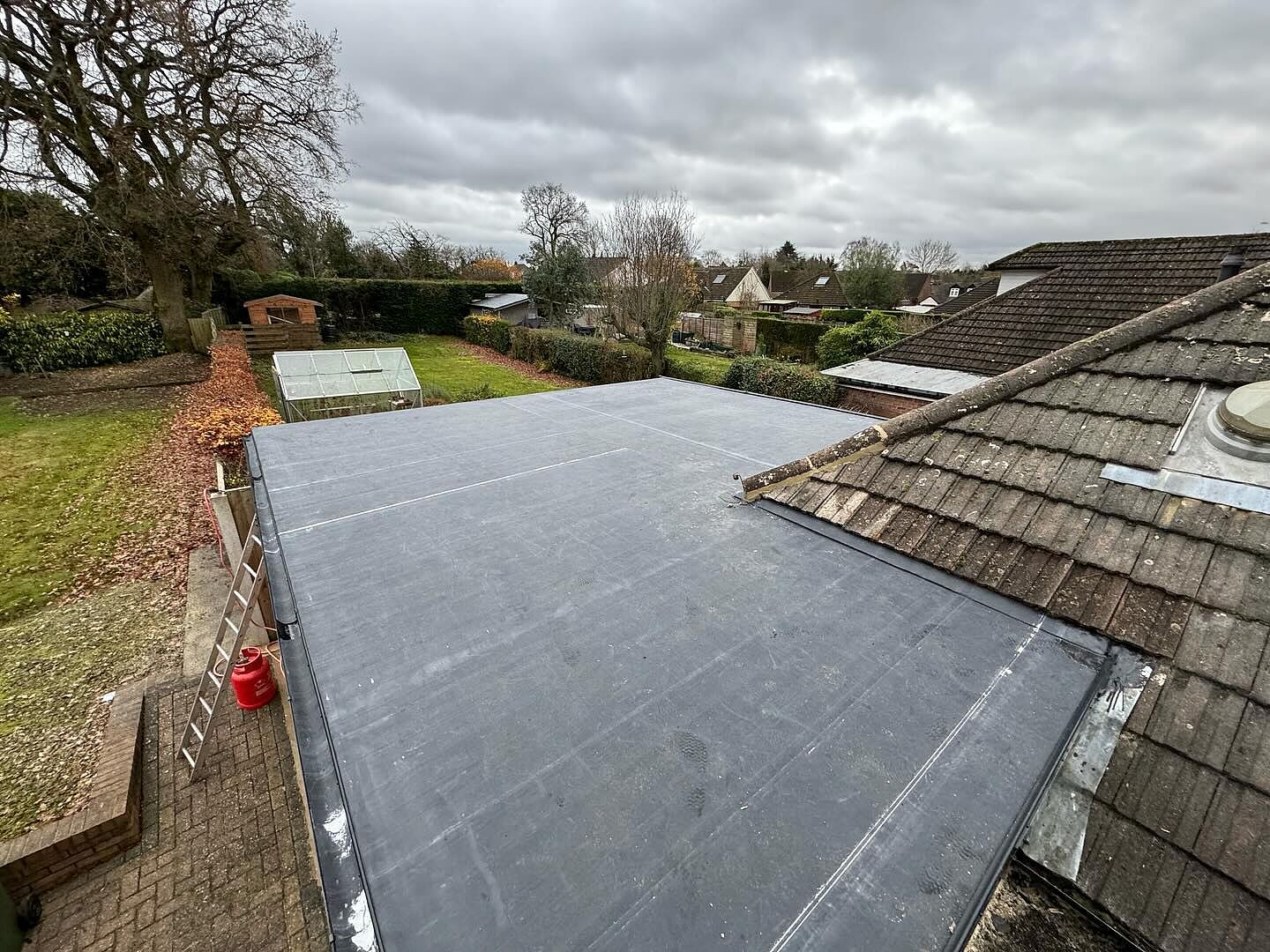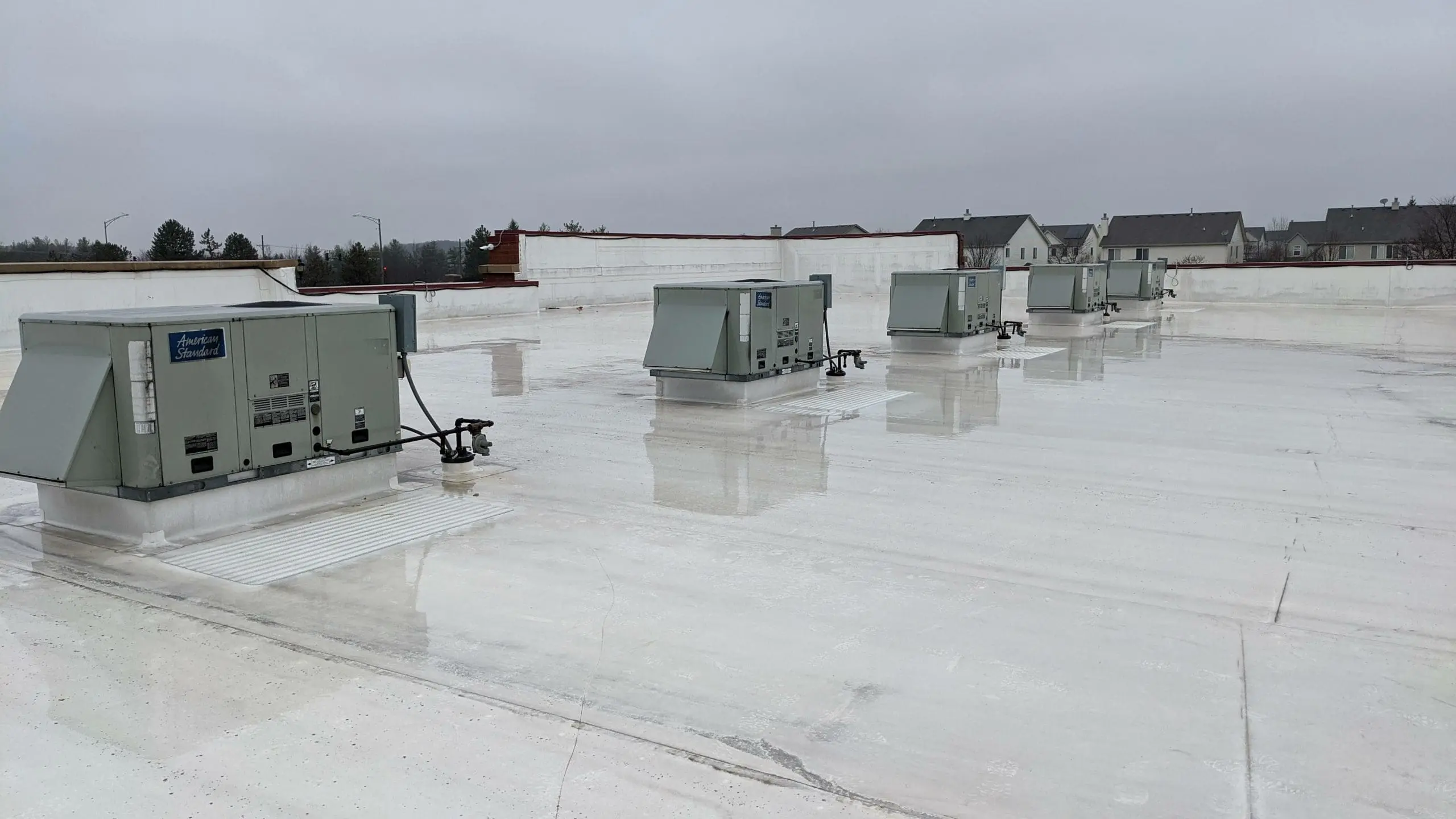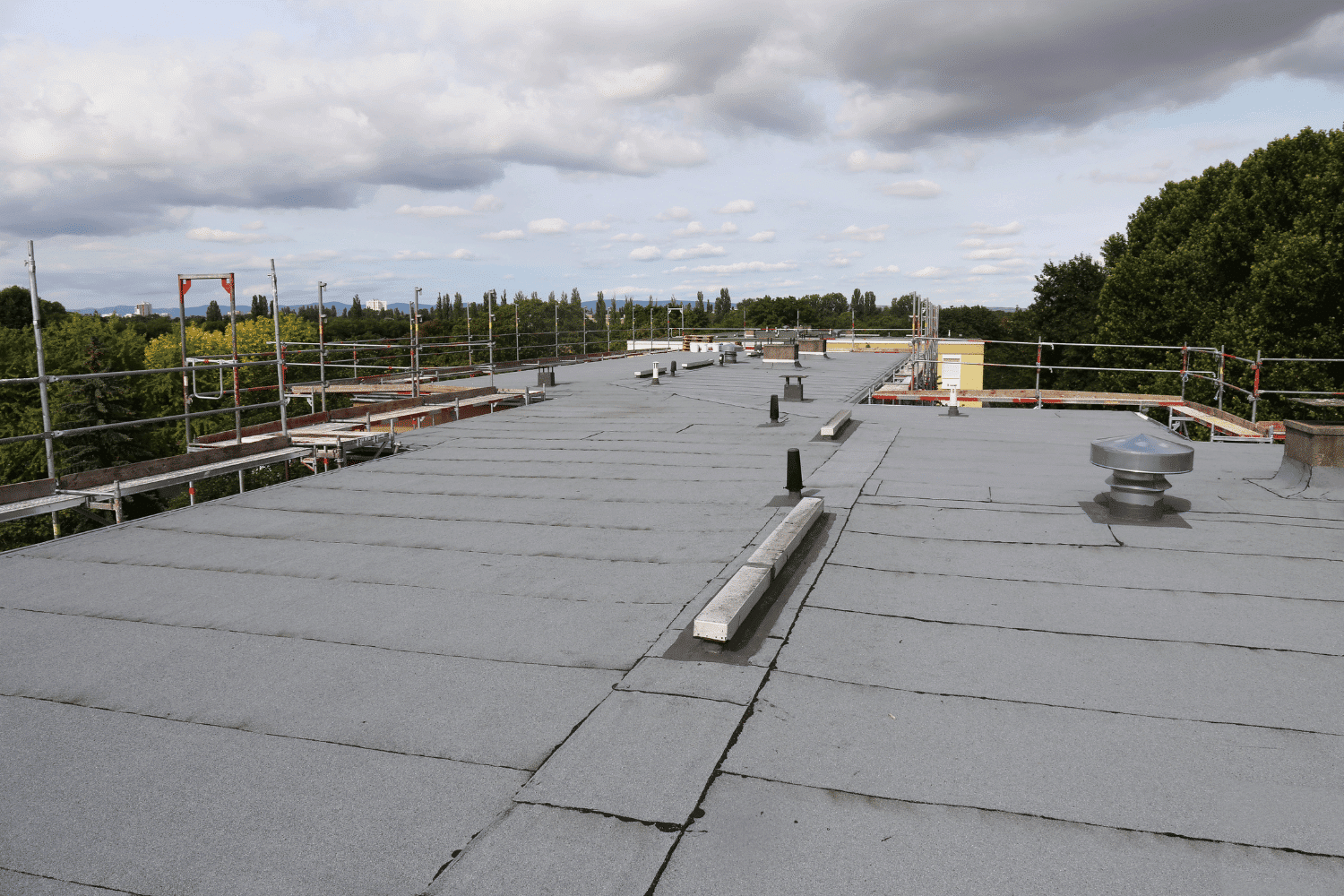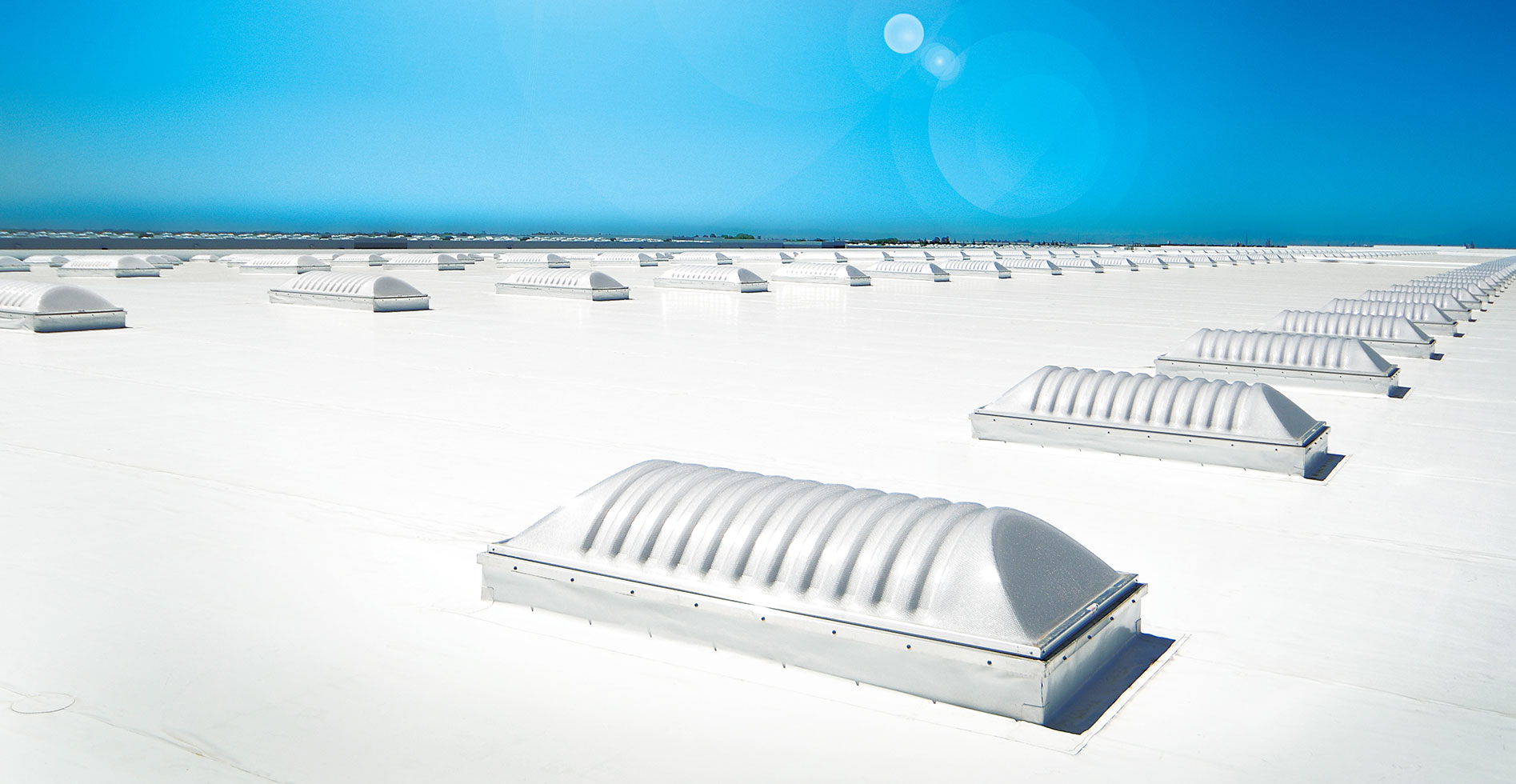
Dallas rooftop temperatures on dark surfaces regularly exceed 170°F in summer. Cool roof systems — white TPO, white EPDM, and reflective silicone coatings — cut that to 100-120°F and reduce HVAC cooling load measurably. We install and document cool roof systems that meet IECC 2021 requirements for Dallas commercial buildings.
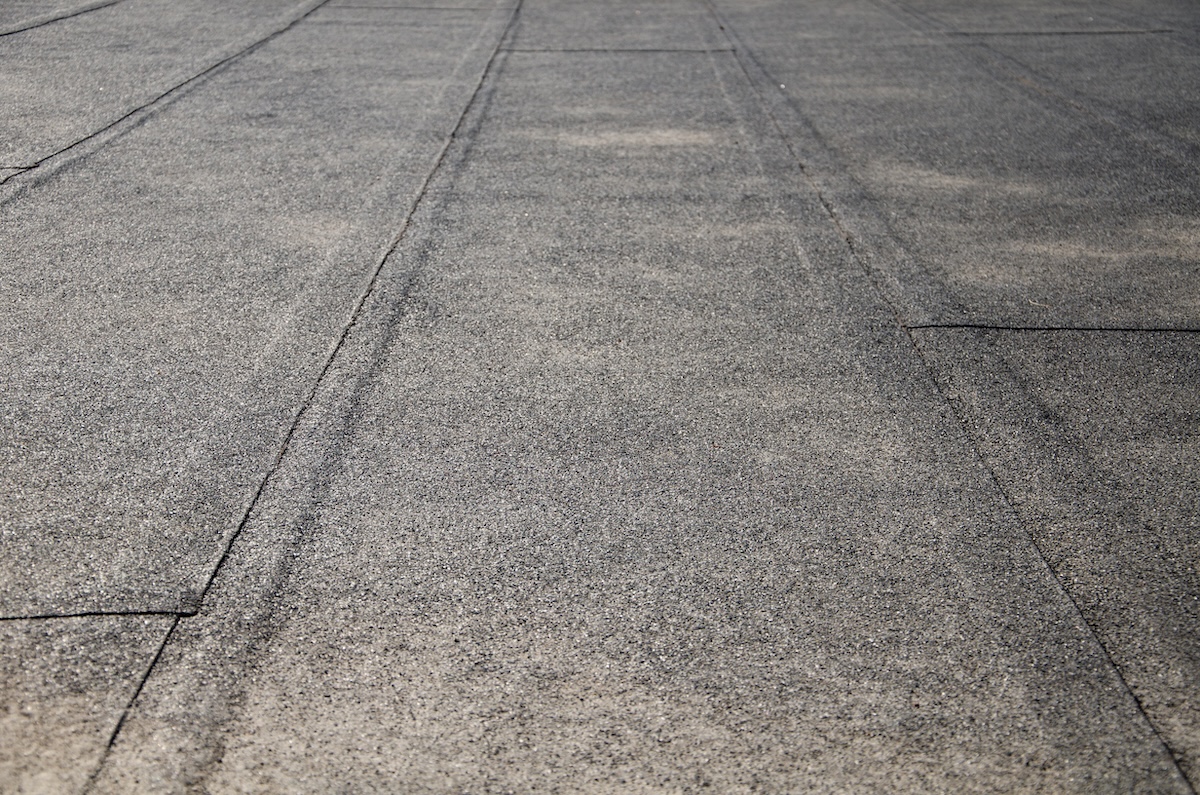
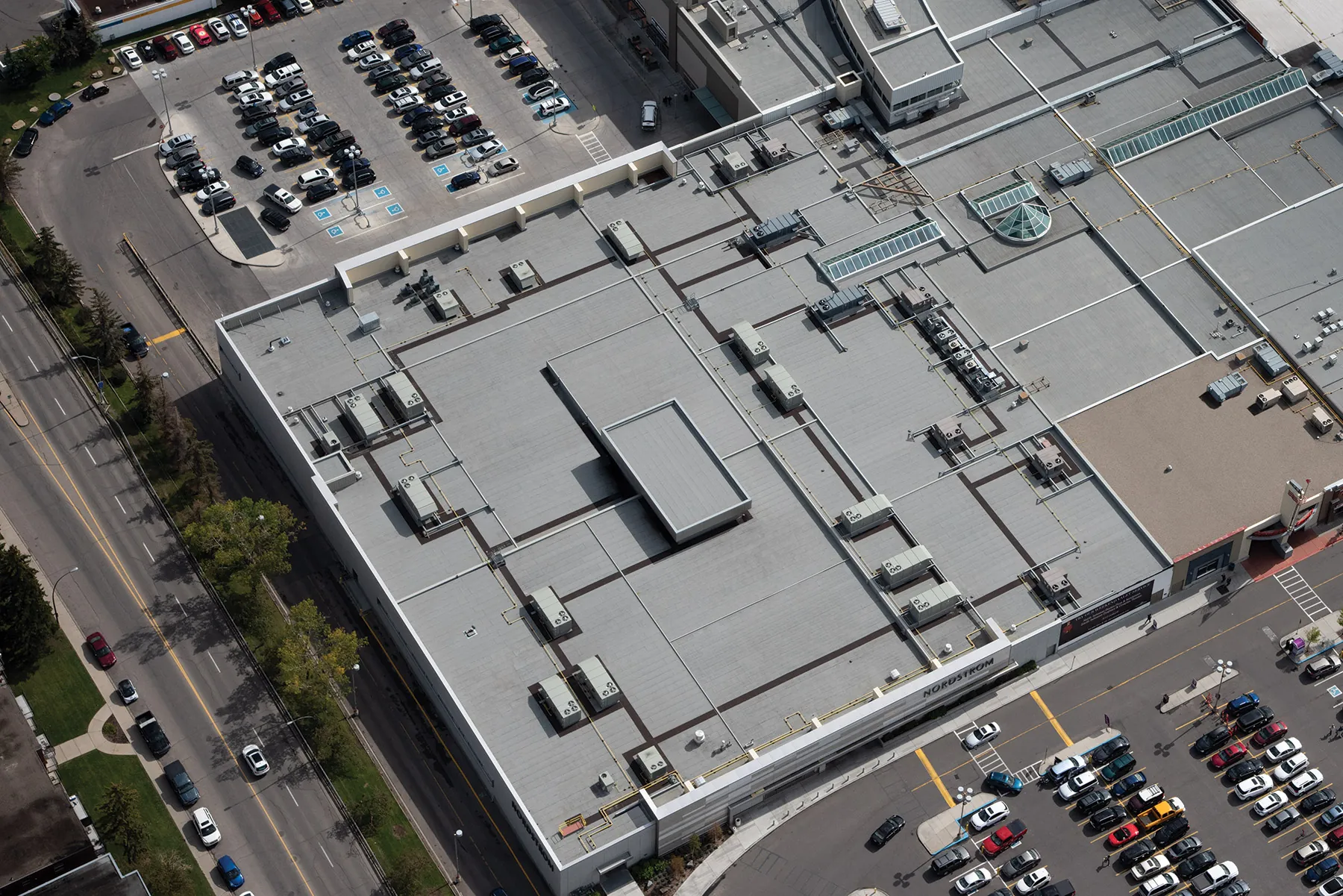
The thermal case for cool roofs in Dallas is straightforward. The city's Climate Zone 2 classification under IECC 2021 places it among the highest-cooling-load commercial building environments in the country. A conventional dark commercial roof in Dallas absorbs solar radiation and pushes rooftop surface temperatures above 170°F from June through August — heat that conducts through the roof assembly into the conditioned space below and increases HVAC cooling load proportionally.
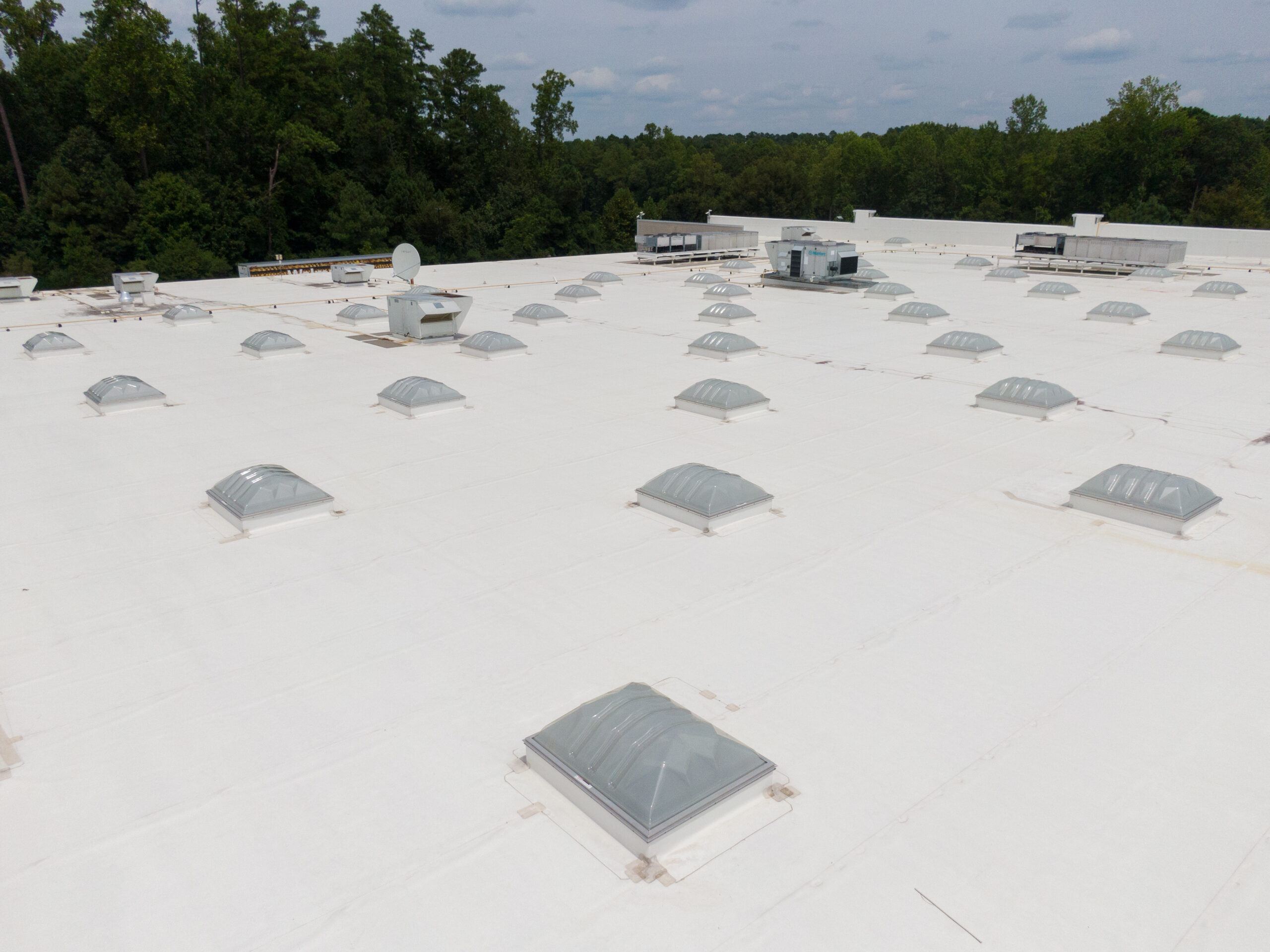
A white TPO membrane, white EPDM, or reflective silicone coating on the same roof reflects 70-80% of incoming solar radiation rather than absorbing it. Rooftop surface temperatures on those systems under the same Dallas summer conditions stay in the 100-120°F range. The HVAC load reduction is measurable — energy modeling for commercial buildings typically shows 8-15% cooling energy reduction from cool roof installation, though the actual figure varies with building use, insulation stack, and HVAC system type.
Dallas's IECC 2021 adoption (via the Texas State Energy Conservation Office) requires minimum roof reflectance and emittance values for low-slope commercial roofs in new construction and major reroofs. The standard TPO and EPDM systems we install already For buildings with existing dark membrane or BUR, a reflective coating is the most cost-effective path to compliance.
White TPO is the most-installed cool roof membrane in Dallas commercial work. The white formulation delivers an initial solar reflectance (SRI) of 0.80 or higher — well above IECC 2021's minimum 0.65 for low-slope commercial roofs — without any additional coating or treatment. The reflectance degrades somewhat over time as the membrane accumulates dirt and biological growth; periodic cleaning (or the self-cleaning properties of silicone-coated systems) maintains the SRI performance.
White EPDM (factory-laminated white fleece or white EPDM formulation) achieves similar SRI values. Black EPDM is the opposite of a cool roof — SRI below 0.10 — so buildings with black EPDM that need energy code compliance have two options: replace with white membrane or apply a reflective coating to the existing black surface. White-laminated EPDM is increasingly common on Dallas industrial buildings where the owner wants EPDM's durability profile and IECC reflectance compliance.
PVC membranes are inherently light-colored and typically The PVC buildings we see on Dallas food-service and chemical-exposure applications get cool roof compliance as a byproduct of the membrane selection, not a separate specification item.
The City of Dallas adopted IECC 2021 as its current energy code. For low-slope commercial roofs, IECC 2021 Section C402.3 requires a minimum aged solar reflectance of 0.55 and thermal emittance of 0.75, or a minimum solar reflectance index (SRI) of 64. Standard white TPO and EPDM membranes
We document IECC compliance on every commercial roof project at closeout: manufacturer's published SRI data for the installed membrane, copy of the Cool Roof Rating Council (CRRC) product listing for the specified membrane, and the energy compliance documentation that the building official requires for permit closeout. Dallas Building Inspection requires energy code documentation for new construction permits and for major reroofs on buildings above the permit threshold — we prepare this documentation as a standard closeout deliverable, not an extra.
Cool roof HVAC load reduction in Dallas is real and measurable, but the magnitude depends on the building. Single-story commercial buildings with low R-value roof assemblies see the most benefit — the roof surface is a larger proportion of the total building envelope, and the insulation stack is thinner, so more of the rooftop heat makes it into the conditioned space. Multi-story buildings with substantial floor insulation see less benefit per dollar of cool roof investment.