SPF roofing is a niche but genuinely effective system for the right Dallas industrial building. It creates a seamless, self-insulating monolithic surface and eliminates the seam failures that plague other recover systems. The substrate qualification and spray conditions narrow the application window significantly — we apply SPF only where the conditions support it.
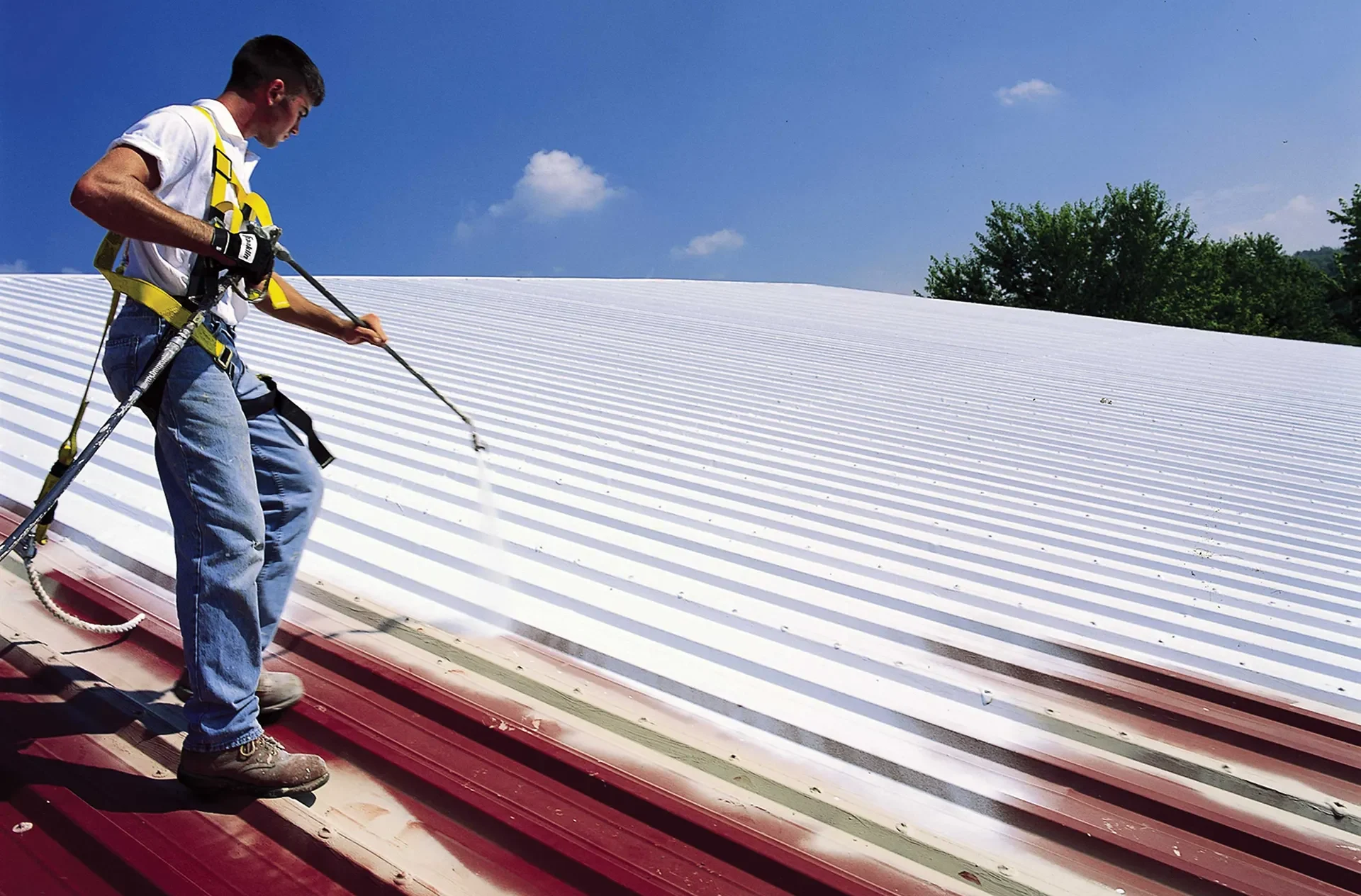
Spray polyurethane foam (SPF) roofing involves spraying a two-component polyurethane foam directly onto the existing roof surface. The foam expands, adheres, and creates a seamless insulating layer that is then coated with an elastomeric protective coating — typically silicone or acrylic — that shields the foam from UV degradation. The result is a monolithic, seamless roof surface with no seams, laps, or penetration flashings in the traditional sense.
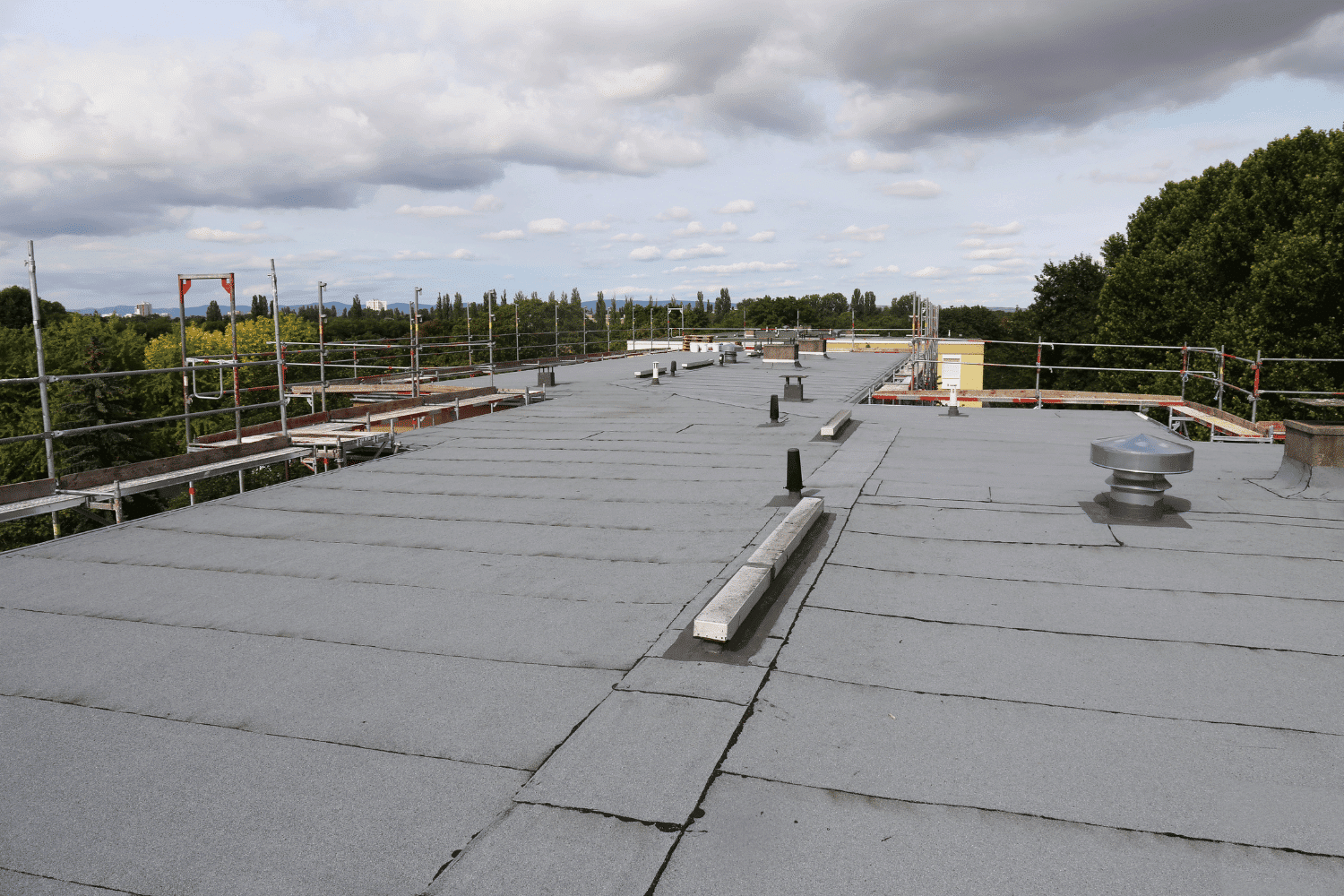
SPF roofing is a recover system — it goes over existing roofing materials rather than replacing them. That makes it attractive for large industrial buildings along the I-20 and I-30 corridors southwest and southeast of Dallas where full tear-off of a 100,000-200,000 sq ft roof would mean weeks of production disruption and significant debris disposal cost. When the existing insulation is dry and the substrate is stable, SPF recover can be faster and less expensive than conventional single-ply recover.
The application window for SPF is genuinely narrow. Wind speed above 12 mph during spray can cause foam to drift, contaminating adjacent surfaces and producing an uneven application. The substrate must be completely dry — more stringently than for coating systems, because foam adheres to moisture and will produce adhesion failures if the substrate has any moisture content. Dallas's humid summers from June through September make the application window tight; we schedule SPF work in fall, winter, and early spring when conditions are most reliable.
SPF roofing systems use closed-cell polyurethane foam at a density of 2.5 to 3 lbs per cubic foot. The closed-cell structure is what makes it waterproof — open-cell foam absorbs moisture and fails as a roofing material. We specify a minimum 2.5 pcf closed-cell density on every Dallas SPF project, and we core-sample the installed foam to verify density before the protective coating goes on.
Thickness determines R-value: 1 inch of 2.5 pcf closed-cell foam yields approximately R-6.5. For Dallas IECC 2021 compliance at R-25 minimum, a 4-inch application is the baseline. In practice, SPF applications typically run 2-3 inches on recover projects where the existing insulation below provides additional R-value. We calculate the existing R-value from the existing insulation documentation (or estimate from inspection) and determine how thick the SPF layer needs to be to hit code compliance.
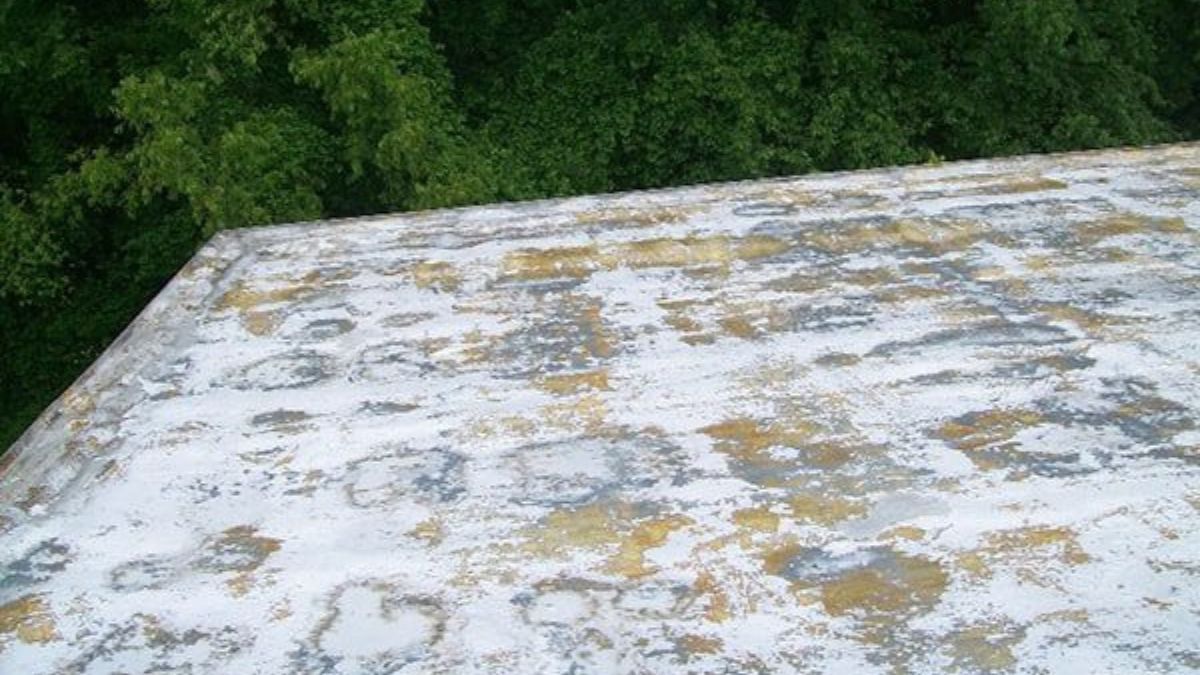
SPF foam is UV-sensitive — unprotected foam degrades rapidly under Dallas sun exposure. The protective coating applied over the foam is what creates the roof's durability. We apply silicone coating at 20-25 mil DFT over SPF on most Dallas projects — silicone's resistance to ponding water and UV is better than acrylic over the full Dallas weather range, and silicone's elastomeric properties accommodate the thermal movement of the foam substrate without cracking.
The coating layer is also what determines the warranty term. Manufacturers offer 10 to 20-year warranties on qualifying SPF systems based on foam density, coating type, and DFT. We carry credentials with GE Enduris and Tremco for SPF warranty work. The manufacturer's warranty inspection at closeout includes a DFT measurement of the coating — same as for coating-only systems.
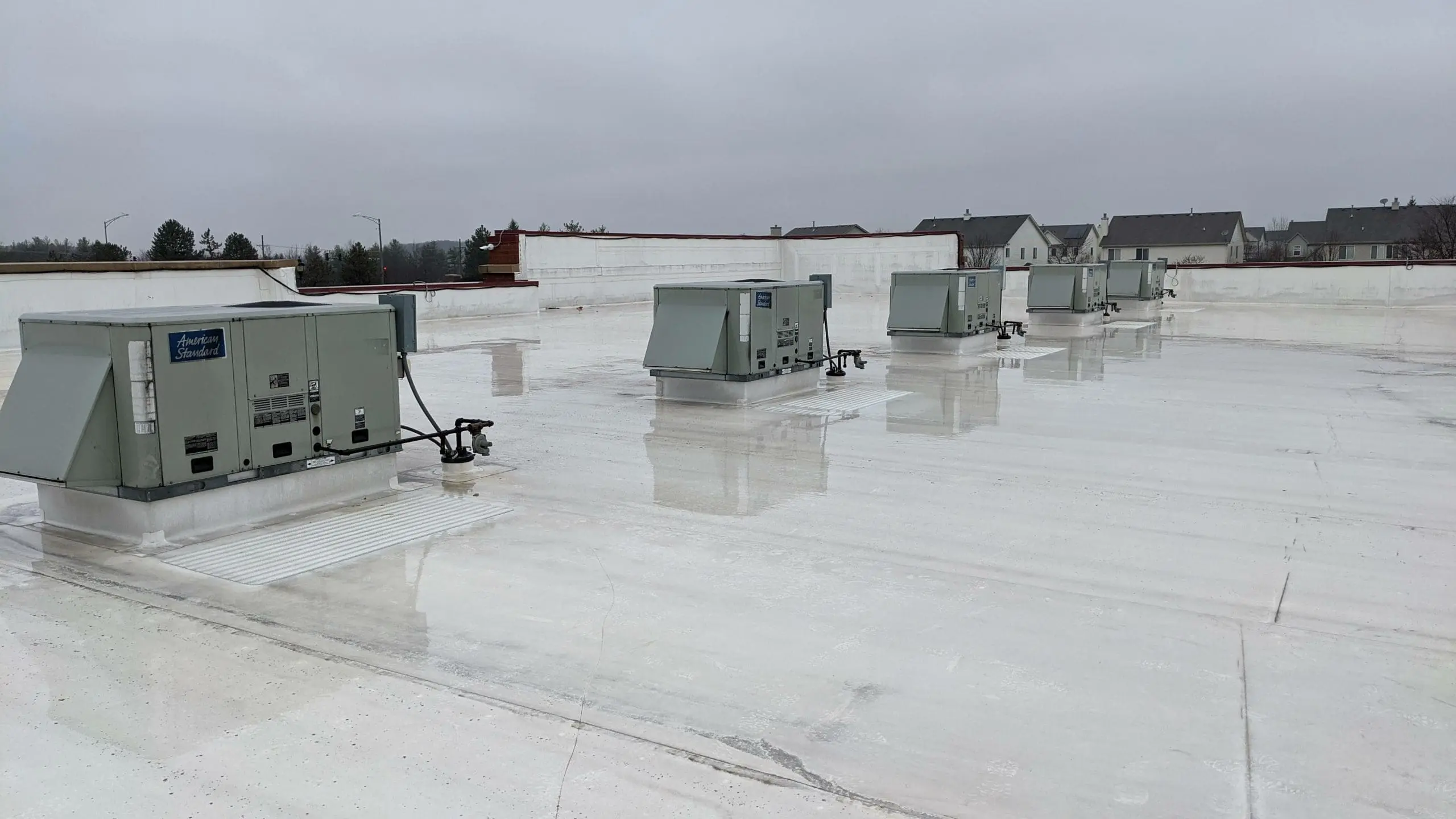
The best SPF candidates in the Dallas market are large-footprint industrial buildings with unusual roof geometry — multiple elevation changes, extensive rooftop equipment, complex drain patterns — where a conventional single-ply system would require extensive custom fabrication and produce numerous field seams. SPF's seamless application turns those geometric complexities into an advantage rather than a liability.
Specific Dallas corridors where we have done SPF work: industrial parks along I-20 west of Loop 12 (Cockrell Hill area), manufacturing buildings in the Continental/Westmoreland industrial zone in southwest Dallas, and older warehouse stock in the Mountain Creek Parkway industrial area. These buildings share the profile: large square footage, complex rooftop conditions, existing dry insulation, and owners who need a cost-effective recover option rather than a full replacement budget.