A rooftop PV system is a thirty-year commitment bolted to a roof that may not have thirty years left. That mismatch is the single most expensive mistake we see on commercial solar projects across Dallas, and it is the reason we ask owners to talk to a roofer before they talk to a panel salesperson. Once an array is energized over a warehouse off Regal Row or a distribution building in the Pinnacle Park area, the membrane underneath is effectively sealed off from easy repair. If that membrane gives out in year eight, every rail, module, and ballast block has to be disconnected, lifted, staged, and reset after a new roof goes down. We have priced those removal-and-reinstall jobs, and the array handling alone routinely runs into six figures on the larger logistics roofs along the LBJ and Stemmons corridors.
We work the roofing half of these projects. The solar EPC the owner hires handles the modules, inverters, and electrical interconnection; we make sure the assembly carrying all of it is detailed, sequenced, and warranted so neither system shortens the life of the other. That division of labor is exactly why coordination matters so much, and it is what this page is about.
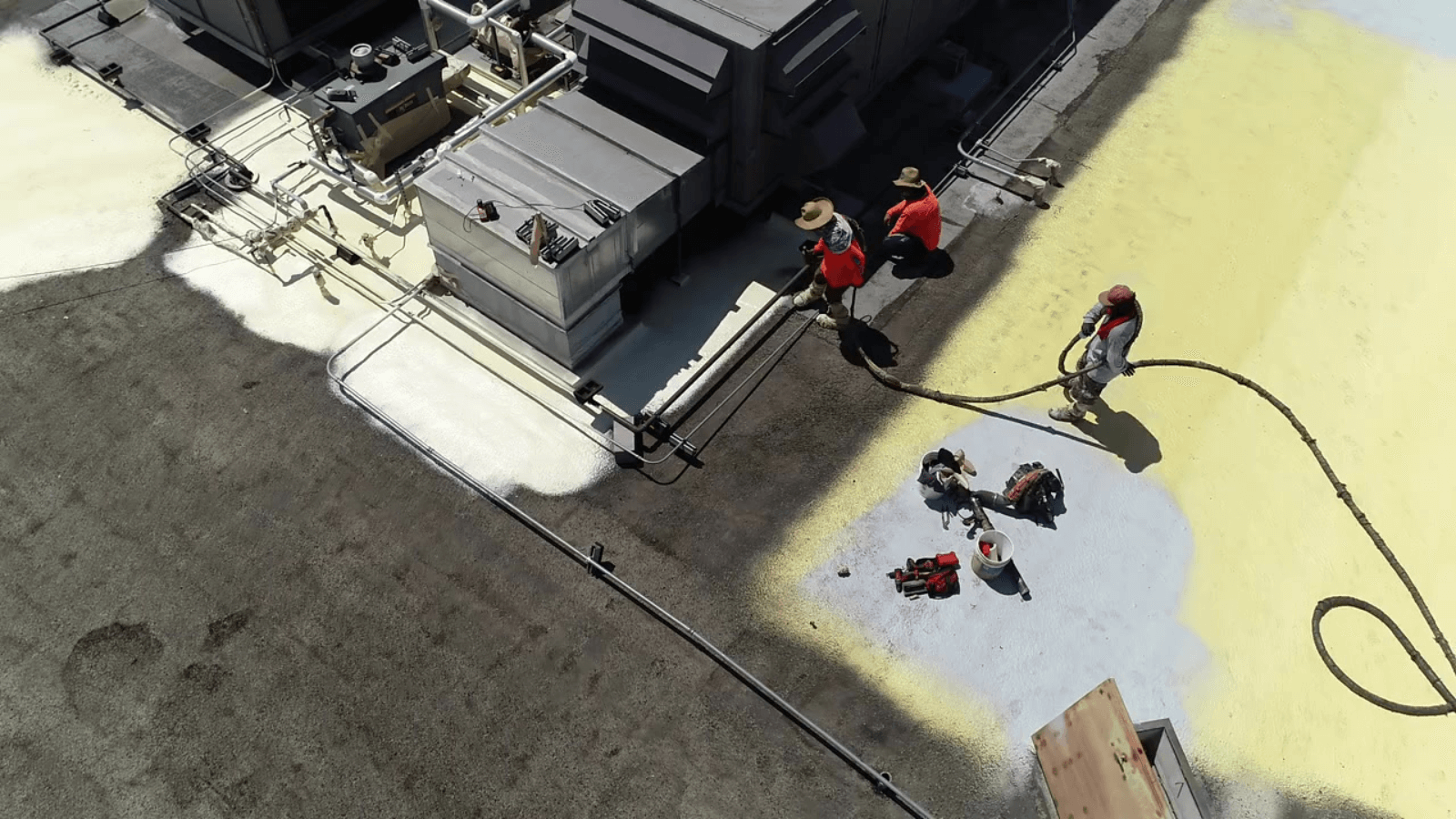
Before we discuss racking or layout, we put eyes and core cuts on the existing roof and give the owner a defensible estimate of remaining service life. Everything downstream depends on that number.
This is a roofing judgment, not a solar one, and it is the part of the project a panel vendor is least equipped to call.
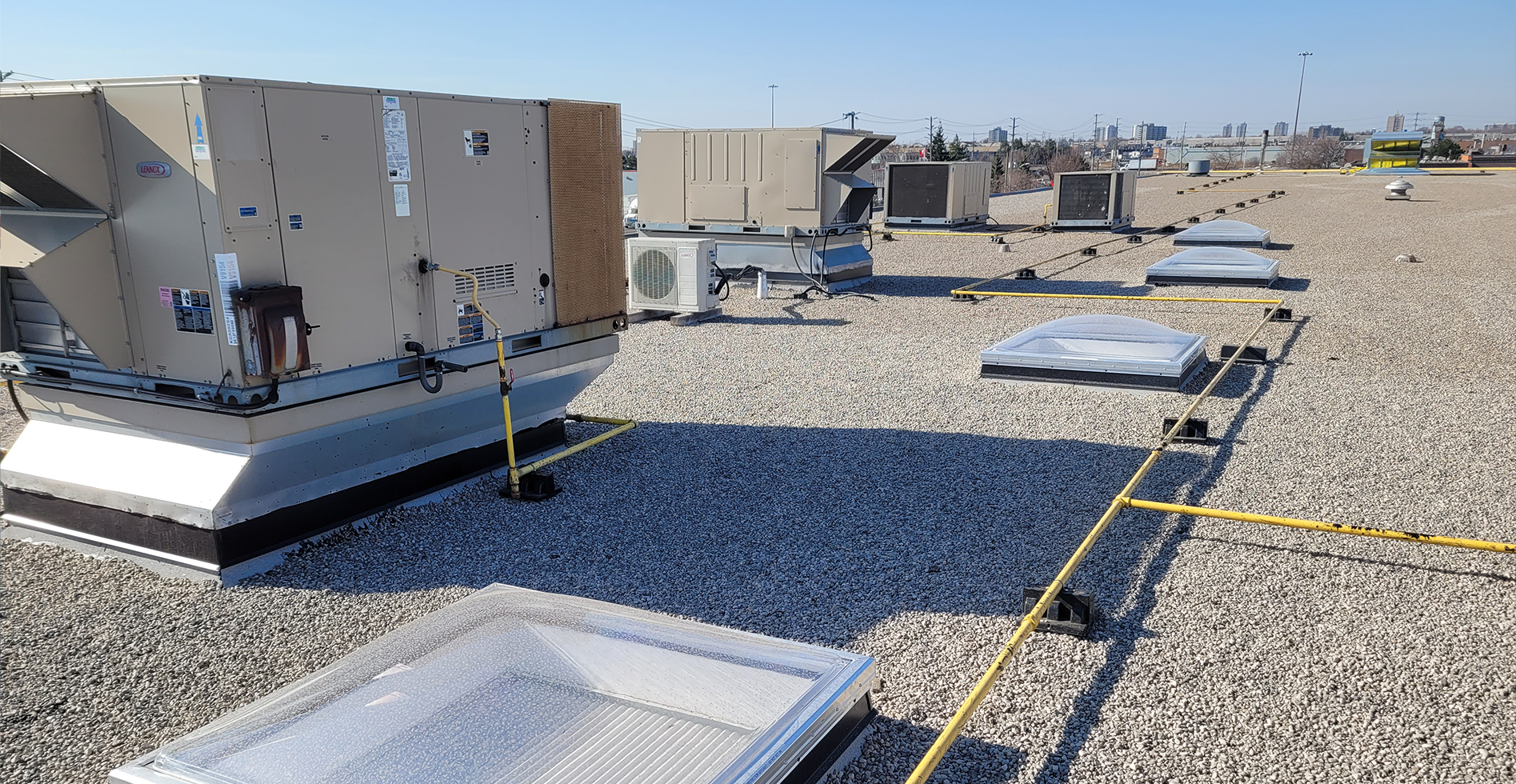
The flat-roof inventory here is enormous and underused. Acres of low-slope membrane sit over the Great Southwest Industrial District in Grand Prairie, the I-20 and I-35E logistics product, and the office and flex roofs around Las Colinas and the Telecom Corridor in Richardson. Many of these buildings run heavy daytime loads, refrigeration, manufacturing, server rooms, and that demand profile lines up neatly with peak rooftop production. Add the federal investment tax credit, accelerated depreciation, and the demand-charge structure on Oncor-served commercial accounts, and the payback math gets attractive. But every bit of that math collapses if the roof has to come out early, which is why we keep dragging the conversation back to membrane condition.
There are two attachment philosophies on a low-slope commercial roof, and each loads the membrane differently.
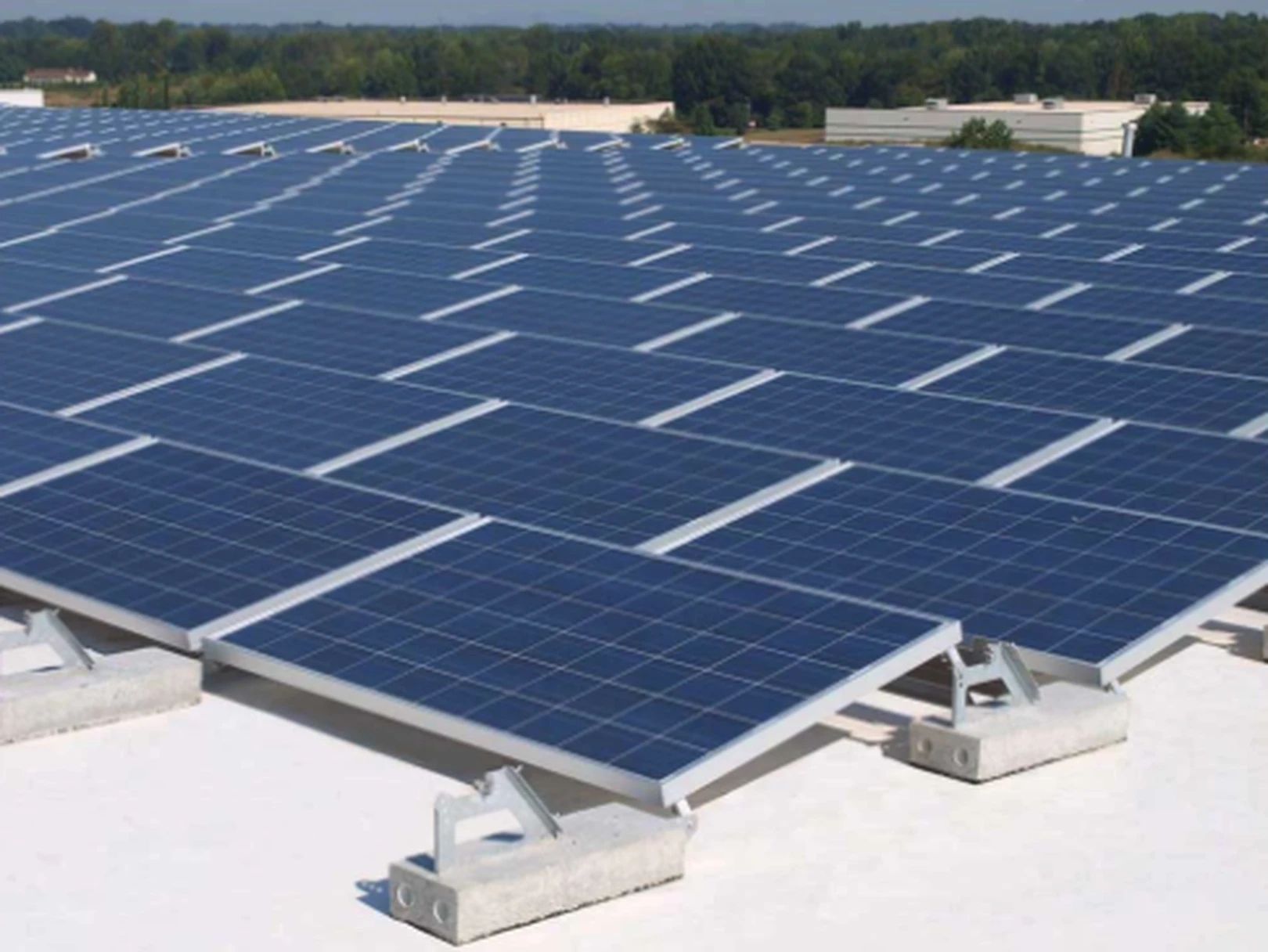
Ballast trays and concrete blocks hold the array by weight alone and leave the membrane unpunctured, which is why they dominate on flat Dallas roofs. The constraint is dead load. Panels, rails, and ballast add up fast, and a lot of the older tilt-wall and bar-joist structures in this market were never engineered with much reserve capacity. A structural review has to confirm the building can carry it. We also verify the slip sheets and protection pads can absorb the concentrated point loads under each ballast foot without abrading the membrane over years of thermal movement.
When uplift or a weight-limited structure rules out ballast, the array gets bolted down, and every racking foot becomes a roof penetration. North Texas wind events are real, and a tilted array behaves like a sail, so uplift on both the attachments and the roof perimeter is a genuine engineering concern, not a formality. Each anchor has to land in the structural deck rather than the membrane alone, get flashed to the membrane manufacturer's published detail, and be capable of the uplift the array will actually generate. A foot set in a generic pitch pan instead of a proper flashed curb is a leak that surfaces the first time wind drives rain horizontally across the roof.
The DC and AC runs from the array down to the electrical room cross the membrane too, and this is where roofer and installer coordination breaks down most often. Conduit laid flat on a membrane chews through it; penetrations that the electrician boots himself instead of letting the roofer detail become chronic drips. We map routing and penetration points with the solar crew before any wire is pulled, and we flash those crossings ourselves so they sit inside the roof warranty rather than outside it.
Membrane chemistry decides what can touch it. A white reflective TPO or PVC sheet is the usual host under a Dallas array because the cooler surface helps module output and drops the building's heat gain, but not every walk pad, adhesive, or racking component is compatible with PVC, and the wrong product against that sheet can plasticize or degrade it. We confirm compatibility before anything is specified.