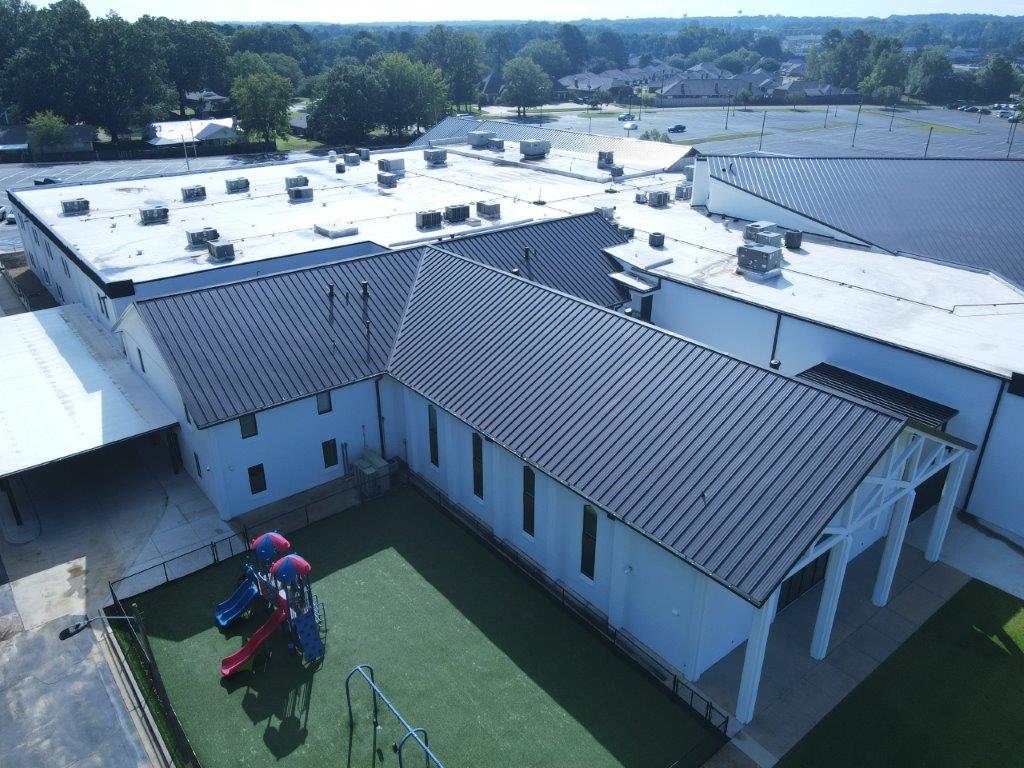
Historic downtown churches, modern megachurch campuses, and suburban congregations across the metro. Architectural metal and flat-roof sections handled under the same project, with weekend service scheduling built into every production plan.
Religious buildings in Dallas fall into two completely different categories that require two completely different scopes. The historic downtown churches — First Baptist Dallas at San Jacinto and Patterson, Cathedral Guadalupe on Ross Avenue, First United Methodist on Ross — are 80 to 120-year-old masonry buildings with slate, clay tile, or aged copper on pitched roof sections and modified bitumen or early single-ply on the flat sections behind the sanctuary parapets. Every material choice on these buildings has to be consistent with historic preservation standards, and many have active stained-glass windows that require specific protection during any work above or adjacent to them.
The second category is the modern megachurch campus. Watermark Community Church at LBJ and Midway, Highland Park United Methodist Church at Preston and University, and the large suburban campuses in Southlake, Flower Mound, and Rockwall have a completely different roofing profile — large commercial flat roofs over auditorium and classroom buildings that are technically identical to any other commercial building of the same era, plus architectural metal accents on visible gable and entrance elements. These buildings are newer, but they are large (some campus footprints exceed 200,000 sq ft of roofed area across multiple buildings), and the production scheduling constraint is absolute: Sunday services do not move.
We have worked on both types across the Dallas area. The common constraint is that neither category tolerates an uninformed contractor who treats the building as a generic commercial project.
Historic downtown Dallas churches present roofing challenges that are rare in standard commercial work. First Baptist Dallas completed a major campus renovation, but older sections of the original buildings still carry aging roof systems that require replacement matching the original material or an approved historic substitute. Cathedral Guadalupe on Ross Avenue has clay tile slopes that require hand-laid replacement tile matching the original profile — mass-produced replacement tile does not pass the Landmarks Commission review for visible surfaces.
Stained-glass protection is the most critical element of historic church roof work. We install protective scaffolding and padded framing over any stained-glass window within the fall zone of any elevated work. The protection stays in place until after debris removal and equipment demobilization — not just during the tear-off. A stained-glass claim on a historic church building is not a roofing claim; it is a cultural preservation loss that no insurance policy fully restores.
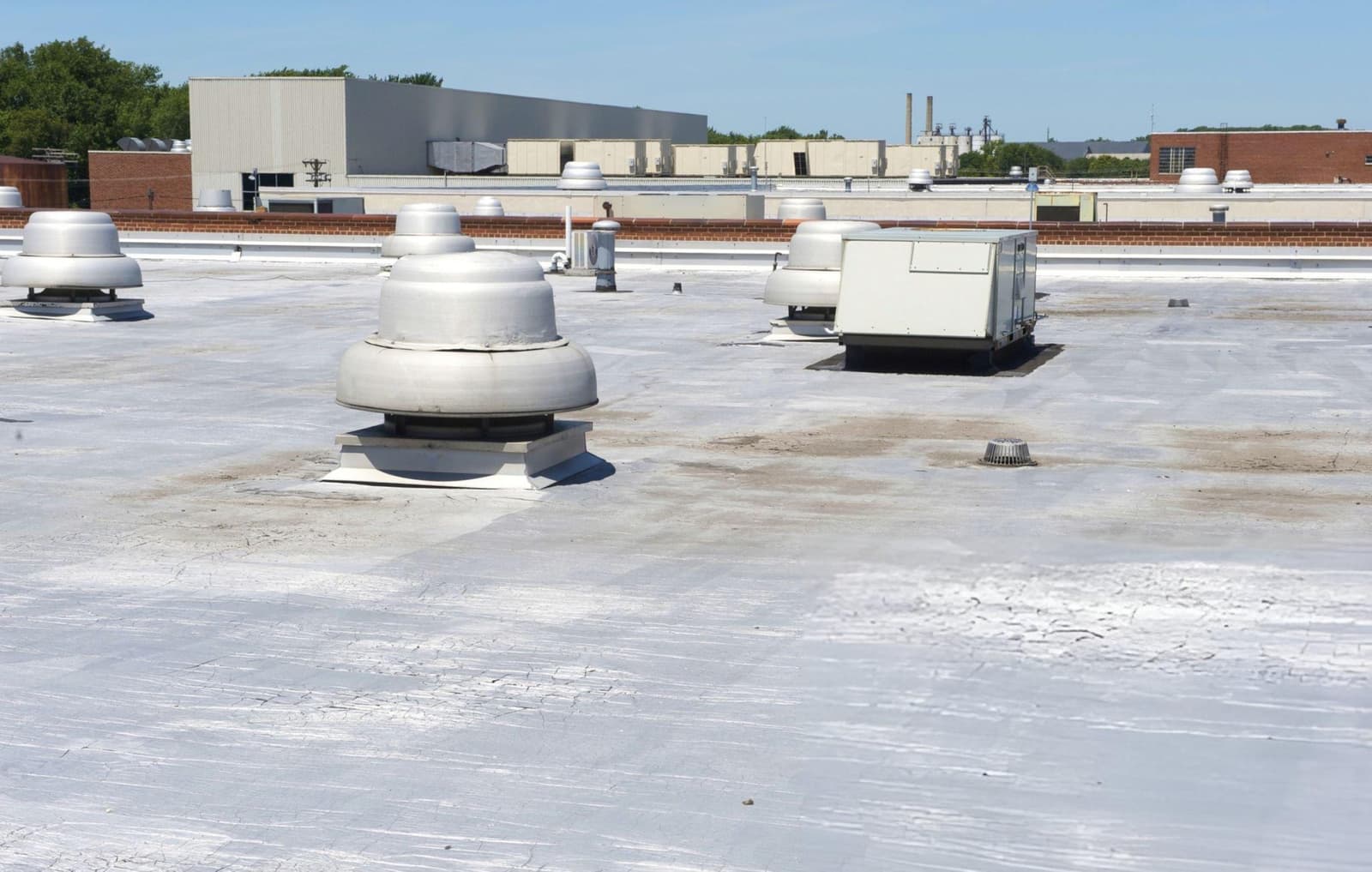
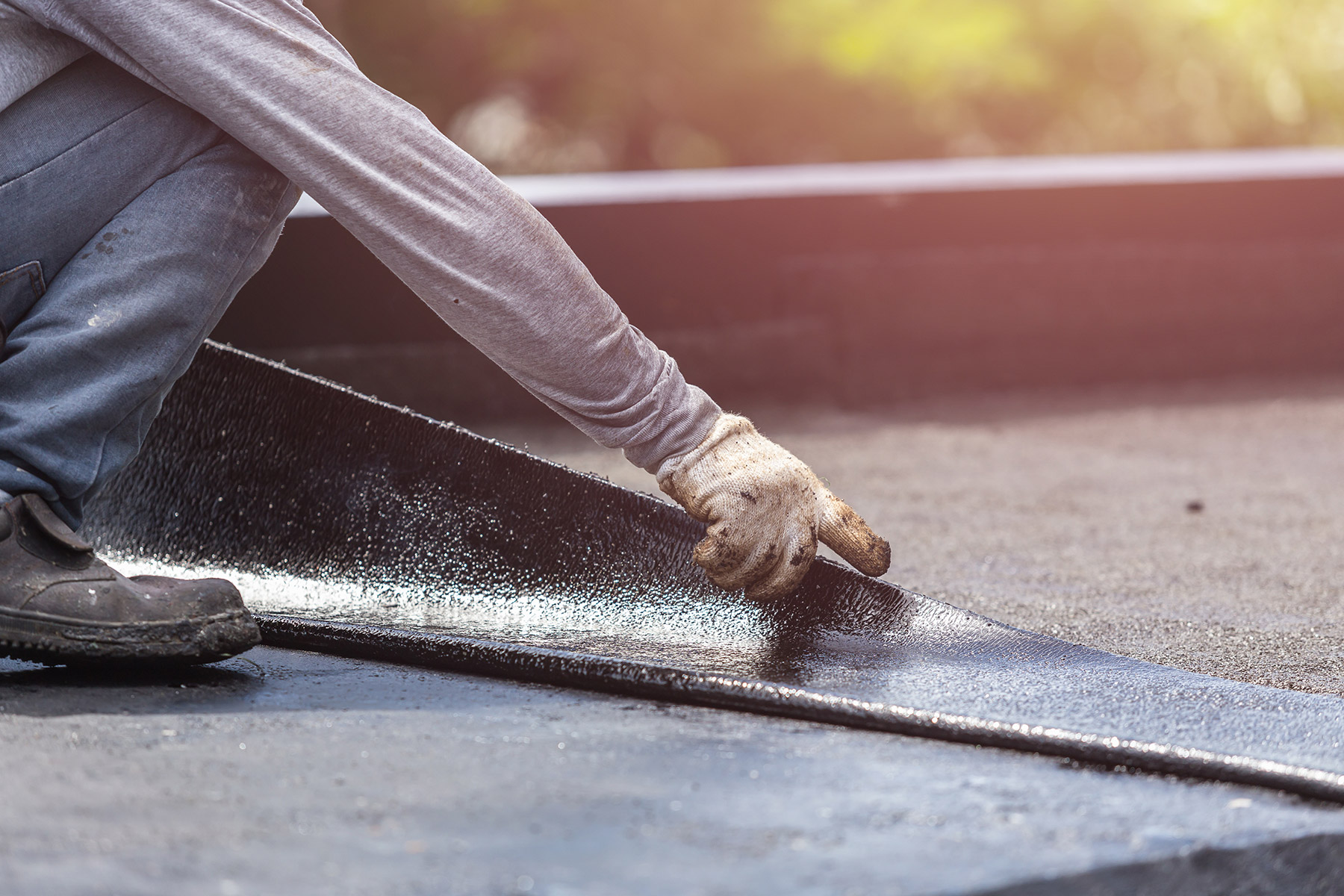
Flat-roof sections on historic churches — the areas behind parapets, over vestibules, and covering attached fellowship halls — can be reroofed with modern single-ply systems without historic approval, because they are not visible from grade. We spec 60-mil fully adhered TPO or EPDM on these sections. The advantage of fully adhered on historic buildings is that it avoids mechanical fastener penetrations into aged masonry or concrete deck that may not have the pull-out values that mechanically attached systems require.
The production constraint on Dallas megachurch campuses is different from historic work but equally firm. Watermark Community Church at LBJ and Midway runs multiple services from Saturday evening through Sunday afternoon and hosts mid-week programs that draw thousands of attendees. Production scheduling has to avoid Saturday afternoon through Sunday evening at minimum — often Wednesday evening as well for mid-week services.
This means the effective production week on most megachurch campus projects is Monday through midday Saturday. For projects where the building system or weather requires full-week production, we coordinate with the church's facilities director to identify which roof zones can continue through service days (typically away from the auditorium and main parking-lot entrance) and which must stop.
Large suburban campuses in Southlake, Allen, and Flower Mound have multiple buildings on a single campus — children's education, worship center, student ministry, administration. We have reroofed these campuses as phased multi-building projects, completing lower-priority buildings (administration, storage) first so that the most critical buildings (worship center) are the last to be disrupted.