A roof condition report is a written, photo-documented assessment of a commercial roof's current state — what it is, what condition it is in, and what it needs. We produce three report depth tiers matched to what the owner, lender, or buyer actually needs from the report.
The most common request we get from Dallas commercial real estate attorneys, property managers, and ownership groups is for a roof condition report that is actually useful — not a one-page checklist or a three-sentence email. A useful roof condition report tells the reader what system is on the roof, when it was installed, what condition it is in across every zone of the building, what repairs or actions are needed and in what timeframe, and what the roof's remaining useful life estimate is. It should be readable by someone who has never been on a roof.
We produce condition reports in three depth tiers. The basic tier covers single-building inspections needed for insurance renewal, quick lease negotiations, or facility manager documentation. The comprehensive tier covers asset sale due diligence, insurance claims, or ownership groups that need a full written record. The capital-grade tier covers institutional lenders, CMBS portfolio reviews, and situations where the report will be used by multiple parties over multiple years — the kind of report where the methodology and defensibility matter as much as the findings.
Every tier shares the same physical inspection: a documented roof walk with the zone diagram, photo log, and condition rating scale. What changes between tiers is the depth of the written narrative, the scope of historical documentation, the capital horizon analysis, and the detail of the scope section.
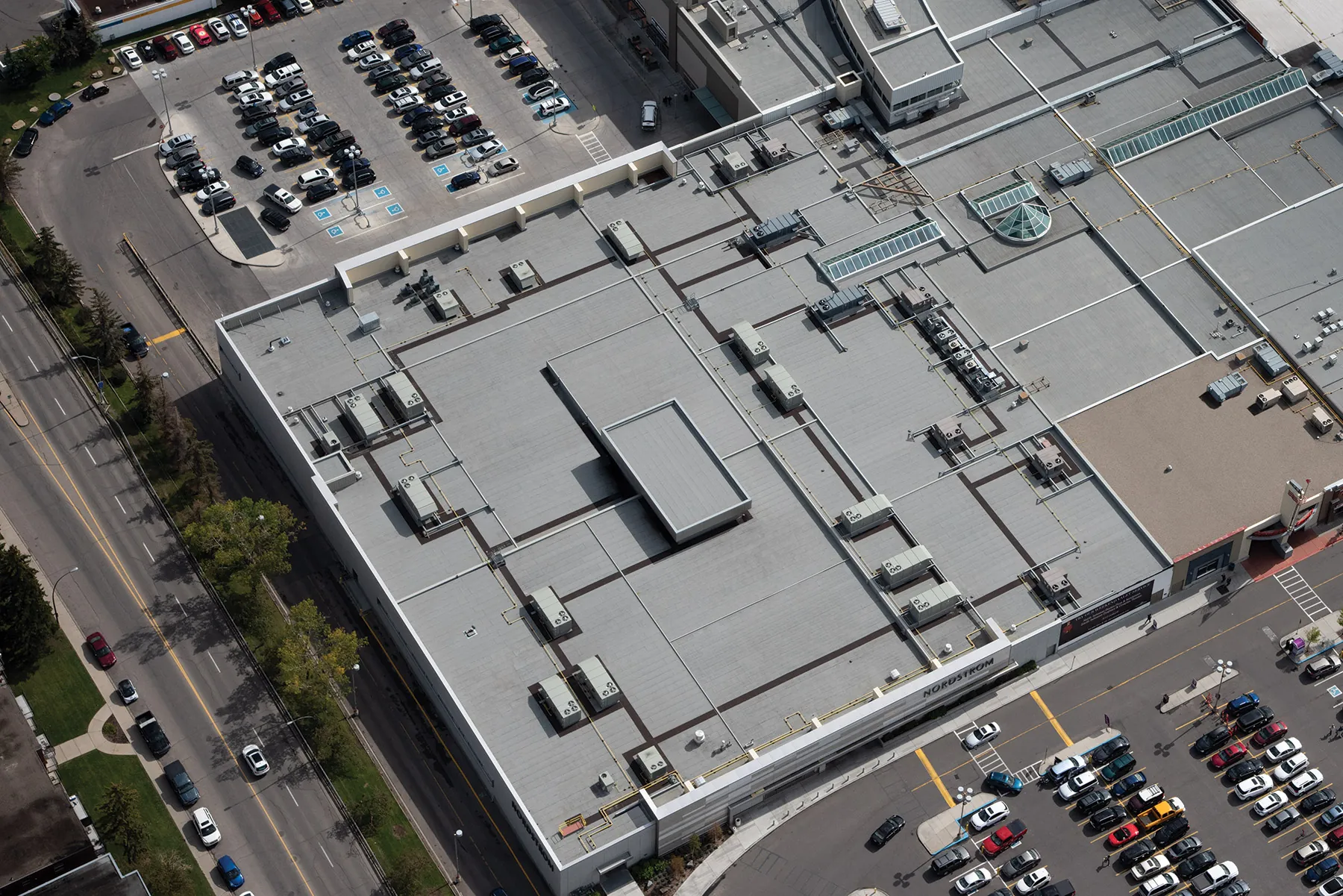
Zone diagram: a to-scale plan drawing of the roof divided into inspection zones, with all drains, penetrations, rooftop equipment, parapets, and access hatches marked. Every finding and every photo is keyed to a location on the zone diagram so the reader can orient the condition findings spatially. We produce the zone diagram in the field during the inspection and refine it from satellite imagery and field measurements before delivering the report.
Photo log: every material finding is photographed with a consistent framing convention (wide-shot to establish location, close-up to show the deficiency or condition detail). Photos are labeled with the zone reference from the diagram and the finding description. A typical comprehensive condition report on a 50,000 sq ft Dallas office building produces 80-120 photos; a basic inspection produces 30-50. Every photo carries embedded GPS coordinates and timestamp.
Scope columns: we organize findings into three scope columns — Immediate (repair needed within 30 days to prevent further damage or warranty compromise), Near-Term (repair needed within 90 days to prevent deterioration), and Capital (replacement planning within 1-5 years). This structure lets the owner triage response without reading the full narrative: the Immediate column is the action list, the Capital column is the budget-meeting topic.
Basic condition report: physical inspection, zone diagram, photo log, 1-2 page written summary, scope columns. Turnaround 3-5 business days after site visit. Appropriate for: insurance renewal documentation, quick asset review, internal facility manager record-keeping, pre-lease roof disclosure. This is not a report appropriate for loan underwriting or asset purchase due diligence where third-party professional documentation is required.
Comprehensive condition report: everything in the basic tier plus a full written narrative (system description, installation history if available, condition analysis by zone, deficiency descriptions with cause analysis, repair recommendations with methodology, remaining service life estimate). 8-15 pages of report plus photo log and zone diagram. Turnaround 7 business days after site visit. Appropriate for: insurance claims, asset sale due diligence, major ownership transitions, and any situation where the report will be reviewed by a party other than the building owner.
Capital-grade report: everything in the comprehensive tier plus: documentation of the inspection methodology, chain of custody on any physical samples (moisture cores, membrane samples), historical system research (we pull permit records from the City of Dallas permit portal, which covers permits filed under the Dallas Development Services Department's online system back to 2010, and from Dallas County appraisal district records for older systems), capital replacement cost estimate prepared to a specified accuracy level (typically -10%/+20% ROM), and a signed certification of the inspector's qualifications. Turnaround 10-12 business days after site visit. Used by CMBS servicers, institutional lenders, and buyers' due diligence teams.