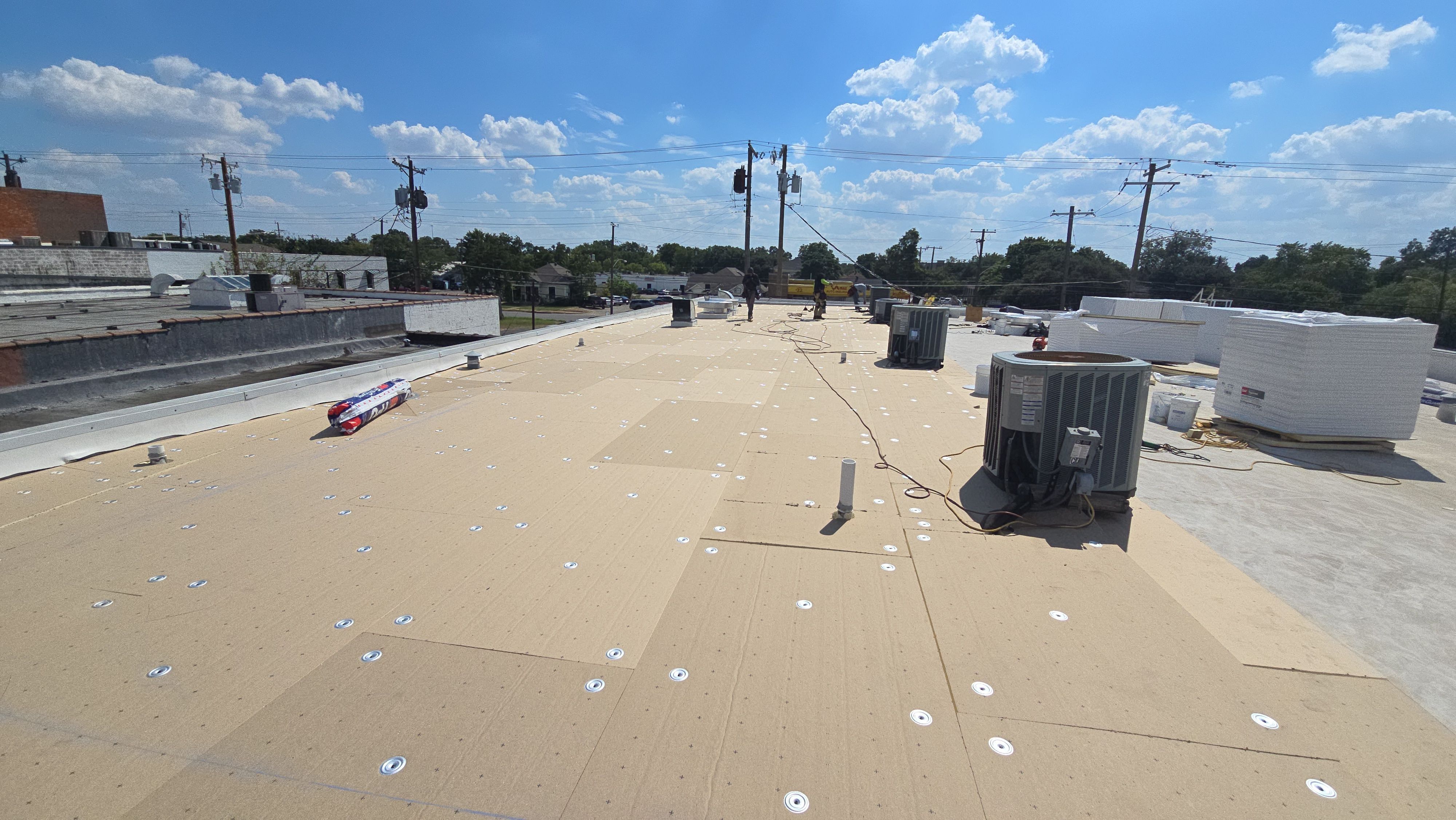
Commercial roofing for city halls, courthouses, fire stations, police stations, and public facilities throughout Dallas, TX.
Dallas operates one of the largest inventories of publicly owned buildings in Texas, and keeping that portfolio weather-tight is a perpetual capital challenge for the city's Facilities Management Department. The Dallas City Hall—an inverted pyramid designed by I.M. Pei and completed in 1978—anchors a civic campus that extends to the Frank Crowley Courts Building, Dallas Police Department headquarters on South Lamar, the Jack Evans Police Headquarters, dozens of fire stations spread across 385 square miles, and branch libraries throughout the Dallas Public Library system. Each structure carries its own roofing profile, maintenance history, and compliance obligation, and the contractors who serve this market must be prepared to engage with a procurement apparatus that is both rigorous and highly public.
Dallas city contracts flow through the Office of Procurement Services, which administers the competitive sealed bid process under Chapter 252 of the Texas Local Government Code. Roofing projects above the statutory threshold are advertised in the Dallas Morning News, on the city's BidSync portal, and through the Minority Business Enterprise outreach process that Dallas maintains under its Business Inclusion and Development program. The BID program sets aspirational goals for minority- and women-owned business enterprise participation on every city contract, and roofing contractors competing for Dallas work must submit a Good Faith Effort documentation package showing they actively solicited certified DBE subcontractors. Failure to address the BID program requirements in a bid response is grounds for rejection as non-responsive.
North Texas weather creates a demanding threat profile for Dallas municipal roofs. Summer heat regularly pushes pavement temperatures above 150 degrees Fahrenheit, ultraviolet radiation degrades roofing membranes rapidly, and the region experiences severe convective thunderstorms that deliver hailstones large enough to puncture unprotected single-ply systems. The 2019 hailstorm that caused widespread damage across East Dallas and Lake Highlands led to simultaneous emergency roofing assessments across several Dallas Public Library branches. Municipal facilities managers now frequently specify hail-impact ratings—FM 4473 Class 4 or UL 2218 Class 4—on new roofing systems installed on city buildings in vulnerable parts of the service area.
Dallas has a substantial inventory of historically significant public buildings that require preservation-sensitive roofing approaches. The 1892 Old Red Museum—formerly the Dallas County Courthouse—occupies a prominent position in the Dealey Plaza area and is a Recorded Texas Historic Landmark. Roofing work on the Old Red and other landmark structures must navigate Texas Historical Commission review, and contractors with experience restoring ornate Romanesque Revival slate and clay tile rooflines are a specialized subset of the Dallas commercial roofing market. The City of Dallas Historic Preservation Office coordinates with state and federal reviewers on projects that involve any public funding, ensuring that the character-defining elements of civic architecture are retained through each re-roofing cycle.
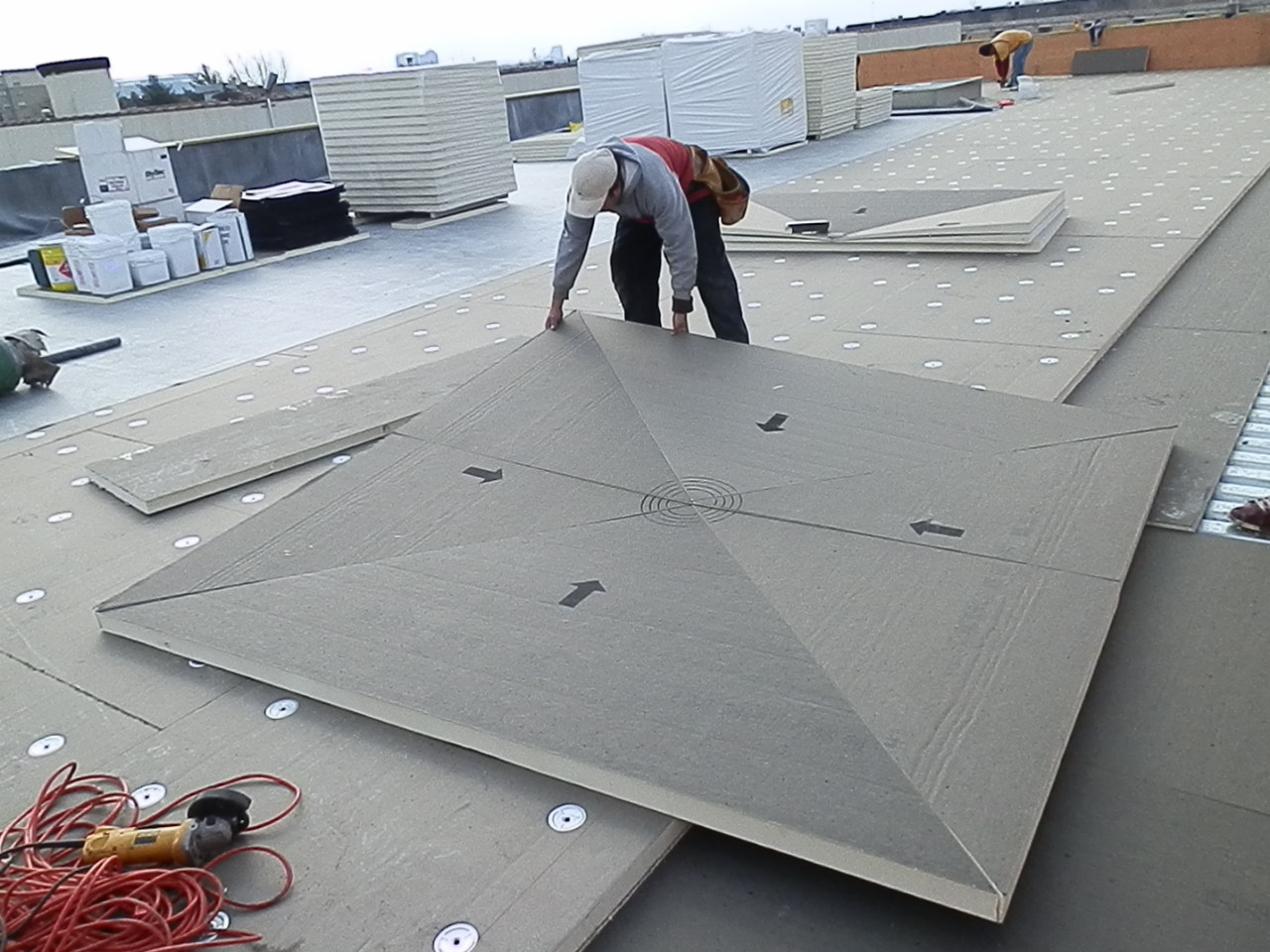
Energy performance requirements shape Dallas municipal roofing specifications significantly. The city adopted the 2021 International Energy Conservation Code as its baseline, and public buildings must meet or exceed those standards during major roof replacements. The Dallas Climate Action Plan, adopted in 2020, commits the city to achieving net-zero emissions by 2050, and the Facilities Management Department has begun incorporating continuous insulation upgrades into re-roofing scopes to improve thermal performance on older city buildings. Polyisocyanurate insulation installed above the deck during roof replacement is a cost-effective way to increase R-values without disrupting occupied interiors, and it counts toward the city's portfolio-wide energy reduction targets.
The Dallas Fire-Rescue Department operates more than 60 fire stations, and roofing those facilities involves challenges that go beyond standard commercial work. Apparatus bay roofs must tolerate heavy exhaust concentrations, vibration from diesel engines, and the constant opening and closing of large overhead doors that stress roof-to-wall flashings. Communication antenna farms on station rooftops require careful penetration detailing, and the electrical infrastructure supporting emergency dispatch systems must remain fully functional throughout any re-roofing project. Phasing plans for fire station roofing in Dallas are negotiated directly with district battalion chiefs to ensure uninterrupted emergency response capability.
Federal prevailing wage obligations arise on Dallas municipal roofing projects funded through HUD programs, FEMA mitigation grants, or federal transportation funding that sometimes flows through city-owned facilities adjacent to transit corridors. Dallas is an entitlement community under the Community Development Block Grant program, and improvements to public facilities using CDBG funds require Davis-Bacon certified payroll compliance. The city's Office of Budget also tracks federal grant conditions, and its contract administration staff performs periodic payroll audits on federally funded construction projects. Contractors who have not previously worked under Davis-Bacon should expect a steeper administrative burden on their first Dallas public sector roofing project.
Warranty structures demanded by the City of Dallas reflect the city's scale and the tenure of its facilities staff. Long-term NDL warranties from roofing system manufacturers are standard on major re-roofing projects, and the city's legal department scrutinizes exclusion clauses that could compromise coverage after severe weather events. Dallas negotiates directly with national roofing manufacturers on approved product lists maintained by the Facilities Management Department, and contractors must use products from that approved list or obtain pre-approval before submitting a bid. This product standardization simplifies maintenance and emergency repair across a portfolio that spans dozens of buildings maintained by a relatively small internal staff.
Contractors seeking sustained work in the Dallas municipal roofing market benefit from attending pre-bid conferences at City Hall in the Cedars neighborhood and from maintaining active vendor registrations on the city's procurement portal. Dallas conducts periodic vendor outreach sessions through the Office of Small Business Development, and contractors who engage early in the procurement cycle often receive useful information about upcoming projects that can inform bonding capacity planning and subcontractor teaming arrangements. The competitive nature of Dallas public roofing work rewards preparation: those who understand the BID program, the prevailing wage framework, and the technical specifications the city favors consistently outperform competitors who treat public procurement as simply another commercial bid process.