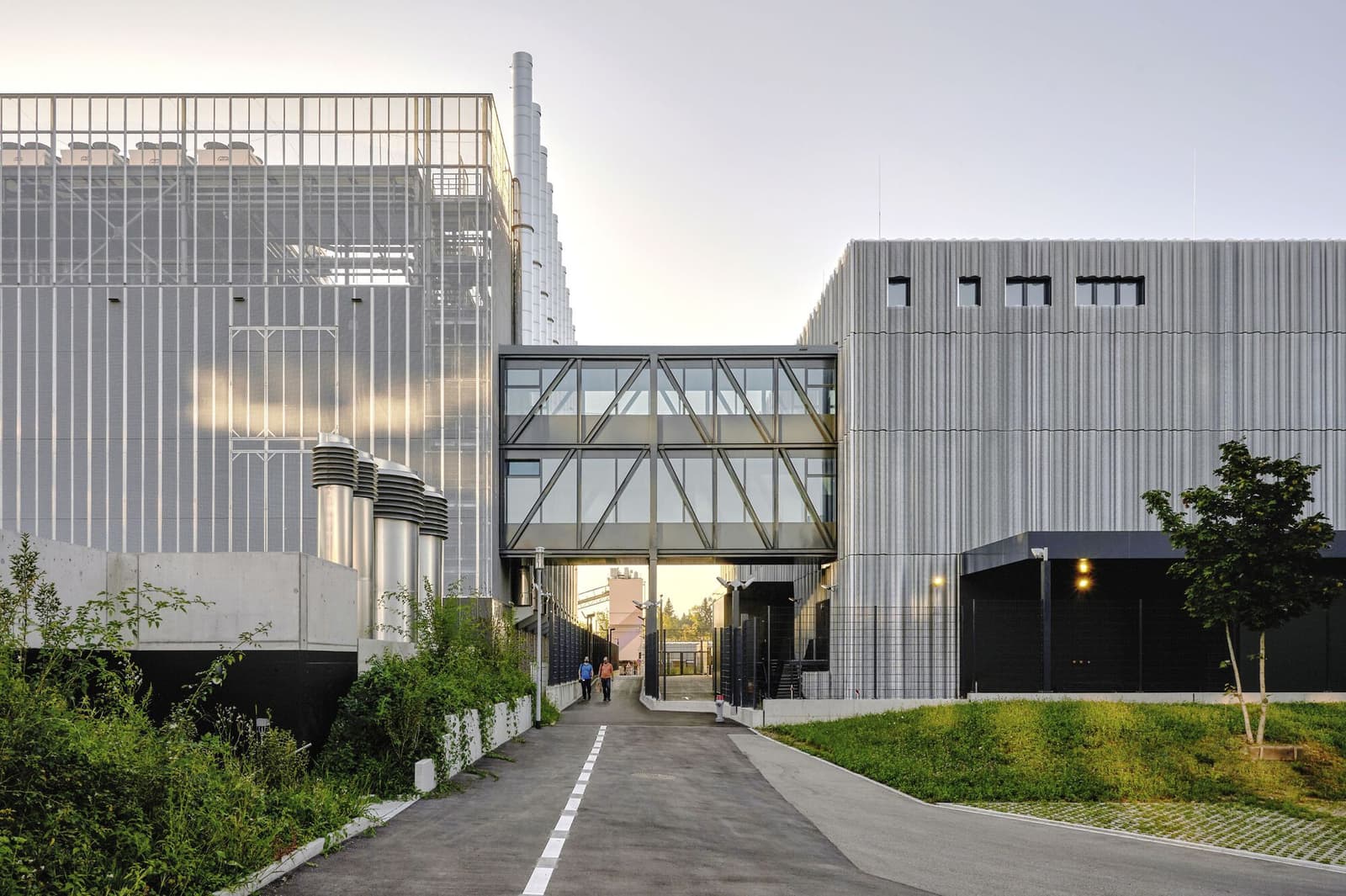
Data Center Roofing for commercial buildings across Dallas.
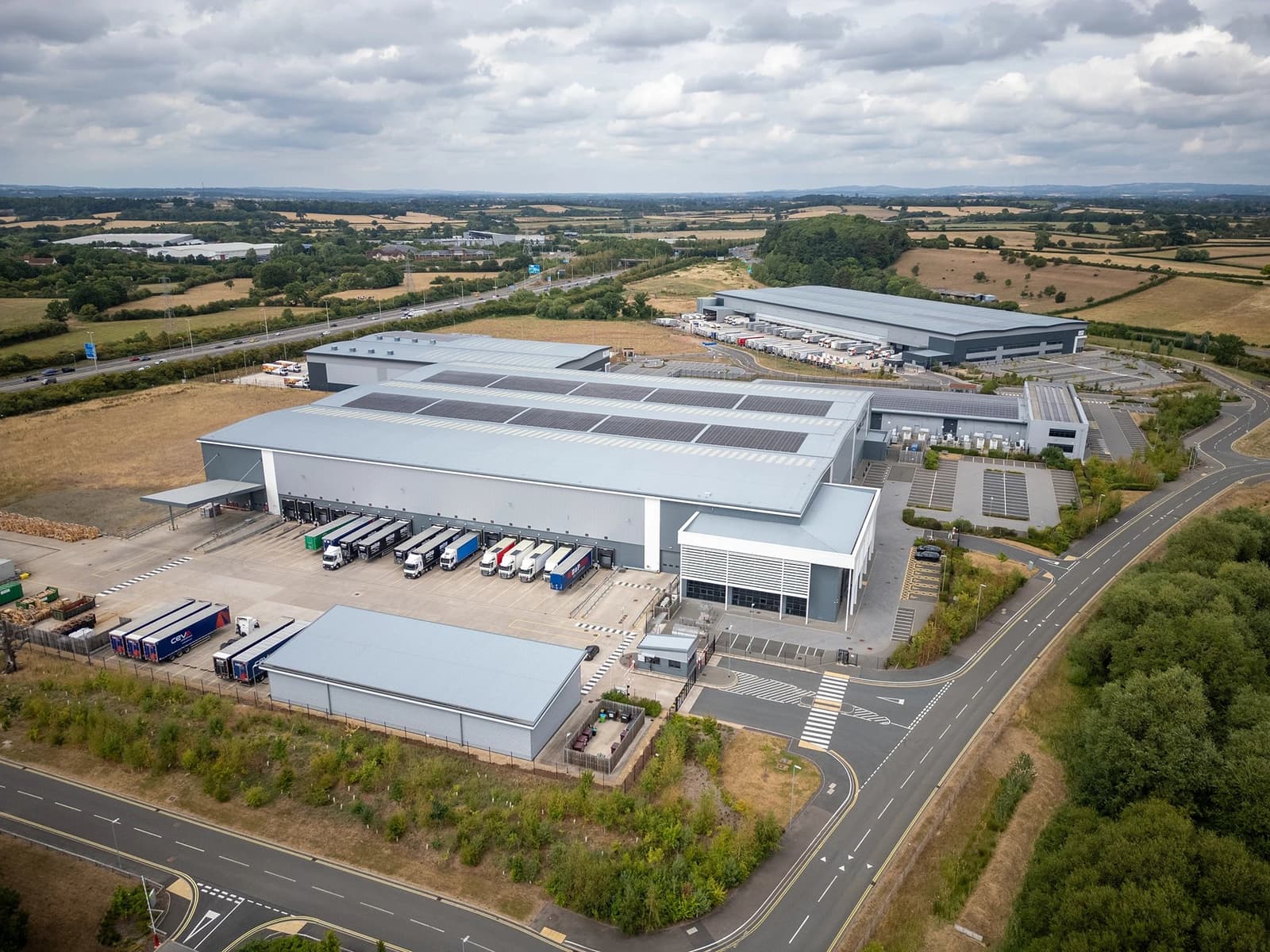
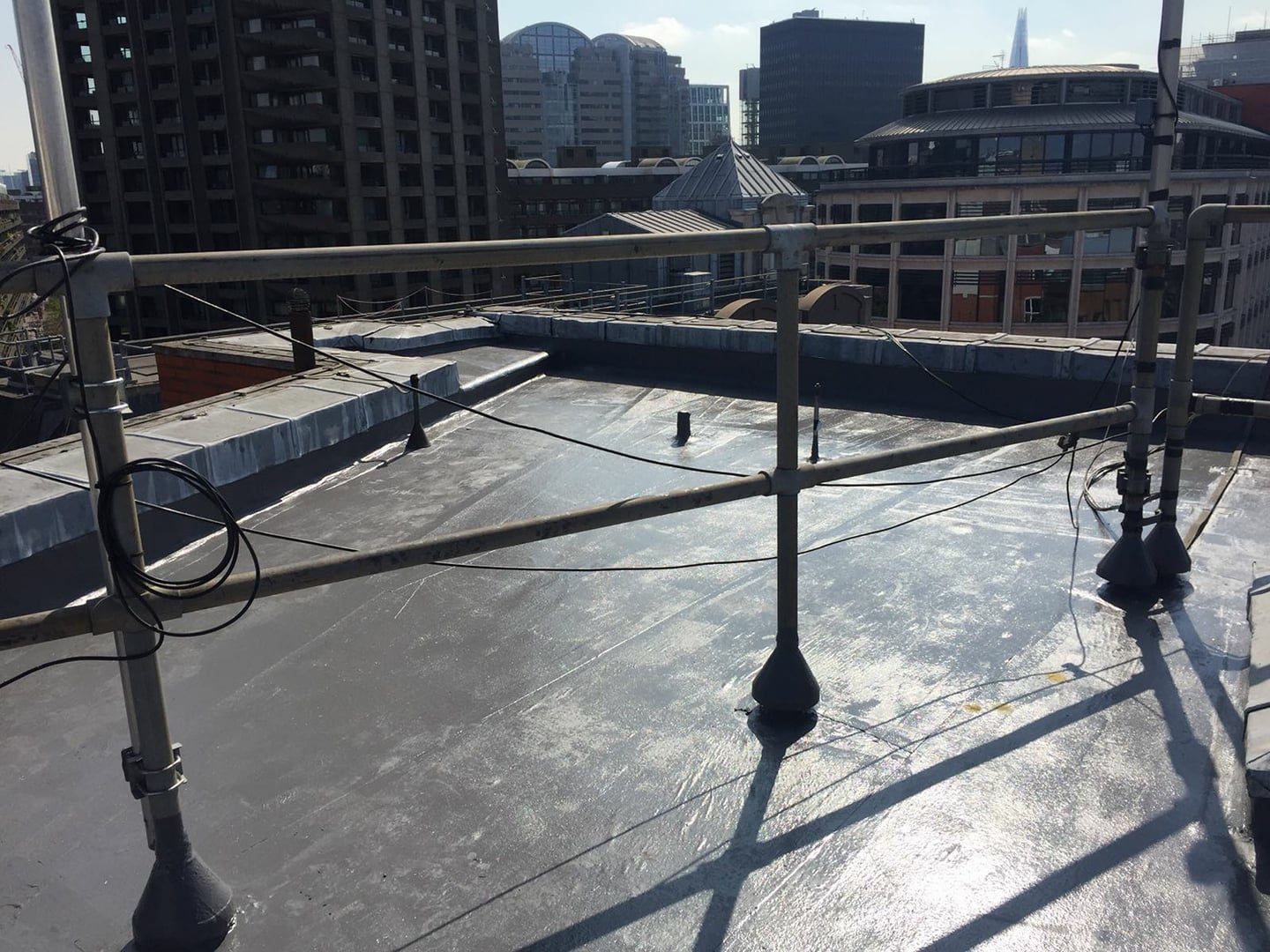
Warehouse roofing in the Dallas metro is its own subspecialty. The Stemmons Corridor between I-35E and Mockingbird Lane holds millions of square feet of 1980s and 1990s warehouse and light-industrial buildings — most of them running original or first-replace modified bitumen that is at or past the end of its warranty life. The AllianceTexas and Railport corridors in northern Dallas County brought a second generation of inventory buildings in the 2000s and 2010s, most of them on first-generation 60-mil TPO that is now hitting its first major maintenance milestone.
Large decks create different problems than small commercial buildings. A 300, fastener patterns and membrane thickness far beyond what a 20,000 sq ft retail strip needs. The rooftop equipment load on a distribution center — multiple HVAC units, evaporative coolers, exhaust fans, dock-door equipment ventilation — creates penetration density that makes flashing work the most labor-intensive part of the job. And the 24-hour operations that most modern distribution centers run mean that coordinating production around shipping windows and shift changes is as critical as the membrane specification.
We have worked on warehouse inventory across the Stemmons Corridor, the Great Southwest Industrial District in Grand Prairie, the Brookhollow/Royal Lane pocket in northwest Dallas, and the newer buildings along Northgate and Sandy Lake in Carrollton and Coppell. The sequencing and the membrane selection are different for each, and we scope them that way.
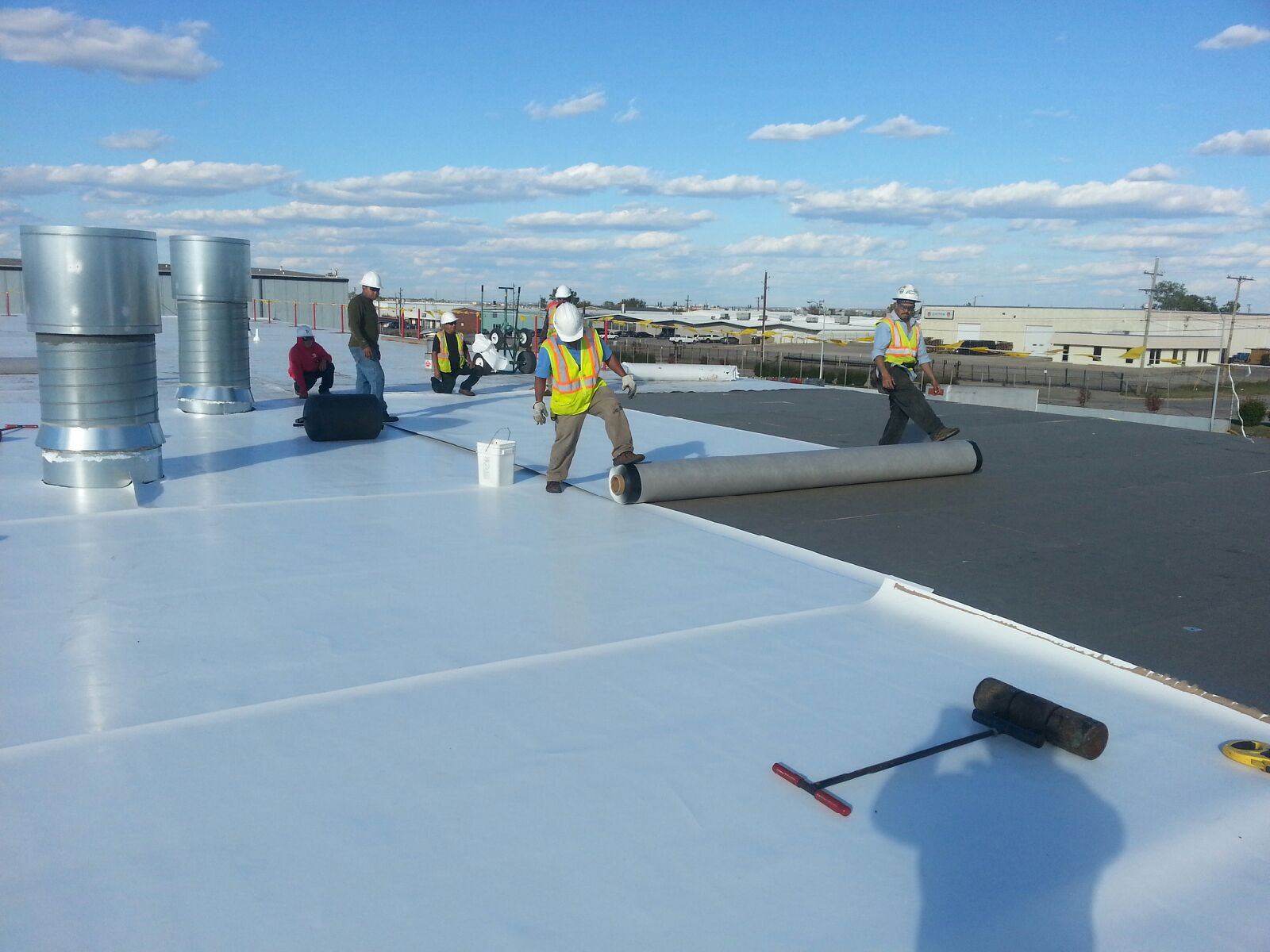
The default specification for Stemmons Corridor warehouse reroofs is mechanically attached 80-mil TPO over tapered ISO insulation. The 80-mil thickness is not cosmetic — it provides meaningful additional puncture resistance for roofs that see heavy foot traffic from maintenance crews, condenser coil cleaning, and dock-door electrical work. It also extends the manufacturer warranty from 20 to 25 years on most systems (Carlisle, Johns Manville, Versico), which matters for buildings whose next ownership event is inside that window.
Fastener pattern on warehouse roofs is designed to the building's wind-uplift zone using FM Global or ASCE 7-22 calculations. A 250,000 sq ft building with an open exposure along I-35E needs a different pattern than a building sheltered by adjacent structures in the Brookhollow pocket. Manufacturer warranty inspections in Texas have flagged underspecified fastener patterns on mechanically attached systems, and the fix after-the-fact is expensive.
Tapered insulation is almost always part of the warehouse reroof package. Stemmons-era warehouses were built with minimal slope designed around interior drains that have partially obstructed over 30 years of use. We design the taper package around the actual existing drain locations and the ponding patterns we document during inspection — not a standard engineered-slope drawing that gets applied to every building regardless of what the water actually does.
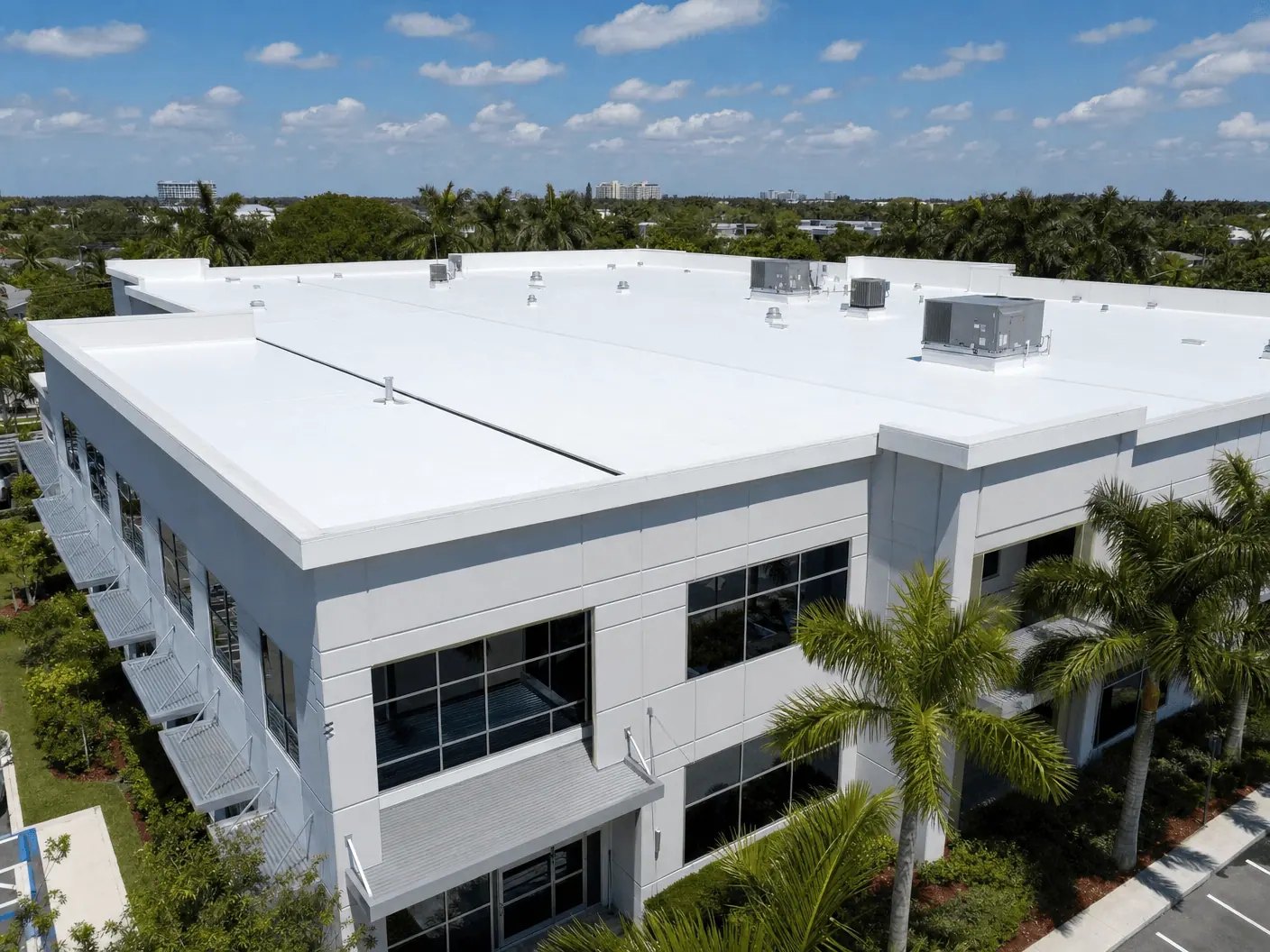
The biggest operational complication on warehouse reroofs is the rooftop equipment density. A 500,000 sq ft Stemmons distribution center might have 40 rooftop HVAC units, 20 exhaust fans, dock-door ventilation stacks, and fire-suppression risers running through the roof deck. Each penetration is a flashing detail that has to be rebuilt. On facilities like the large DHL and UPS processing buildings in the Dallas Love Field area, we coordinate with the facility's HVAC contractor to isolate and temporarily shut units during curb-flashing work, and we sequence equipment work around shift changes so refrigerated zones are not compromised during peak processing hours.
Cold-storage facilities add a layer of complexity: you cannot leave a penetration unsealed overnight when the interior is a 35-degree refrigerated environment. We plan cold-storage work in smaller daily sections with same-day sealing on every penetration before crew departure, regardless of what the broader section completion looks like. This adds crew cost but it is not optional on refrigerated distribution.
Active warehouse operations cannot tolerate a debris event inside the building. When we tear off modified bitumen on occupied warehouses, we use vacuum-equipped equipment that pulls material directly from the roof deck to containers rather than dumping it. Interior ceiling protection — poly sheeting over high-value inventory or active pick-and-pack lines — is part of our pre-construction scope on facilities like the mid-Stemmons fulfillment centers.