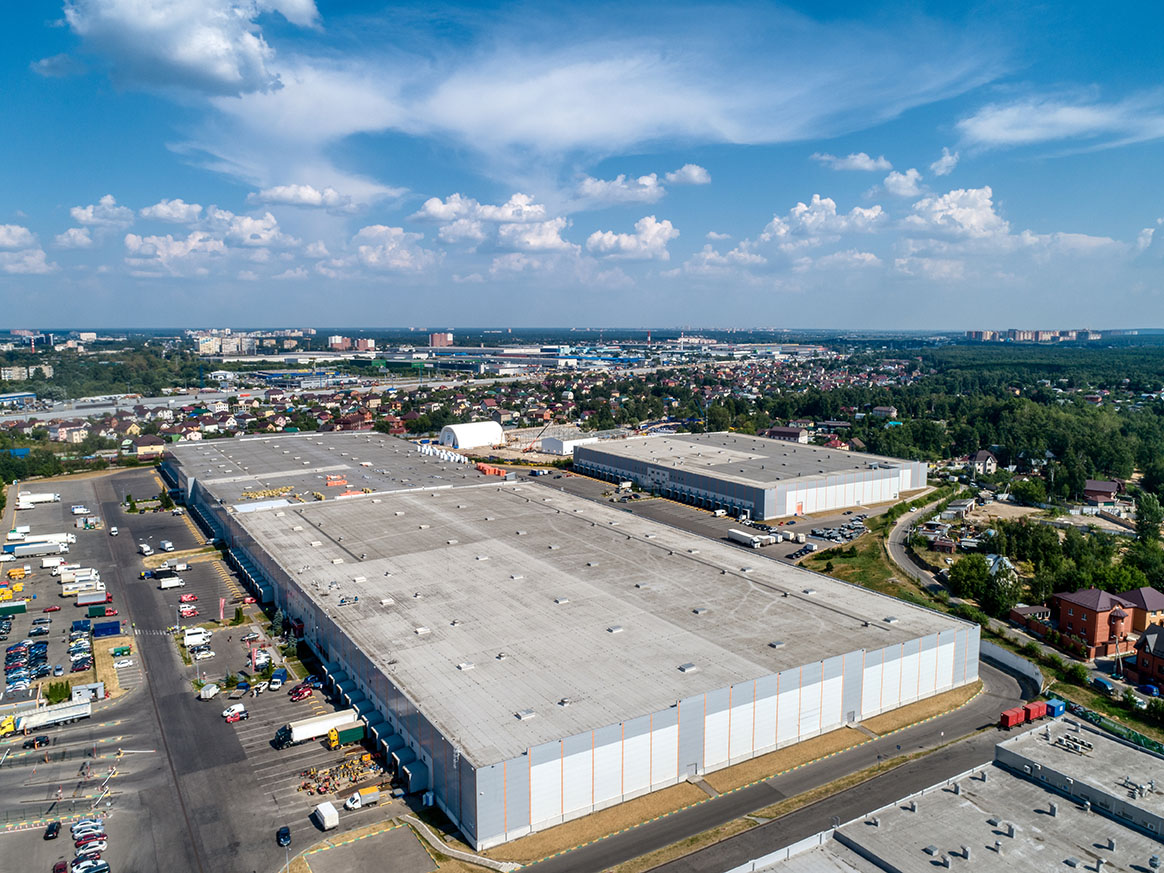
The Dallas Logistics Hub Inland Port south of the city — spread across Hutchins and Wilmer along I-45 — is one of the largest freight aggregation zones in North America. Those facilities run 24 hours a day, and a leak that triggers a safety shutdown or wets a row of pallet racking is not a routine maintenance problem. We service the inland port corridor, the Stemmons Freeway tilt-wall stock along I-35E, and the Alliance Texas free-trade zone near the Tarrant County line, and we understand what it takes to schedule roofing work around active logistics operations without stopping the building.
Your priority is keeping the building running. Ours is making sure the roof doesn't stop it. We schedule around your receiving windows and shift changes, communicate in real time through your preferred facility management portal — ServiceChannel, Corrigo, or direct contact — and deliver inspection reports your maintenance records system can log the same day we're off the roof.
TPO membrane is the standard for Dallas warehouse and distribution construction. We install, weld, and warranty TPO systems sized for the thermal cycling and Class 4 hail load the DFW climate puts on large-format flat roofs — and we spec to the manufacturer's actual uplift requirements, not the code minimum.
After a spring hail event across Dallas County, we GPS-map every impact point, document membrane condition with photos, and deliver a structured report your insurance and warranty carriers can act on within 48 hours of the event. Documentation from the first 72 hours matters — it establishes causation before subsequent rain events complicate the record.
Blackland Prairie clay heave shifts drain pitch on aging Dallas tilt-wall facilities. We survey existing drain locations against current slab geometry and correct ponding zones through tapered insulation, drain relocation, or crickets before a new membrane goes down — otherwise the new membrane fails for the same reason the old one did.
Annual inspection, post-hail walkthrough, and semi-annual drain clearing on a service calendar that fits your facility's receiving and shipping schedule. Maintenance programs for the Dallas Logistics Hub corridor include spring post-hail documentation as a standard deliverable, not an add-on.
Proficient in major facility management portals, including ServiceChannel, Corrigo, Building Engines, Emcor, fmPilot and Ariba
Managing a DFW distribution portfolio means tracking capital replacement timelines across buildings at different points in their roof life cycles. We deliver per-building condition grades, capital planning timelines keyed to lease expiration dates, and consolidated reporting across your full Dallas Logistics Hub or I-35E corridor portfolio so you're not managing ten separate roofing vendors with ten different report formats.
TPO membrane is the dominant system for new and re-roofed DFW warehouse construction and there are good reasons for that. It handles the thermal cycling between DFW summer peaks and winter freeze events, resists the UV load on large unshaded flat decks, and the hot-air-welded seam system creates a continuous waterproof layer rather than a lapped-and-adhered seam that can separate over time. For buildings with chemical or grease exhaust from manufacturing operations adjacent to the roofline, PVC is the correct specification — TPO degrades in sustained chemical contact. For aging modified-bitumen roofs that still have a functional deck and acceptable insulation, a silicone restoration coat extends service life without a full tear-off, which matters when the capital budget is constrained and the roof still has performance left in it.
We coordinate directly with your operations manager before any crew is on the roof. Dock access hours, rack aisle clearances, forklift traffic patterns, and receiving schedules all factor into the daily work plan. We use safe-work zones on the roof that don't create falling-object hazard over active aisles, and we stage materials and equipment to avoid competing with inbound freight. For 24-hour facilities in the Hutchins and Wilmer inland port corridor, we've sequenced work across night shifts and receiving windows without a single operations stoppage. The advance coordination adds a day of planning and saves a week of friction.